
 Mary Anne
Caen attracts two kinds of visitors: those who are there specifically for the D-Day Landing Beaches and all things World War II…and those who land here after the Channel crossing and leave immediately to drive furiously to whatever destination they’re making for. But a third kind is rapidly growing: those who take a short break in the splendid city of Caen.
Having written extensively on D-Day both here (see my list/links at the end bottom of the article) and been the co-author of the Bradt D-Day Landing Guide, I well understand the former.
But those who just see Caen as a jumping off port are missing out on this delightful, lively city where visitors who defy the usual practice and make it a destination stop are well rewarded.
A Little History of Caen
William and Mathilda
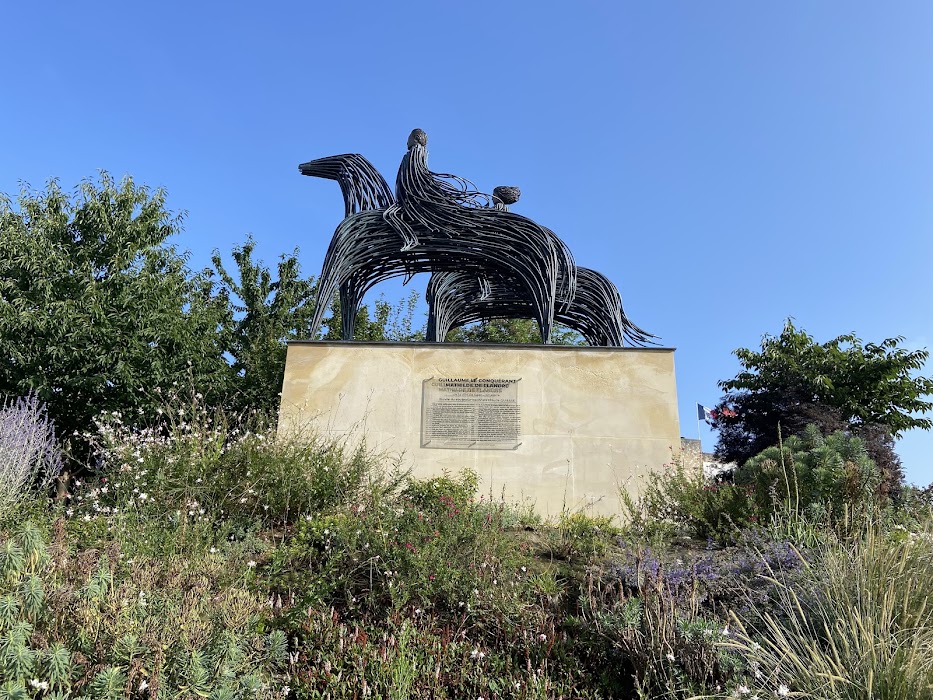
2027 will be an important year for Normandy – and Europe. It sees the international celebration of the birth of William the Conqueror and his life.
Caen is the perfect place to begin the story of this extraordinary man and his place in history. Two of the major buildings in Caen are associated with William the Conqueror (c. 1028-1087) and his wife Mathilda of Flanders (c. 1031-1083), so please excuse this very short history.
William was known as William the Bastard, being the illegitimate son of unmarried Duke Robert I of Normandy and his mistress Herleva. William’s chosen wife was the aristocratic Mathilda – granddaughter of King Robert II of France. Her reply to his declaration was pretty firm – she would not marry a bastard. The story then wanders into Mills and Boon territory. William either rode to Bruges, forced himself into her bedroom and beat her. Or he dragged her from her horse and presumably declared his undying resolve in the mud.
Apparently fascinated by such a manly response, Mathilda consented. Historians, naturally, dispute this version, but let’s not get in the way of a good story.
William and Mathilda were married in 1051 or 1052, probably in Rouen Cathedral, despite Pope Leo IX banning the union on the grounds of consanguinity – the couple were third cousins once removed. Four or five children later, Pope Nicholas II granted a dispensation after the couple agreed to found two churches as penance, the Abbaye aux Hommes and the Abbaye aux Dames. It was a typical convenient solution to a thorny problem of politics.
Top Sights in Caen
Château de Caen
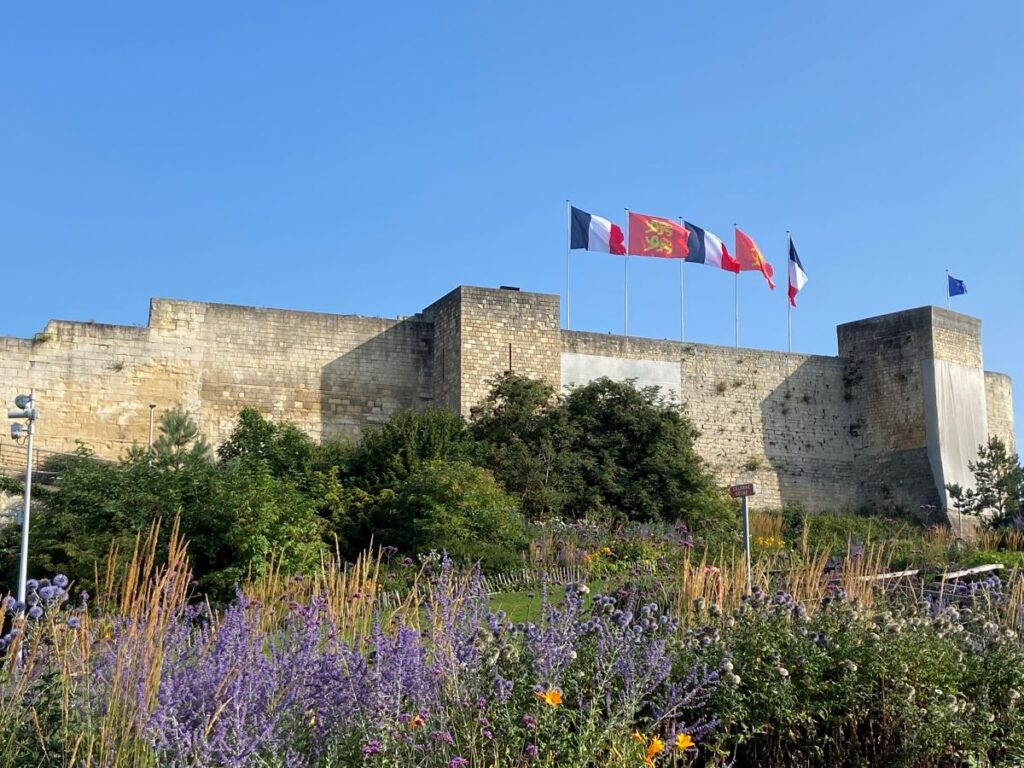
Begun by William the Conqueror in 1060 and later fortified by his son Henry Beauclerk in 1123, it retains enough of the old buildings to show its size and importance. Walk over the moat into the citadel and you see how difficult the castle would be to attack. Having survived centuries of strife, ironically the greatest damage done when Caen was bombed in 1944 by the Allies. Since then restoration work has brought the castle back to its former, medieval life.
Walk up to the ramparts to reveal the city below, and in the distance the Abbaye aux Hommes.

I’d advise you to start at the Exchequer, a handsome stone building from the late 11th century. Inside it’s empty but wait for the immersive show. The doors close behind you; the vast room darkens as the lights dim and the great salon is filled with the sounds and sights of A Journey through the 1000-year history of Caen based on the 2025 commemorative year. The history of the ancient city is revealed, taking you back into the lives of long distant ancestors, through the industrial era, on to World War II and up to today.
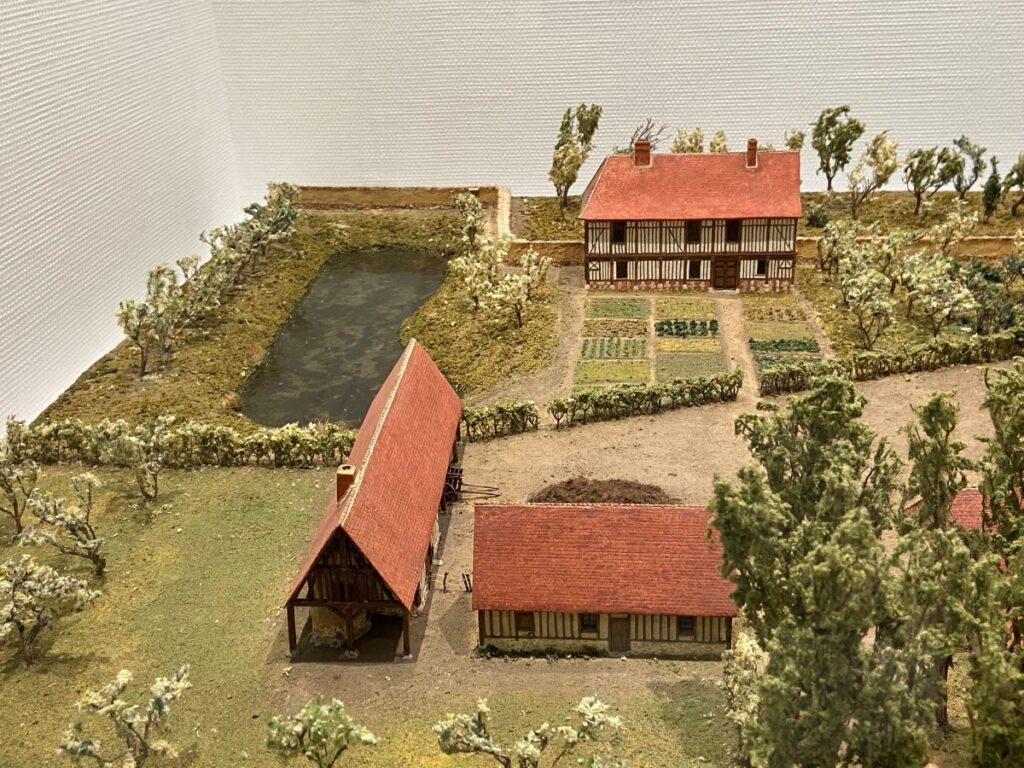
There’s plenty to see in the extensive grounds: the Musée de Normandie takes you at a gallop through the story of the region; the Fine Arts Museum takes you on a whistle stop tour of art through the ages and you can visit the strange tower of Queen Mathilda.
Château de Caen
Enceinte du Château
14027 Caen
Tel: +33 (0)2 31 30 47 60
Website
Rates: I advise taking the main pass which gets you into all the museums on the site €8; concessions €6
Free some weekends and public holidays
Open Grounds are open daily 7:30am-10:30 pm. Visitor Centre and museums weekdays 9:30am-12.30pm & 1.30pm-6pm; weekends/public holidays 11am–6pm. Closed Jan 1, May 1, Dec 25.
If you can allow at least half a day.
Abbaye aux Hommes
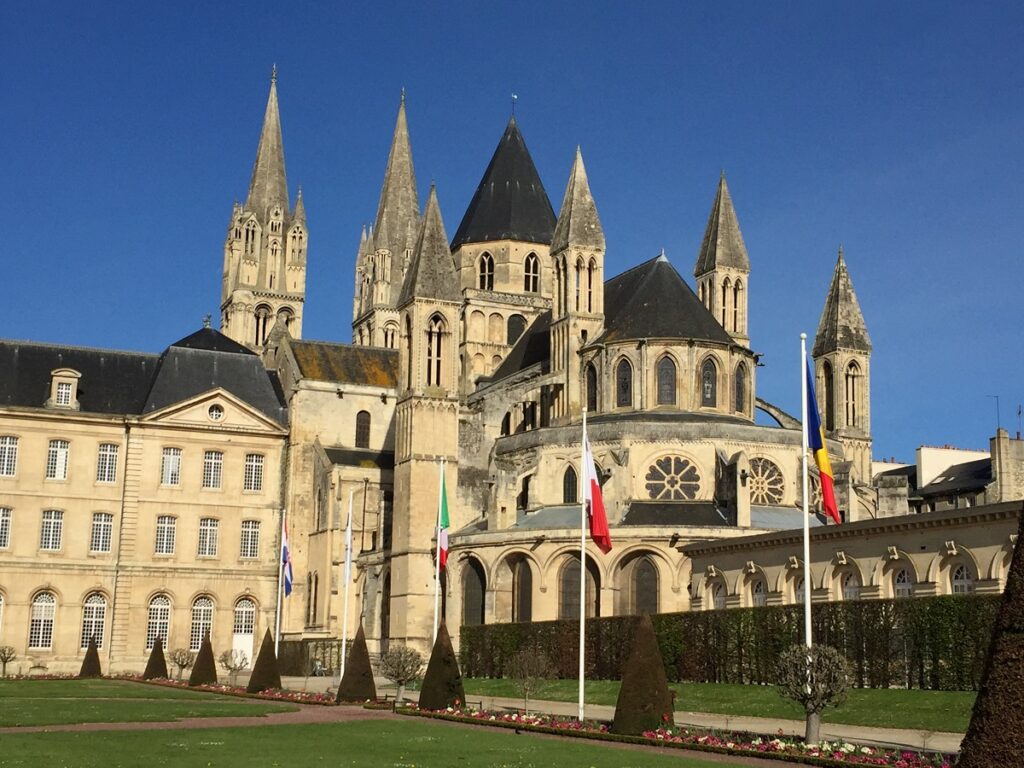
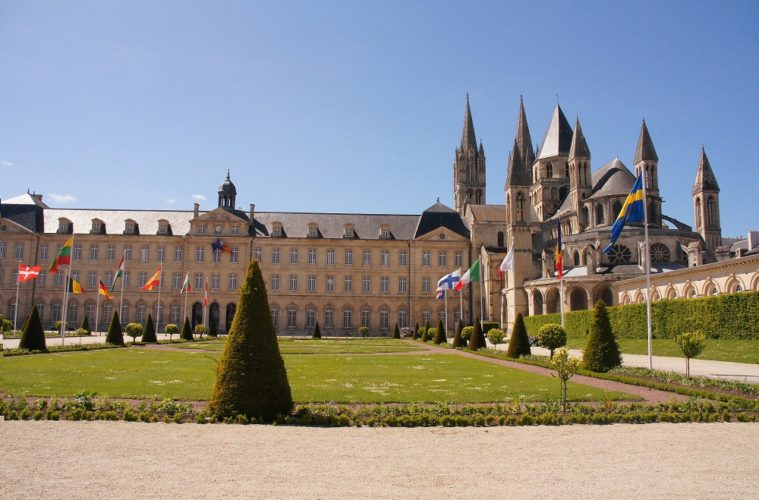
The magnificent building stands to the west of Caen. Glorious flowering gardens and a long gravel path lead you to the front of this impressive site. To one side stands the Church of Saint-Etienne, one of Normandy’s greatest Romanesque buildings and a sight to behold with its wonderful mix of Romanesque seen in the three tiers in different styles and its ornate towers.
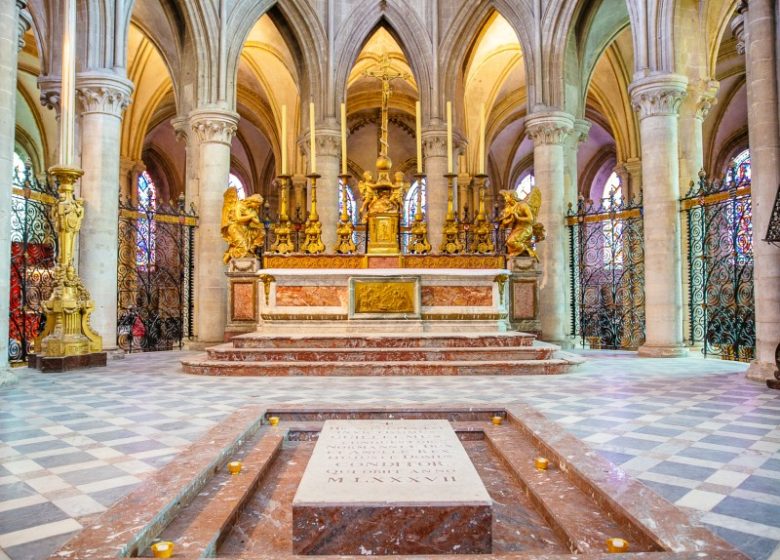
The vast interior is plain, with an 18th-century organ standing proud at the west end. At the east end you’ll find the tomb of William the Conqueror, though after the church was sacked by the Hugenots in the 16th century, his remains were scattered. All that remains of him is a femur, buried beneath the stone.
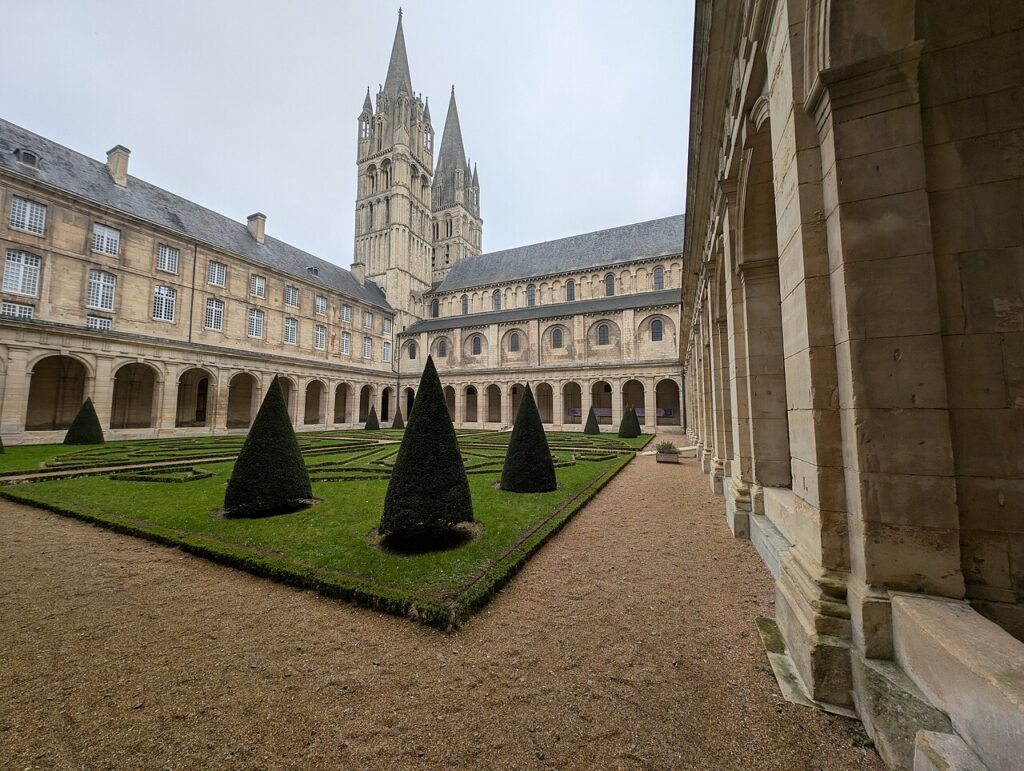
The main building in the complex, designed in the 18th century, is a wonderful example of the neo-classical style. Today it’s the town hall, but it also has a good space for temporary exhibitions. Pause for a moment in the peaceful, quiet cloisters which remove the stresses of everyday life. The monks gathered daily in the Chapter Hall to listen to one (just one) of the 73 chapters of the life of St Benedict.
Abbaye aux Hommes
Esplanade J.-M. Louvel
14027 Caen
Tel: +33 (0)2 31 30 42 81
Website
Admission free
Open daily except weekends in school holidays in January. Closed Jan 1, May 1, Dec 25.
Abbaye aux Dames
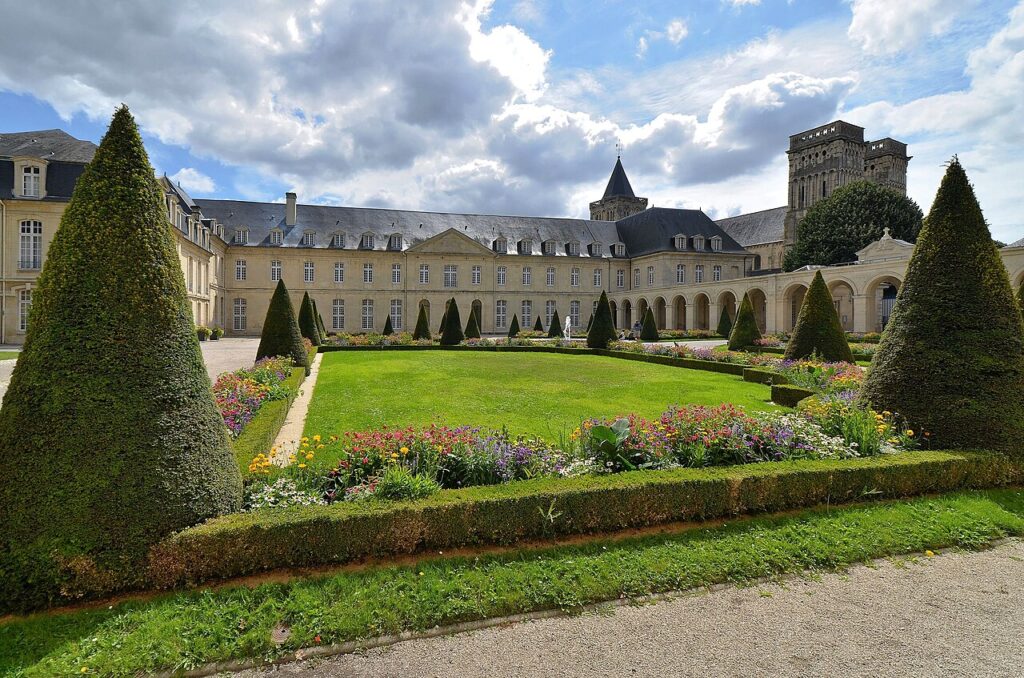
Founded in 1062 by Queen Matilda and consecrated in June 1066, it stands about 1 mile away from the Abbaye aux Hommes at the east end of Caen. The building is a smaller but more delightful version of the Abbaye aux Hommes; the grand façade more welcoming, the cloister smaller and more intimate.
Start at the Eglise de la Trinité, mostly built in the 11th century in Romanesque style. Queen Matilda is buried here which I find rather sad. William and Matilda were a devoted couple and if romance played a part in history, they would have been buried together. The building is a smaller but more delightful version of the Abbaye aux Hommes; the grand façade looking more welcoming, the cloister smaller and more intimate. It was occupied by Benedictine nuns until the French Revolution then followed the usual path of such buildings. It first became a barracks, then housed beggars and the homeless, became a hospital in 1823, then a hospice in 1908, and today houses the Regional Normandy Council.
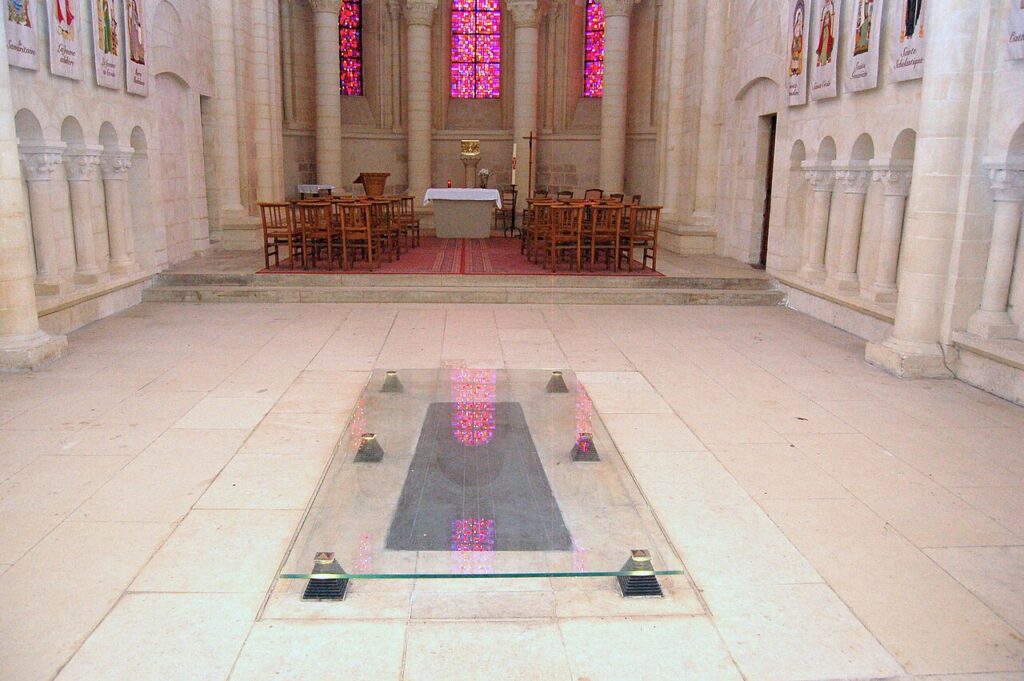
A guided tour shows you the whole building, including the crypt. It’s surrounded by a large park with lovely views over Caen.
Abbaye aux Dames
Place Reine Mathilde
14035 Caen
Tel: +33 (0)2 31 06 98 98. Guided tours +33 (0)2 31 06 98 45
Website
Admission free
Open Mon-Fri 8.30am-12.30pm & 1.30-6pm; Sat Sun 2-6pm. Closed Jan 1, May 1, Dec 25.
Walk the City
Caen is an easy city to walk around and the tourist office (in the Hotel d’Esceville), conveniently located south of the castle, is the place to book a guide who starts from here.
Walk down rue St Pierre, now mainly a shopping street with bland modern buildings…except for two 16th-century half-timbered buildings at 52 and 54, that are impossible to miss.
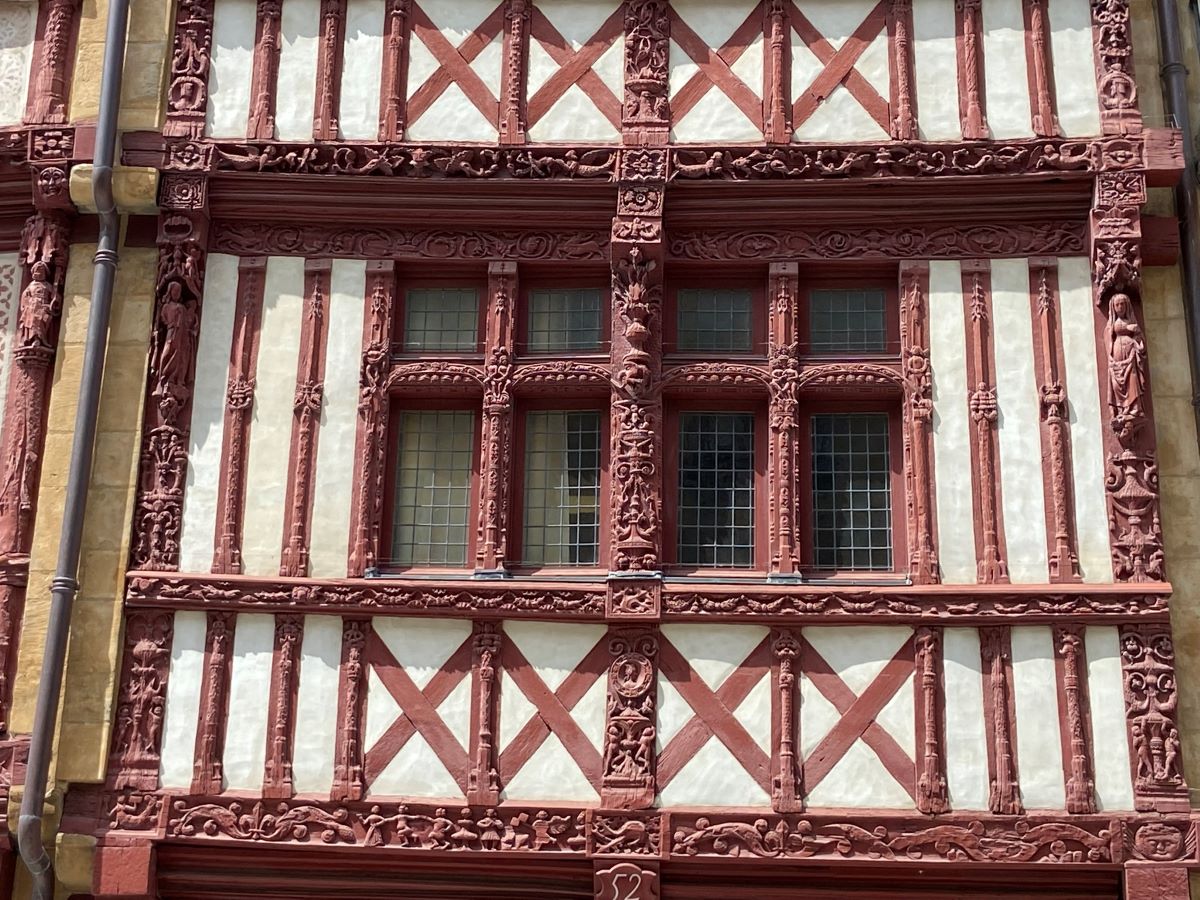
If you’re feeling energetic and have time, take a left down rue Paul-Doumer to the Place de la Republique, laid out as a public garden. Then walk past the 17th-Century Notre Dame de la Gloriette to Place Malherbe and into Place St Sauveur.
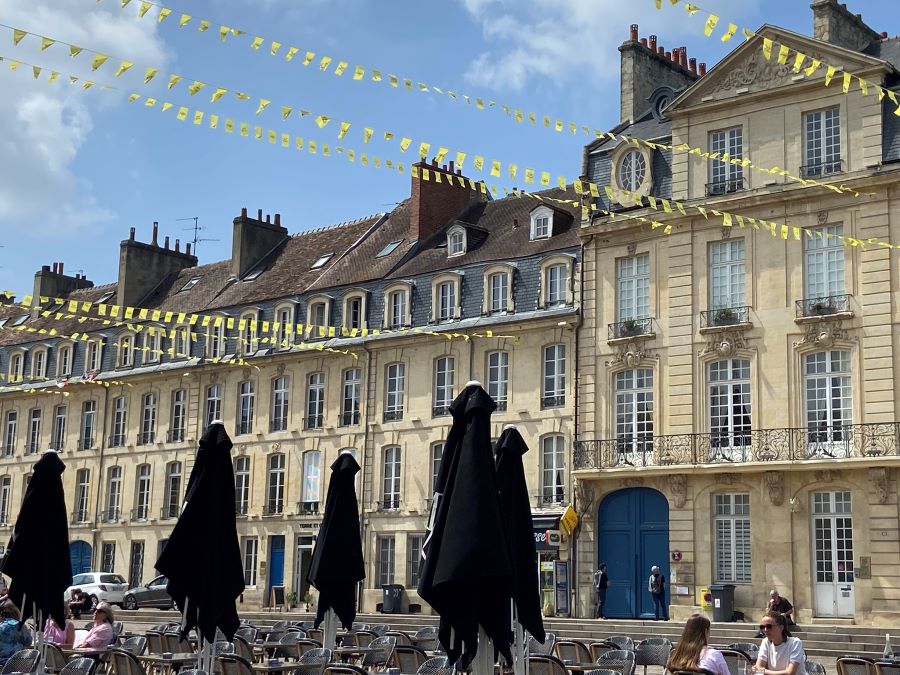
Stop for a coffee in Place Saint Sauveur and sit and look at the 18th-century houses that line the sides. Shop at the market on Friday mornings for local Normandy cheeses, breads, meats and more. It’s all presided over by a statue of Louis XIV depicted as a Roman emperor rather than the Sun King. When I was there he was encased in a wooden box, decorated with some dubious Bacchanalian figures. You could see the regal figure but you could also see the back wooden wall as well. Hopefully it was temporary and he has now been restored to his real glory.
Then you are at the Abbaye aux Hommes.
Jardin des Plantes et Jardin Botanique
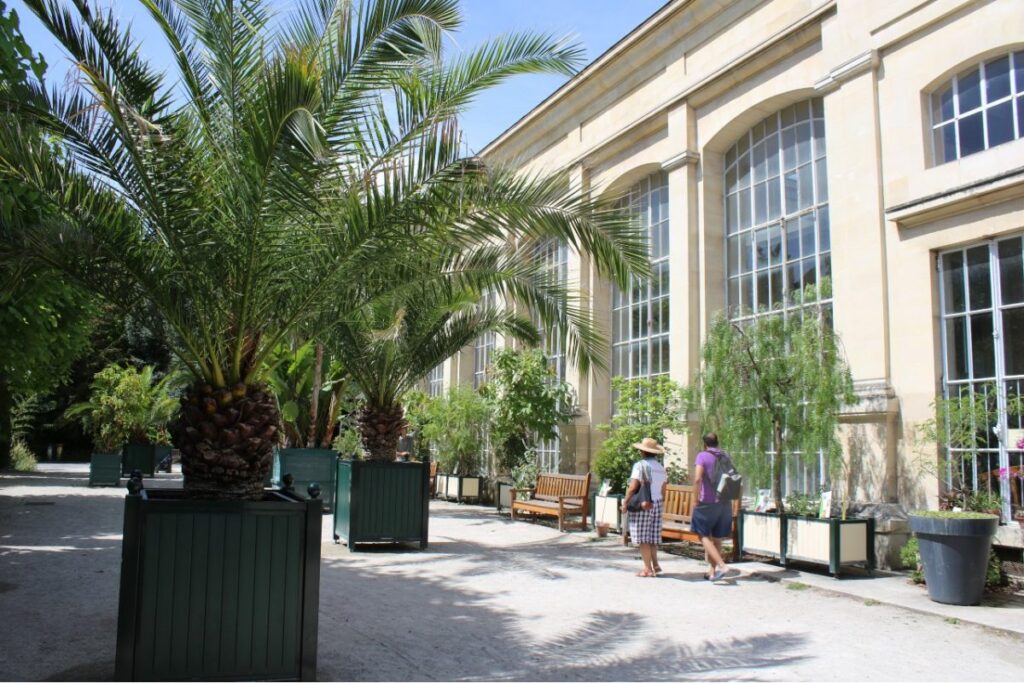
The collection was started in 1689 from the private garden of Jean-Baptiste Callard de la Ducquerle, a doctor and botanist. Today there’s an impressive main building and acres of plant-filled gardens. You can grab something to eat here as well. While it’s popular with locals for its advice, lessons and information on plants generally, it’s also a delightful place for visitors to wander through providing a welcome oasis in hot weather. Check opening times and ticket prices here.
Where to Stay in Caen
We stayed at The People Caen, which is an upmarket hostel. Being of a slightly older age than your normal hostel person, we were a little nervous. But it’s a fabulous place for people of any age and filled with families with the odd grandparent in tow.
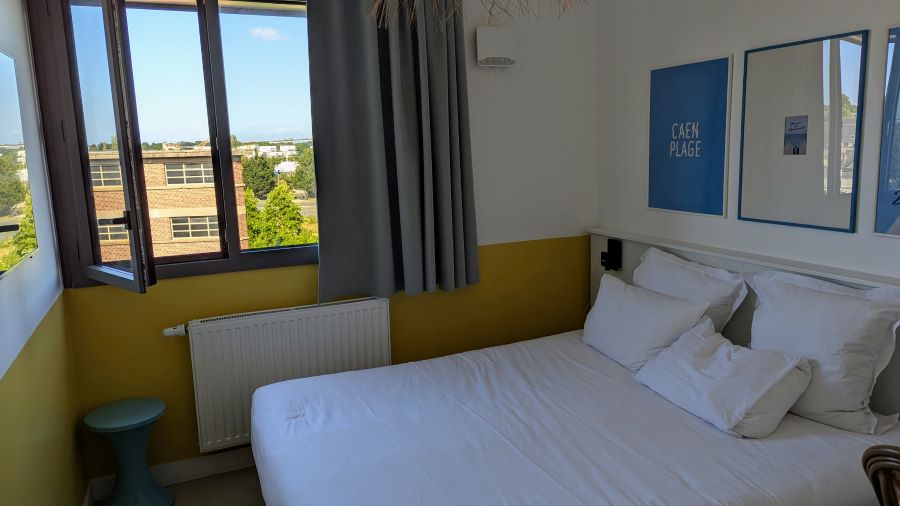
Bedrooms are comfortable, light and airy though not large; bathrooms are good. There’s a rooftop bar with great views, good pizzas to order in the evening and the odd market inside selling all sorts of colourful, sometimes over-the-top kind of fashion that only suits somebody under 21.
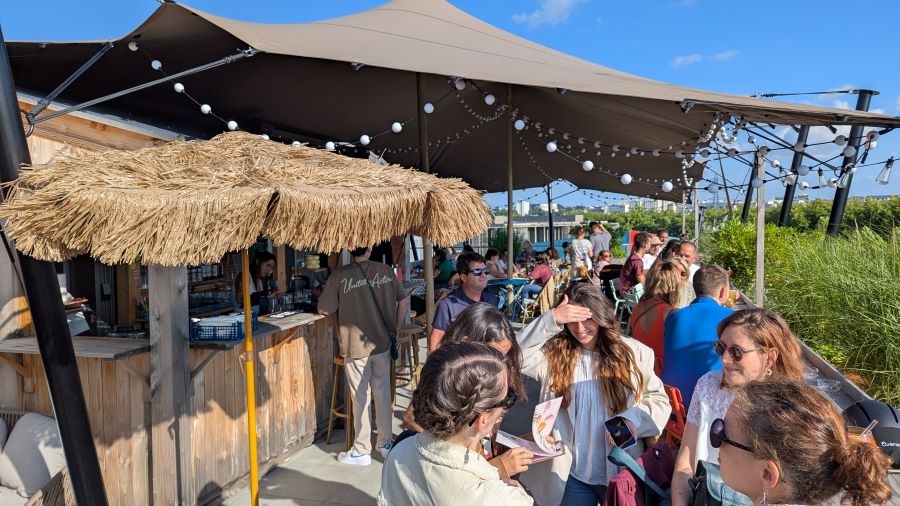
Added to this, there’s public parking next door (though beware of using foreign credit cards; we spent a couple of hours with the very helpful receptionist trying to pay before succeeding). Once your car is safely stowed away, tram T2 starts its route here at Presqu’Île. There’s also a free shuttle bus taking you around Caen. The shuttle from here goes through the centre of town ending up at the Palais des Sports.
The People Caen
15 Av. Victor Hugo
14000 Caen
Tel: +33 (0)2 61 53 69 40
Website
Prices
Double rooms: €62 to €95; family rooms (4 people) €69 to €170. There’s a list of other rooms from private rooms for 6 people to single sex and mixed dormitories.
There are plenty of hotels in Caen, from budget accommodation to luxury.
Where to Eat in Caen
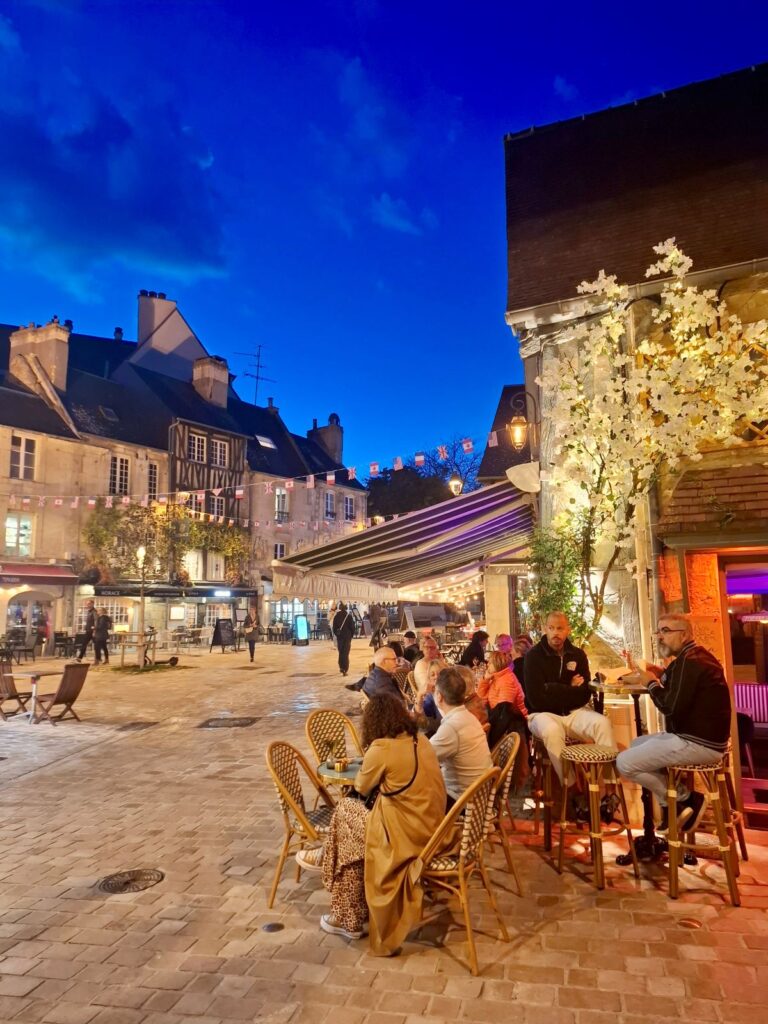
Vaugueux is the district to make for. It’s an area of small streets just east of the Château with a long pedestrianised street of excellent restaurants and bars. We walked there from the hostel, about a 20-minute pleasant stroll. Our destination? Horace.
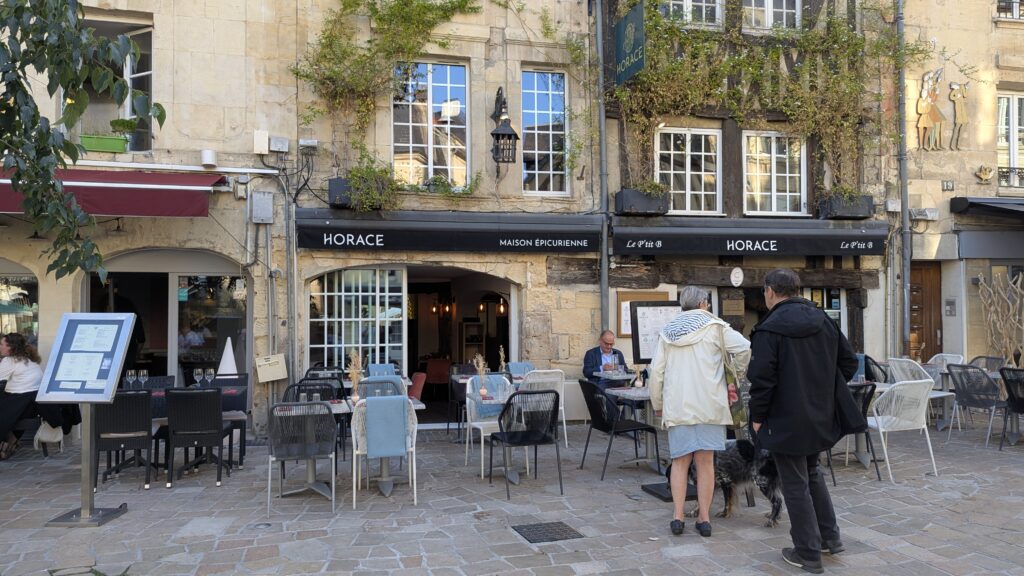
Horace is a delightful restaurant located in one of the old houses that fill the district. We ate on the outside terrace which is a people-watching magnet. Traditional menus uses local ingredients and are excellent value. €24 and €28 menus take in crispy Camembert with apple and Normandy sausage for starters, mains such as confit of duck and salmon, and pasta for vegetarians. Desserts might include warm chocolate cake with passion-fruit sorbet and almond cake with lemon and vervain. The €42 menu includes the likes of oysters, sea bream ceviche and duck foie gras for starters, scallops, sirloin steak and more.
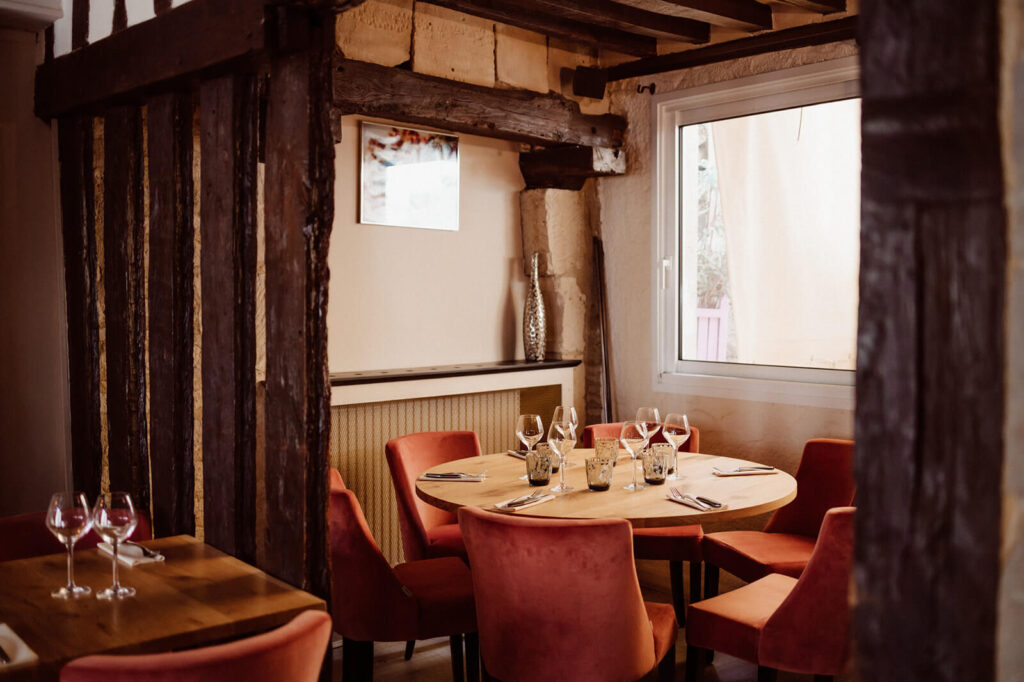
Horace
15 rue du Vaugueux
14000 Caen
Tel: +33 (0) 2 31 93 50 7
Open Thursday to Monday 12noon-1.30pm & 7-9.30pm
Le Carlotta
Located on the Bassin Saint Pierre quay, Le Carlotta is a delightful Art Deco brasserie, complete with all the glorious over-the-top decorated glass, mirrors and plush red seating you expect to see in a traditional brasserie. Take advantage of the seaside location and order seafood – from oysters to a groaning fruits de mer plateau (€49 or €70). Those after turf rather than surf might go for duck confit parmentier, or a generous steak. It’s not the cheapest restaurant in Caen but it’s gracious, well positioned and serves excellent meals.
Le Carlotta
16 quai Vendeuvre
14000 Caen
Tel: +33 (0)2 31 86 68 99
Open Monday to Friday noon-2.30pm & 7-11pm
How to Get to Caen
Like most people coming from Britain, we went on Brittany Ferries from Portsmouth, one of the best ferry companies. The Guillaume de Normandie, the second of their Hybrid-LNG ships, takes ferry crossings up another level. If you go overnight book a comfortable cabin with a good bathroom. And eat if you can in the Bella Riva restaurant rather than the casual café to keep the cruise feeling. There are allergy free and pet friendly cabins as well. Public spaces are roomy and it’s remarkably quiet compared to the diesel engine ferries.
By Sea

Top Tip:
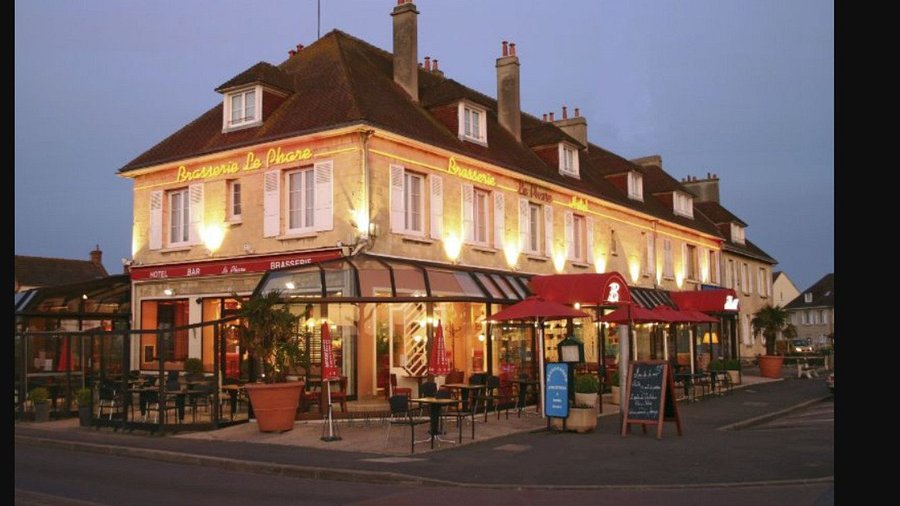
We travelled by day, landing at Caen around 10pm. We got through French passport control fairly fast and it’s best to take the right-hand lane exiting the ferry which gives you two control points. But with the new 2026 restrictions it might take longer to get out of the French port. With our late arrival we booked at the Hotel du Phare. It’s a 3-star hotel, with a charming staff. We arrived too late to have a drink in the bar, but the manager brought us glasses and biscuits as we opened the bottle of Calvados we had bought on the ferry. Rooms are perfect for a quick overnight stay; there’s a good breakfast and you can park right outside the hotel. If you take a front view room you can see the port and the ferry, a 2-minute drive away.
Hotel du Phare
10 Place du Général de Gaulle
Ouistreham 14150
Tel: +33 (0)2 31 97 13 13
Website
Rooms from £103 per night
Caen and World War II
Caen was the great objective of the D-Day Landings in June 1944. But it took far longer for the Allies to take than originally planned. On June 7, on their way from the Normandy landing beaches, the British and Canadian Divisions ran into the formidable German 12th SS Panzer Division, the infamous Hitlerjugend (Hitler Youth). Fighting in the villages around Caen took an extremely heavy toll, the story remembered in the many impressive memorials.
You’ll find beautifully maintained Commonwealth War Graves Commissions graveyards where the ages of those killed will make you weep. There are plenty of impressive memorials like the one dedicated to the Typhoon pilots, a dramatic black marble monument shaped as two arrows meeting, commemorating the 151 Typhoon pilots killed in Normandy between May and August 1944. It’s south of Caen at Noyage-Bocage. To the west, visit the emotive Abbaye d’Ardenne, where the Canadian Massacre memorial in a small peaceful garden remembers the 15 Canadian prisoners of war murdered on June 7.
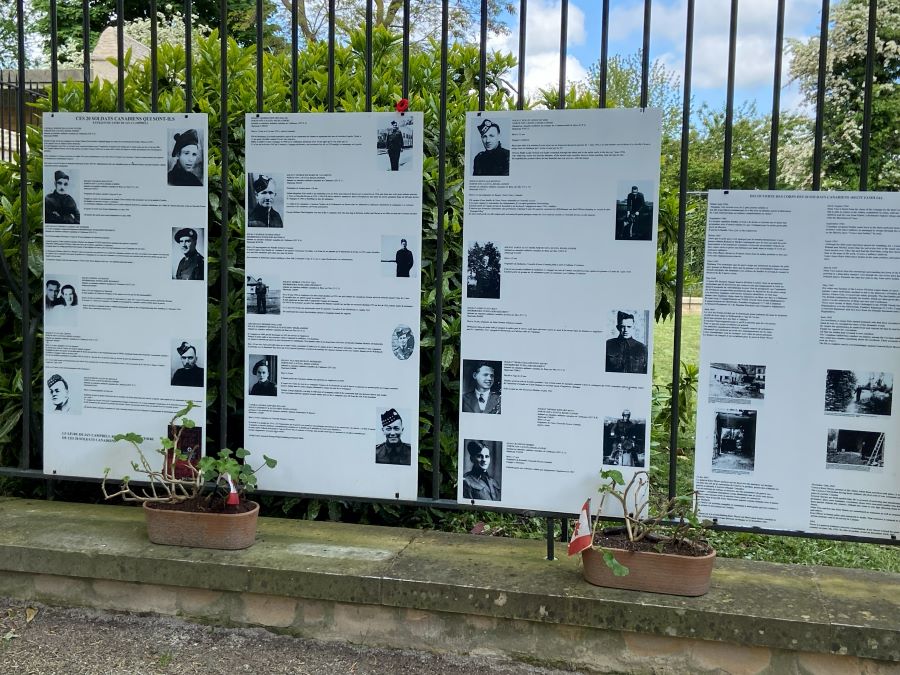
If you want to see these, and a whole lot more, then (excuse the blatant advert), please buy a copy of the book I wrote with Alastair McKenzie, D-Day Landings, A Travel Guide to Normandy’s Beaches and Battlegrounds. It‘s published by Bradt Travel Guides and you can get it in bookshops or through Bradt Travel Guides website, or Amazon.
Mémorial de Caen

If you only have time for one museum to visit outside the centre, make it the Mémorial de Caen. It covers both world wars in detail, but is particularly strong on World War II. Superb themes, artefacts, videos and more will really bring history to life. But be warned, some of the story is very uncomfortable. The museum moves from One War to Another, through France in the dark years of the 30s, from European to World War, through Genocide, and propaganda to the end of the war…and what impact it had. There’s an excellent section on the D-Day Landings which I recommend you see before setting off around the sites around Caen. It ends with a 19-minute film.
The museum then continues to the Cold War and beyond. Well worth seeing is the separate underground bunker of General Richter, who directed the 716th German Infantry Division, and ran the German Normandy defence of the coast from here.
Le Mémorial de Caen
Esplanade Général Eisenhower
CS 55026
14050 Caen Cedex 4
Tel : +33 (0) 2 31 06 06 45
Website
Opening times vary during the year so check the website. But mainly the museum is open daily 9am-6pm.
Tickets: Adult €20.80; child and seniors €18.50; Family €53. Other rates valuable.
Combined tickets with other attractions also available.
More about Normandy
Normandy Impressionist Festival 2026
Normandy and Impressionism – A general overall look at the great Impressionist art movement and what to see in Normandy
Guide to the Impressionist Painters
Normandy Travel Guide – What to see and Do in Normandy
Getting to Normandy
World War II in Normandy
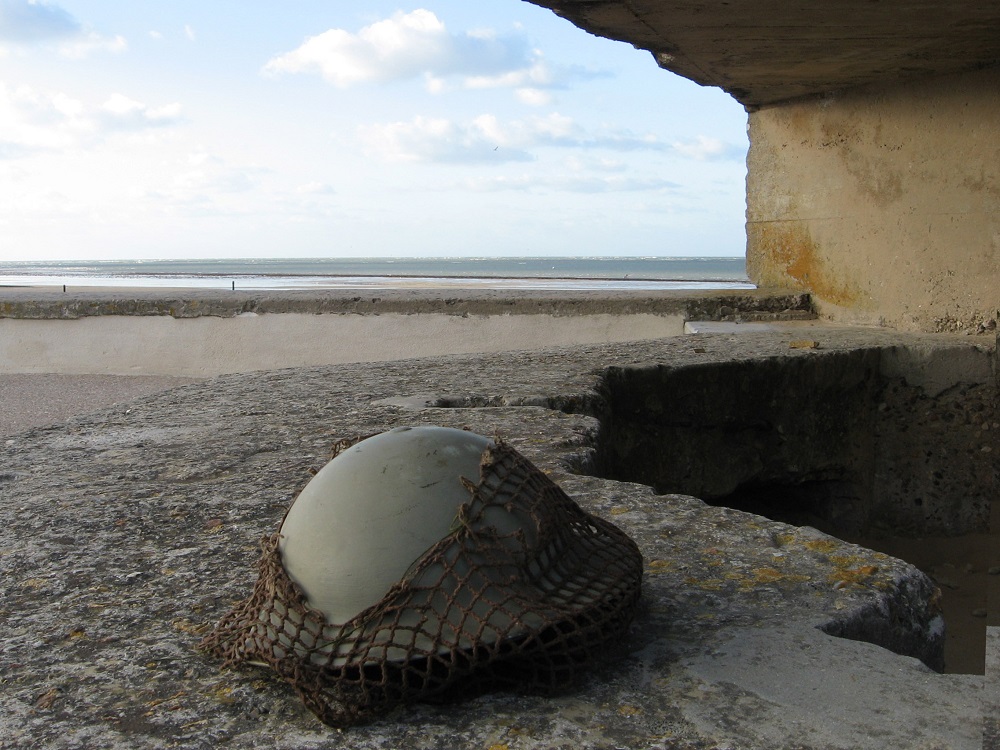
D-Day Landing Beaches from Utah to Sword