

 Mary Anne
The wide-ranging Normandy Impressionist Festival (Normandie Impressionisme) runs from May 29 to September 27, 2026. It’s a great year for Impressionism, marking the centenary of Claude Monet’s death in Giverny. The artist spent the last 43 years of his life here, making and painting his garden, marking Monet’s painting into a more abstract mode. The theme of this year’s Impressionist Festival is one of questions and ideas around Un Possible Jardin – The Gardens of Possibilities – a Contemporary Homage to Claude Monet. It’s directly inspired by Monet’s Giverny garden and the idea of gardens that are personal and intimate or public, openness or closure, nature controlled or allowed to rampage free and more.
It’s a very French and philosophical approach, but if you want to, just enjoy the huge number of different exhibitions for the art alone, leaving the philosophy to others.
The contemporary trail takes the idea of Monet’s Giverny garden with a series of exhibitions in places like Honfleur, Rouen, Vernon, Le Havre and more.
The festival concentrates on important contemporary works. Some of the most famous international artists have contributed: Ai Weiwei, Fujiko Nakaya, Noemie Goudal and others.
The Birth of Impressionism
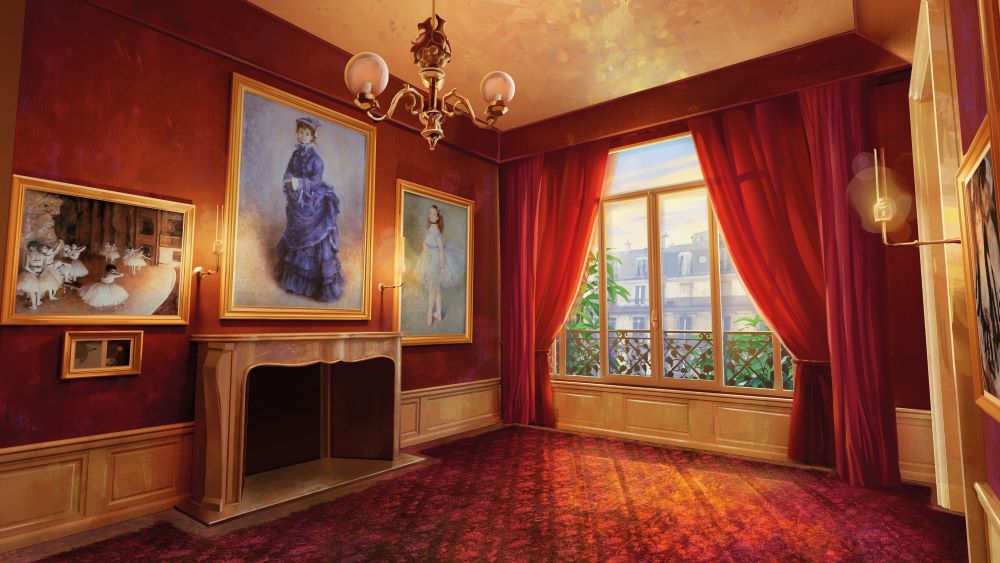
It’s the evening of April 15, 1874, and a group of 30 young, unknown and struggling painters gather in the studio of the photographer Félix Nadar at 35 boulevard des Capucines for an exhibition of their work. The Cooperative and Anonymous Society of Painters, Sculptors and Printmakers included Pierre-Auguste Renoir, Edgar Degas, Berthe Morisot, Claude Monet, Camille Pissaro, Alfred Sisley and Paul Cézanne. They were showing works that had been rejected by the Académie des Beaux-Arts Salon.
The exhibition was not a success; it was too revolutionary for the time. The name ‘Impressionism’ was coined as an insult by a Parisian journalist called Louis Leroy. He was writing about Monet’s Impressionism, Soleil Levant, a painting of the sun rising over the port at Le Havre and he referred to it as ‘unfinished’. He wrote sarcastically in the journal Charivari on April 25, 1874: “What does this painting represent? Impression! Impression, I was sure of it. I also said to myself, since I am impressed, there must be some impression in it.”
Impressionism was born in that studio, and greeted with universal initial horror; the style was such a complete change from the stuffy classicism of the past 100 years. It took decades before Impressionism was appreciated and the artists struggled for many years.

2026 Normandy Impressionist Festival
The exhibitions centre around Normandy and Paris, the two places most associated with the Impressionists. It was on the beaches of the Normandy coastline and along the bustling boulevards of Paris where the artists set up their easels to record life and paint in the open air, something made possible by the invention of oil paints in tubes.
Major Exhibitions of Normandy Impressionist Festival 2026
Museums in Normandy
Giverny
Musée des Impressionnismes: Monet in Giverny: Before the Water Lilies, 1883-1890 takes Monet’s early years here, from 1883 to 1890 when he bought the house and began designing the garden. 30 paintings depict poplars, meadows, the banks of the Epte and the Seine in different weather patterns: rain and sunlight, mist and clouds.
March 27 to July 5, 2026

Honfleur
Musée Eugène Boudin: In this exceptionally pretty little port town, the museum is featuring Monet’s early days as an artist. Boudin encouraged the young painter to go outdoors to paint en plein air.

Rouen
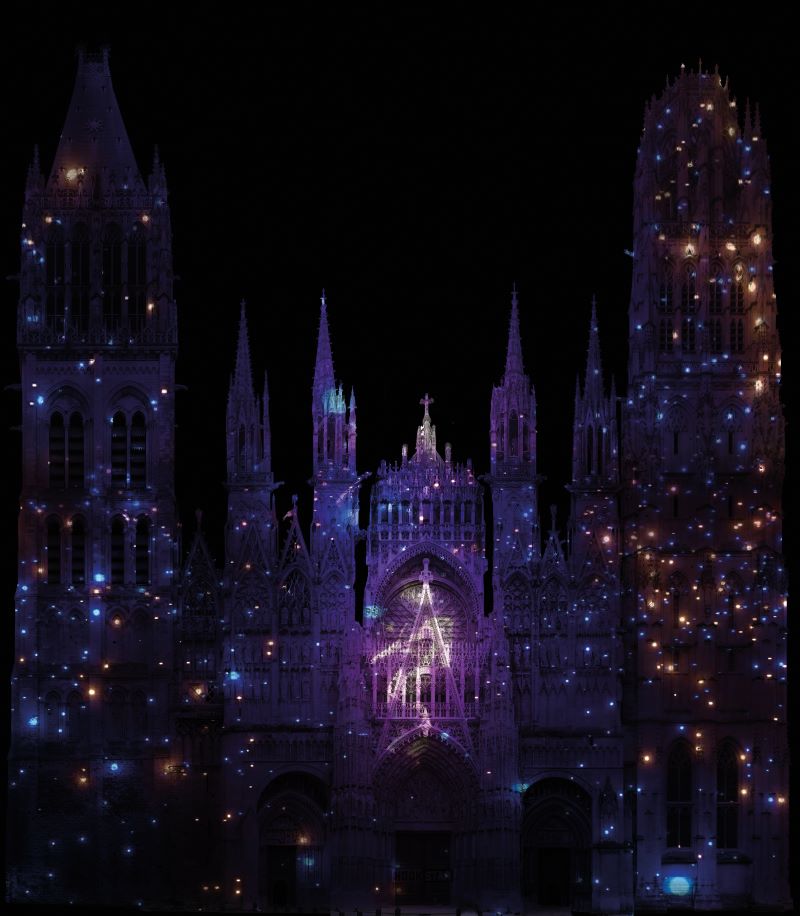
Musée des Beaux-Arts de Rouen has the largest collection of works by Monet outside Paris. Particularly worth seeing are his paintings of Rouen Cathedral. In summer you can see the facades of Rouen Cathedral lit up nightly, usually from June to September. The theme for this year is still to be announced.
Studio DRIFT shows the installation Meadow, with water lily lights opening under the visitors’ heads. It’s in the city centre heritage space: the 10th century Sainte-Croix-des-Pelletiers church.

Le Havre
The maritime city is not appreciated enough for its museums and galleries. But this year it pushes the boat out with Monet in Le Havre at the Museum of Modern Art (MuMa).
Monet lived in Le Havre as a child and a young man, from 1845 when Monet was five years old to 1874, a seminal year for Monet and Impressionism. It was a formative time: he painted his first canvas, View Taken at Rouelles as well as major works like The Pointe de la Hève at Sainte-Adresse (National Gallery, London) and Seascape:, Night Effect (1864, National Gallery, Scotland). At the mouth of the Seine Estuary, nearby Pointe de la Hève at Sainte-Adresse was seen as the ‘end of the world’.

His family and local collectors were immensely supportive, and his painter friends Eugene Boudin and Gustave Courbet introduced him to new patrons. The exhibition has documents not seen before about his life, paintings, drawings and sketchbooks as well as photographs.
June 5-September 27, 2026

Caen
Celeste Boursier-Mougenot created a sound installation inspired by Monet’s water lilies – Clinamen which is outdoors in Caen at the Colline aux Oiseaux Park. FRAC Normandie has a crysstal garden and a circle of 12 ‘sound swings’ (which you can play on) topped with church bells.
Paris
Musée de l’Orangerie: Monet – au fil de l’eau (Monet – In Real Time). The theme of Monet painting time focuses on how Monet’s style clanged from the 1870s to the 1890s. Almost 40 paintings are displayed at the museum that was called a true ‘Sistine Chapel of Impressionism (Andre Masson in 1952), with particular focus on the famous Nymphéas (Water Lilies).
September 30, 2026 to January 25, 2027.

Musée Marmottan Monet: Houses the world’s largest collection of Monet paintings (including Impression, Sunrise). The museum will host Histoires du Paysage de Monet a Hockney (1890-1925). Focusing on landscape art it starts with Monet and then goes on to show works by major 20th and 21st century artists, ending with David Hockney’s famous Normandy pieces.

La Maison Impressioniste Argenteuil
West of Paris on the banks of the Seine, Claude Monet lived in Argenteuil from 1871 to 1878. He painted over 256 works here, with 156 depicting Argenteuil. His studio and living rooms have been reconstructed in the Museum. Along with the documents here you get an idea of Monet’s life and work.

Monet’s House in Vétheuil
Claude Monet lived in a rented house in Vétheuil, about 15 minutes from Giverny, from 1878 to 1881. It was an unhappy time for the artist; his first wife Camille, died here and his paintings were not selling. But the paintings of his small, steep garden are lush and happy. You can visit the house this year at specific times. Check the website for openings.
Apr 1-Oct 31, 2026.

Where to see Clade Monet’s paintings in Paris
Musée d’Orsay has the greatest collection of Impressionist paintings in the world.
Monet Travels to Brittany
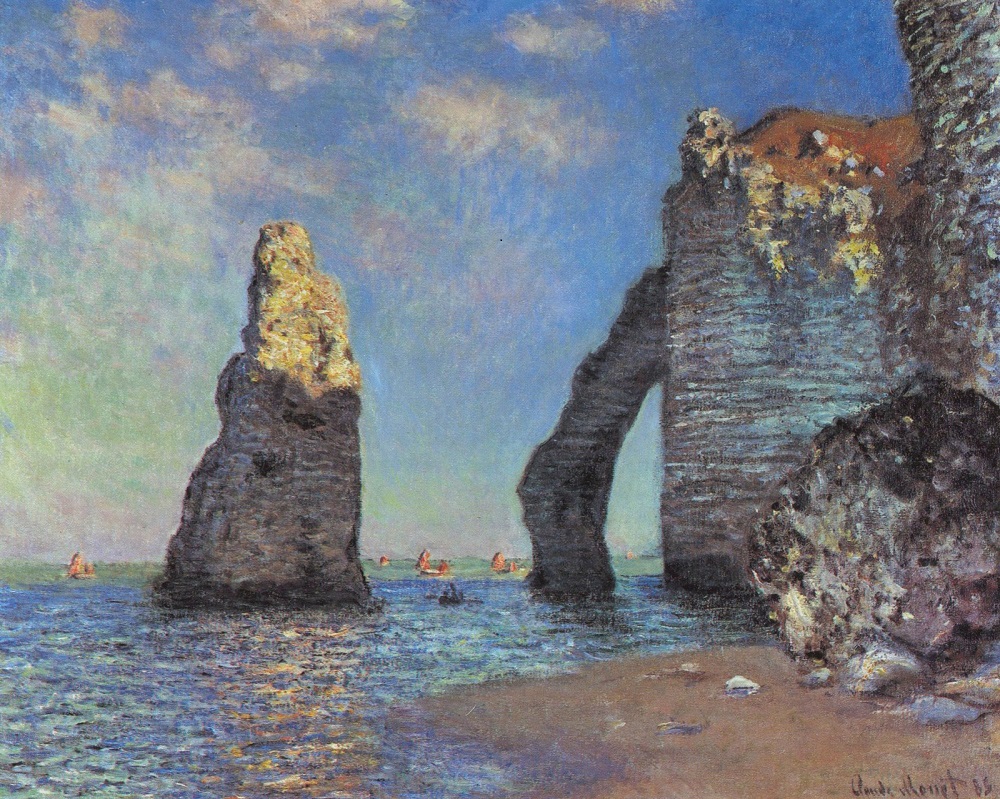
In mid September 1886, Monet traveled to the island of Belle-Île-en-Mer in Brittany. He fell in love with the dramatic, tempestuous coast with its raging tides and rocky landscape. He returned home, completed the paintings and exhibited them, with great success, the following year.
Discover more about Monet and Brittany
Houses and Studios of the Impressionists
Walking around an artist’s house and studio gives a wonderfully realistic feel of the painter, their life and work. The most visited, and well-known, is the house of Claude Monet in Giverny (see above).
Visit any of these other houses during the Normandy Impressionist Festival 2026; all are well worth a detour.
Jean-François Millet was born in 1841 in Gréville-Hague, northeast Normandy. The modest house is now a museum, recalling his childhood in the mid 19th century.
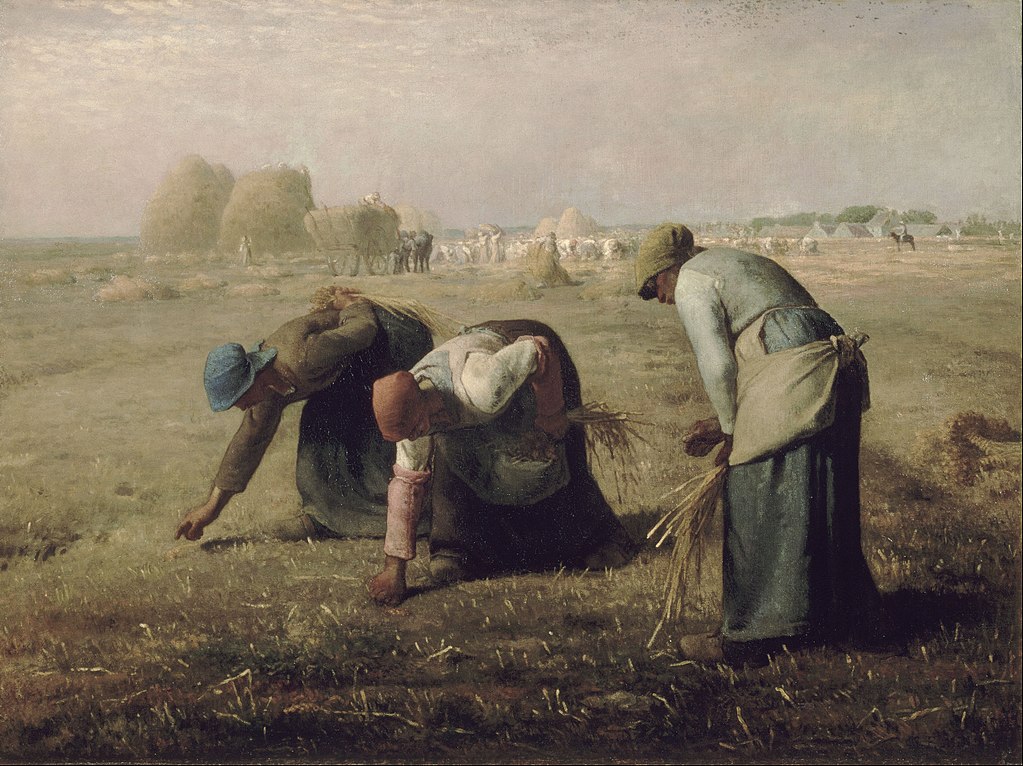
In 1849 he moved to Barbizon on the edge of the Forest of Fontainebleau and lived there until 1875. Here he painted the local rural life, in particular L’Angélus and Les Glaneuses, two canvases that have been exhibited around the world. The Millet Museum has his paintings as well as other Impressionist painters, engravings and prints.
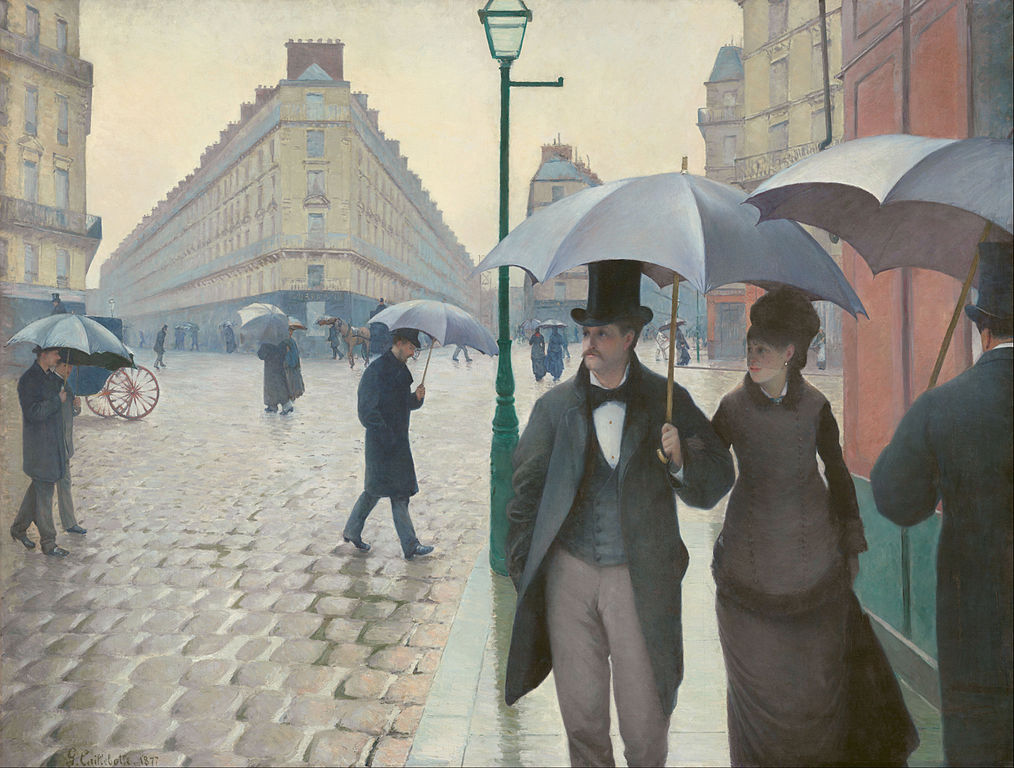
Gustave Caillebotte (1848-1894) lived in Yerres from 1860 to 1880. The large Caillebotte Museum south of Paris occupies his house. A visit takes you back to the late 19th-century and gives you the chance to see many of his works.
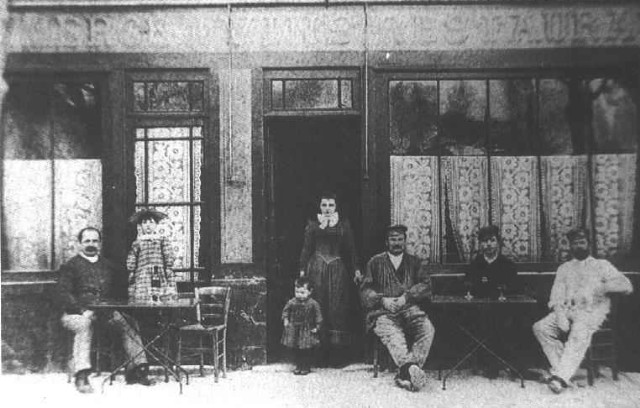
Vincent van Gogh (1853-1890) spent his final days at the Auberge Ravoux in Auvers-sur-Oise. He lived in the atmospheric room under the eaves of the house in a Paris suburb. Today it’s a restaurant; have lunch or dinner then see the room.
More about Vincent van Gogh in Paris.
More Impressionist Delights to Savour
There are plenty of events put on at the Impressionist Normandy festival.
Take a cycle tour around Giverny with a guide who knows the village well and makes sure you see all the major sites linked to Claude Monet.
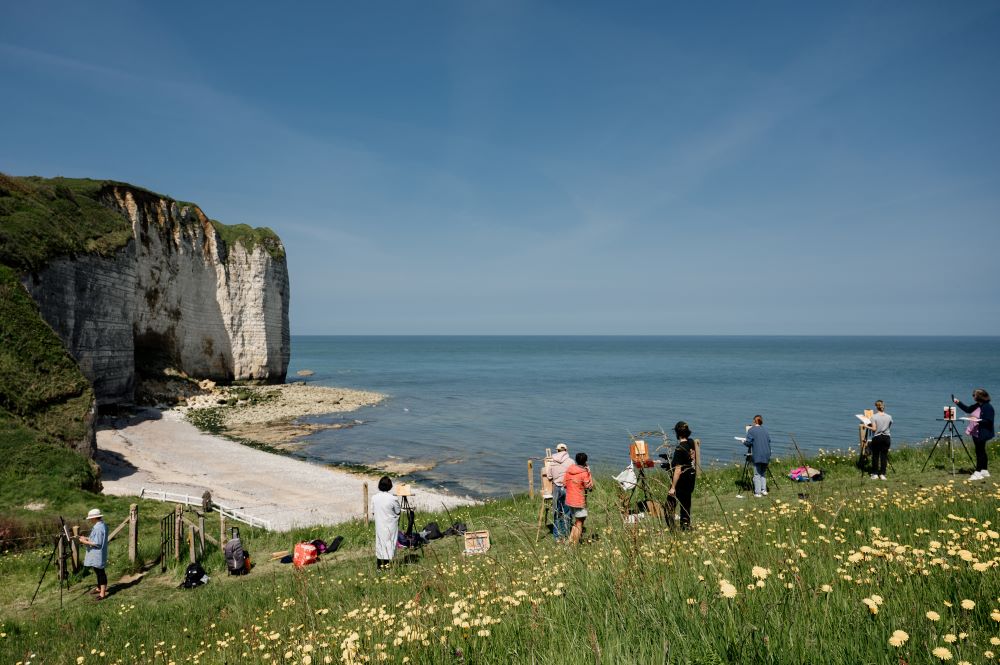
Try your hand at painting like an Impressionist. The Alabaster Coast provides the inspiration; you provide (hopefully) the artistic expertise, with an art teacher to guide you.
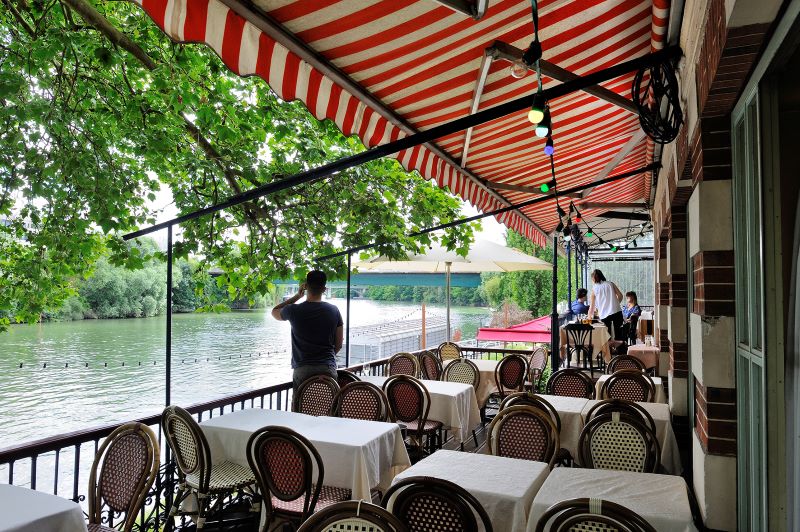
If you want to experience how the Impressionist painters spent their leisure hours, try the Founaise restaurant at Chatou. It’s a restaurant but the outside terrace recalls the guinguettes, open-air cafés often located beside a river where the atmosphere was casual and the food and drink offering a cheap and cheerful option.
Look at both these official websites for all the information on the wide-ranging exhibitions and events:
Impressionist Adventures
Normandy Impressionist Festival 2026 – Normandy Tourist Office
Normandy and Impressionism – A general overall look at the great Impressionist art movement and what to see in Normandy
Guide to the Impressionist Painters
Normandy Travel Guide – What to see and Do in Normandy
Getting to Normandy
