

 Mary Anne
Angers sits beside the Maine river in the western part of the Loire Vallery. It’s a delightful city, relatively unknown, perfect for a short break and just the place to relax. Much of its charm (and the feeling of wellbeing it gives you) comes from its status as the greenest city of France.
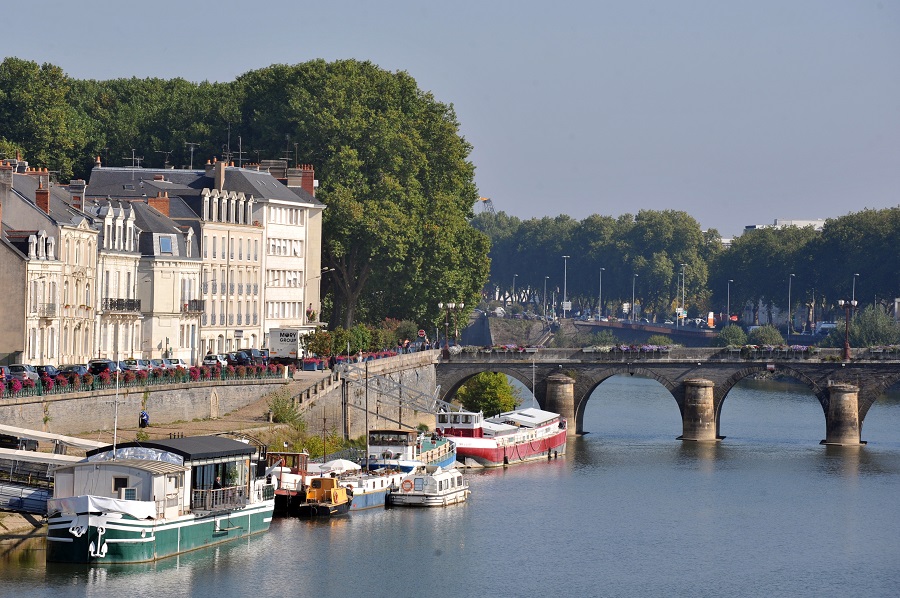
Taking a short Break in Angers
We arrived late afternoon after a trip through Normandy and checked in to the Oceania Hôtel d’Anjou. (See details below). Our room looked out onto the Jardin du Mail, the Hôtel de Ville then over the hills and far away. The fountains in the park were motionless and silent, shut down in the blistering July heatwave.
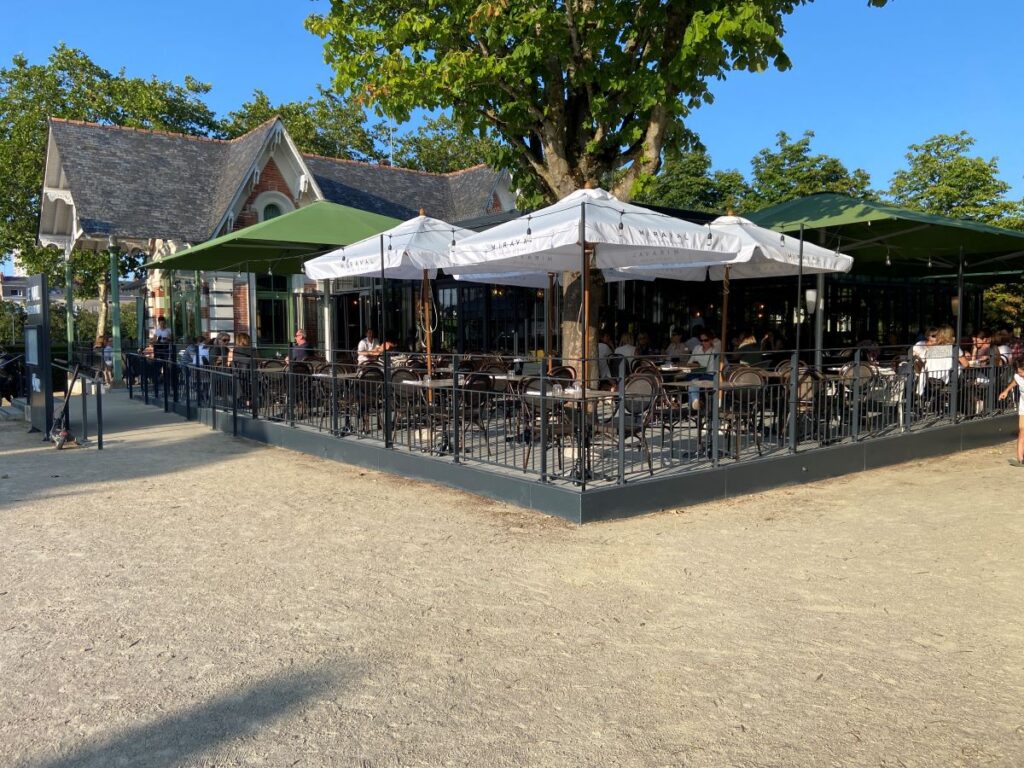
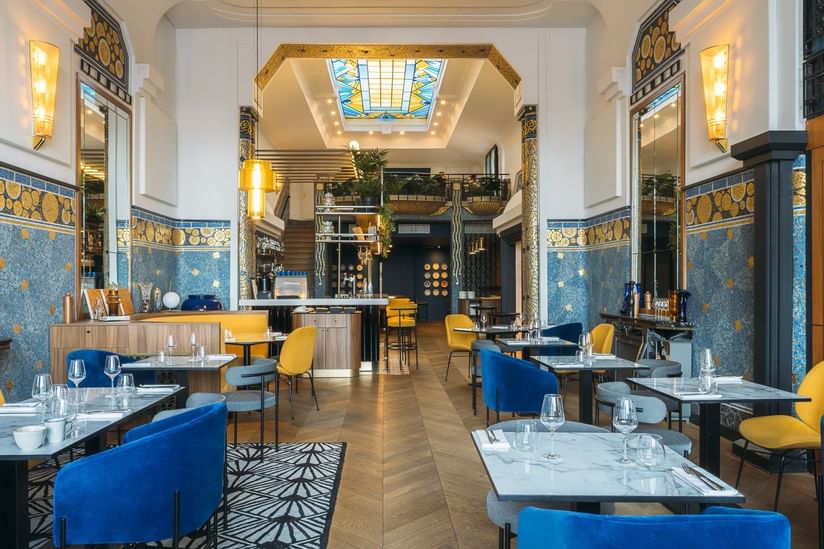
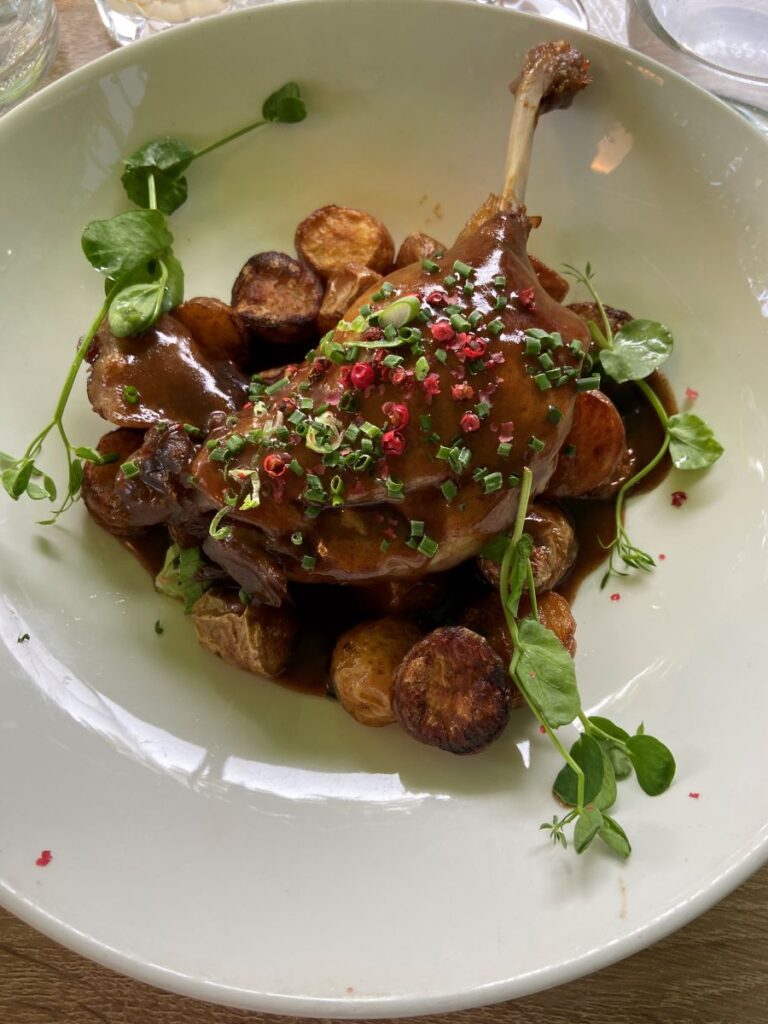
It was a 4-minute walk from the hotel over the burnt grass to Le Mail restaurant where soft lights glowed and cocktails were being shaken and stirred. The place was buzzing with locals savouring plates of fluffy light Mimosa eggs, duck paté with foie gras, kimchi sauce, pimento oil and honey followed by the likes of confit of duck, Iberian pork and plenty of fish dishes. As we ate on the terrace, the light slowly faded and all was well with the world. (See Le Mail restaurant details below.)
A Little History
If you’re allergic to history then skip this and go straight to What to Do and See in Angers. But this short history will, I hope, give some idea of the historic glory of Angers.
Plantagenet Power and Glory

It was those mighty Plantagenets who turned Angers into a powerhouse. In the 12th century, Geoffroi of Anjou married Matilda in Le Mans. Matilda was the daughter of Henry I of England, granddaughter of William the Conqueror and heiress to the throne of England. It was quite a match for Goeffroi. At its height, the Plantagenet Empire stretched from England and Scotland down to Spain. To the east it bordered Flanders, Champagne, Burgundy, Savoy and the Toulouse region. The family held the English throne until 1485, when Richard III died in battle and the Tudors took over.
Angers was important, but it was nearby Le Mans which was the capital of the great and powerful Plantagenet Empire. Even today Le Mans has a large beautifully preserved medieval quarter. Here’s more about Plantagenet Le Mans.
What to see and do in Angers
My partner and I went to Angers with very different interests. Alastair McKenzie runs Mechtraveller, a website for the mechanically minded (battles, planes, tanks, military museums and the like), while I can spend hours in museums and cathedrals tracing the figures of the past and looking at art – ancient and modern.
Angers provided attractions for both of us. As always there were places we would not have chosen but found fascinating. For Alastair it was the Tapestry of the Apocalypse; I was bowled over by the Museum of Military Engineers.
But I will start with my top picks.
Top Attractions in Angers
Château d’Angers
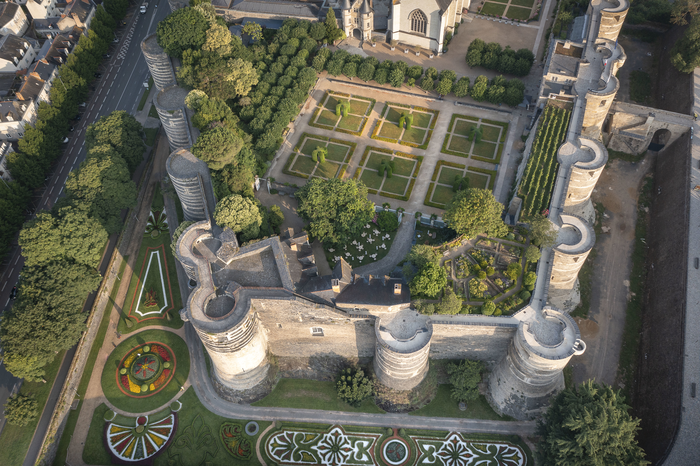
You can’t miss the massive fortress with its 17 huge round towers that punctuate the surrounding black-and-white slate and limestone walls. This royal fortress overlooking the River Maine takes you back to the city’s Neolithic beginnings from 4000 to 2500 BC, then to the Romans, great admirers of the good life with their heated bathrooms, fireplaces and wastewater drains. In the 9th century, the Counts of Anjou, threatened by the Normans, settled here, (and used the Roman’s heating system). More buildings were added in the ensuing centuries, impressive and comfortable for the nobles who lived here. The most recent addition is the modern building housing the extraordinary Tapestry of the Apocalypse.
Tour the Château d’Angers
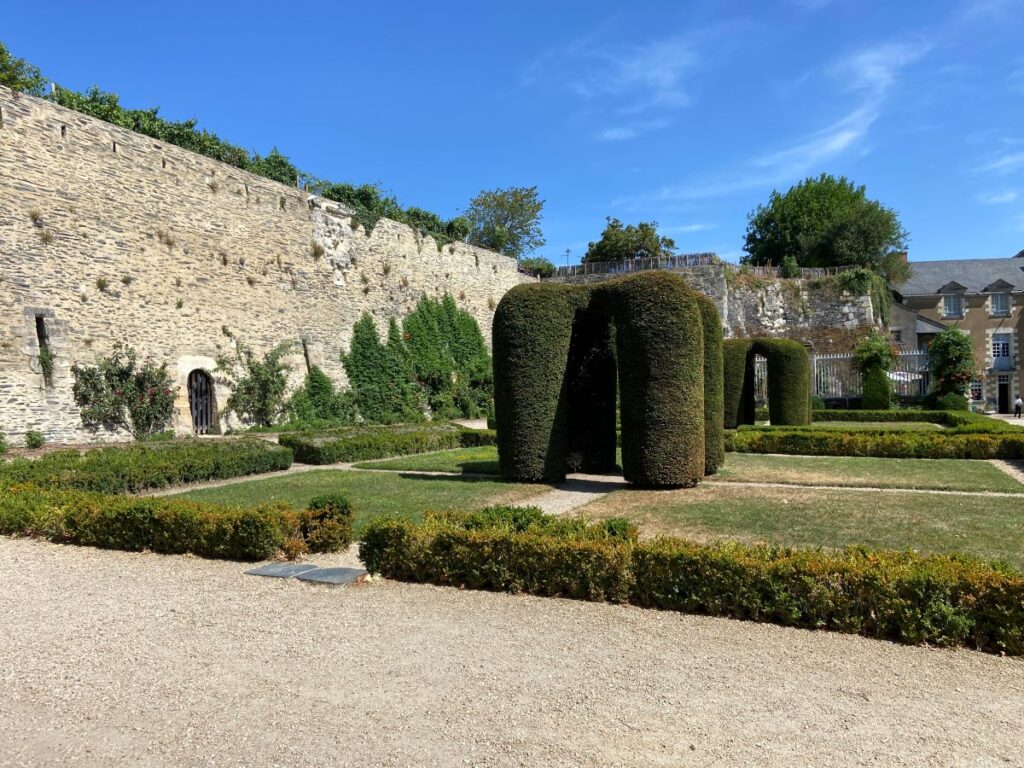
Like so many medieval châteaux, walk through the drawbridge and you’re in a charming landscape of small formal gardens, a vineyard, and impressive buildings. You get an idea of life in the 15th century in the central royal residence where the stone-walled rooms are small, heated by huge fireplaces. The chapel, built around 1410, is a sainte chapelle, containing a splinter of the True Cross. It’s larger than many, with Angevin vaulting and remarkable traces of frescoes on the walls. The Kings, Queens and Counts might have been religious, but the practicalities had to be considered: the private oratory is heated by its own fireplace.
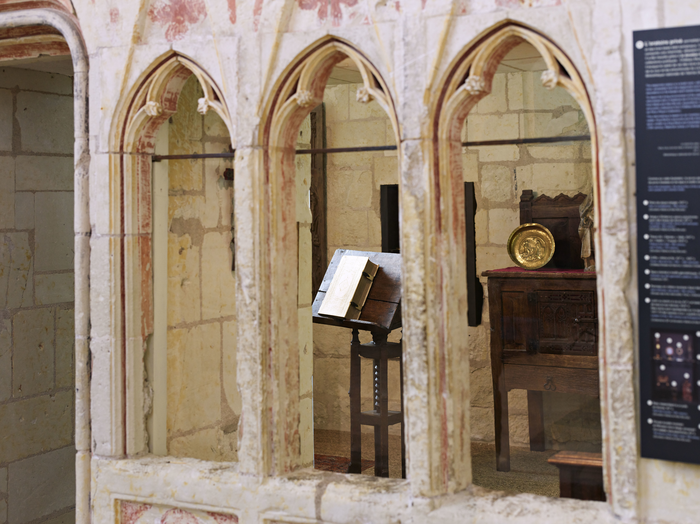
Climb the steps to the ramparts and walk along the walls for a superb view of Angers and an understanding of why the Counts of Anjou felt safe in this impregnable castle.
Traces of the past are everywhere with some of the most poignant appearing in the graffiti of prisoners who were incarcerated here from the time of Louis XIV to Napoleon III. Their names, dates and messages might be carved on the walls, but what happened to these sad souls remains unknown.
The Tapestry of the Apocalypse
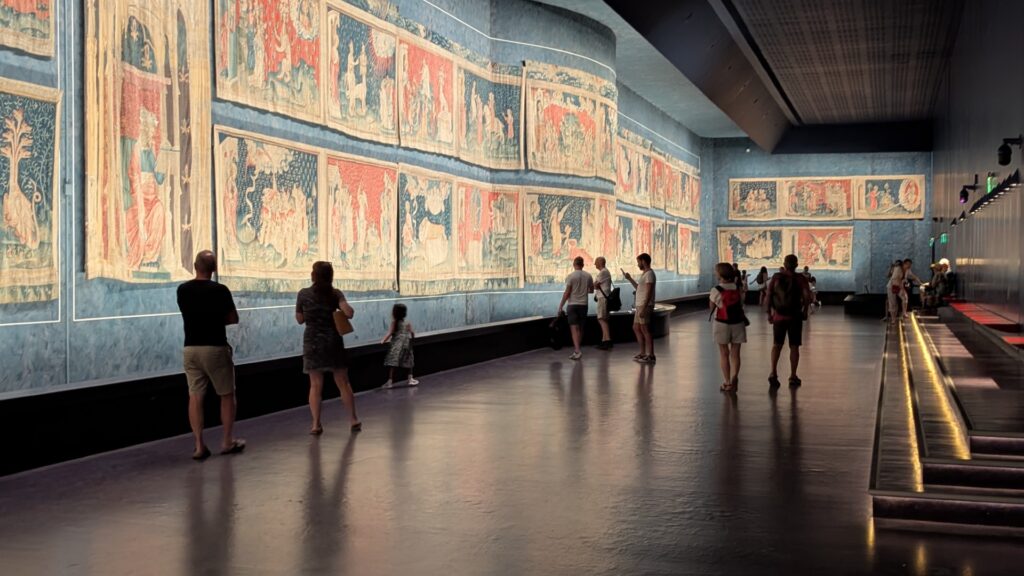
A specially constructed gallery houses the extraordinary Tapestry of the Apocalypse. It’s a world-class attraction but is relatively unknown to foreign visitors to France.
Woven in Paris between 1373 and 1382 for Louis I of Anjou, the Tapestry of the Apocalypse illustrates Revelations, the last chapter of the New Testament of St. John.
It’s dark as you walk in and it takes a moment or two for your eyes to adjust and your mind to take in the series of images of the end of the world. Mythical beasts, dragons, demons, angels and gallant knights, the horsemen of the Apocalypse and fortified towns tell a host of stories. To the medieval mind these images and tales would have been terrifying but they would have understood the politics behind them. France was in the middle of the Hundred Years’ War with England and had also suffered huge mortality rates from the Black Death that entered France from Italy through the port of Marseille.
Take a guided tour or the audio guide to get some of the tales and clues, and for the truly dedicated I would advise a dip into the Book of Revelations beforehand.
The largest surviving set of medieval tapestries in the world at 103 metres long it was listed by UNESCO in the Memory of the World Register in May 2023.
Read the full story of the Tapestry of the Apocalypse here.

Château d’Angers
2 Prom. du Bout du Monde
49100 Angers
Tel: +33 2 41 86 48 77
Website
Open daily May 2-Sep 4 10am-6:30 pm; Sep 5-April 30 10am-5:30pm. Closed Jan 1; May 1; Dec 25
Admission May 2-Sept 4 €14; Sep 5-April 30 €11. Included in the Angers City Pass
The Museum of Fine Arts/Musée des Beaux-Arts
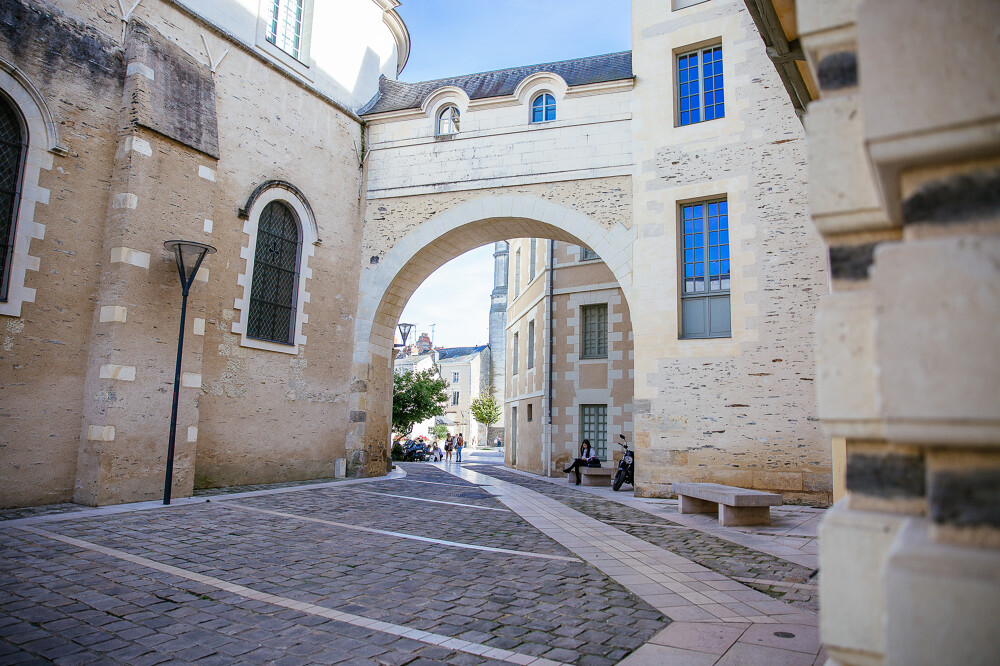
The rich collection is housed in the mansion of one Olivier Barrault, Viscount of Mortain, mayor of Angers and treasurer of the Brittany region, built between 1486 and 1493. Today it has two sections: the History of Angers and Fine Arts.
The History of Angers
The history of Angers is an amazing hotch-potch of activities and stories, as so many city museums are. From the first traces of people in Angers in the Neolithic age to today, it covers all aspects of the city, some of which you’ll experience as you walk through this easy-to-navigate town.
In the museum I saw stand-out objects like the mosaic floor from a Roman villa; intricate jewellery; 9th-century glass; beautiful cherry brandy and liqueur bottles…in fact something to interest everyone. Paintings and plans show the economic life of the city since the 12th century: its great fairs, its commerce and trade. There’s a fascinating section dealing with the horticulture of Angers covering the birth of different fruits, and the gardens and orchards that go back centuries. Today Angers is the leading European centre for horticultural research.
The Fine Art Collection
The second section covers fine art from the 14th to the 21st Century. It’s a rich collection including those old Flemish master which I personally love, magnificent Greek ornaments and a whole lot more.
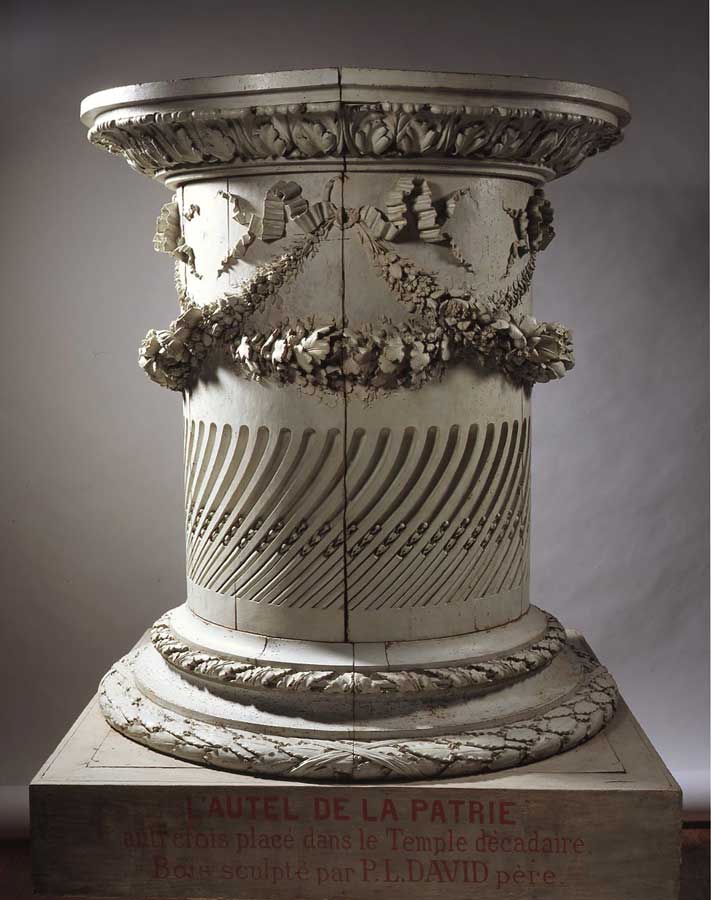
And there are some intriguing items. My attention was caught by the Autel de la Patrie. This Altar of the Fatherland was carved out of oak in 1798 by Pierre-Louis David, a staunch Republican who fought against the Royalist supporters in the Vendée during the French Revolution. It was placed in the cathedral in Angers (officially renamed the Temple of Reason) celebrating the new cult of the Supreme Being. This civic festival was instituted by the French Revolutionary Maximilien Robespierre to replace Roman Catholicism and the rival atheist Cult of Reason. Even the most revolutionary must have a faith of some kind as a reason for life.
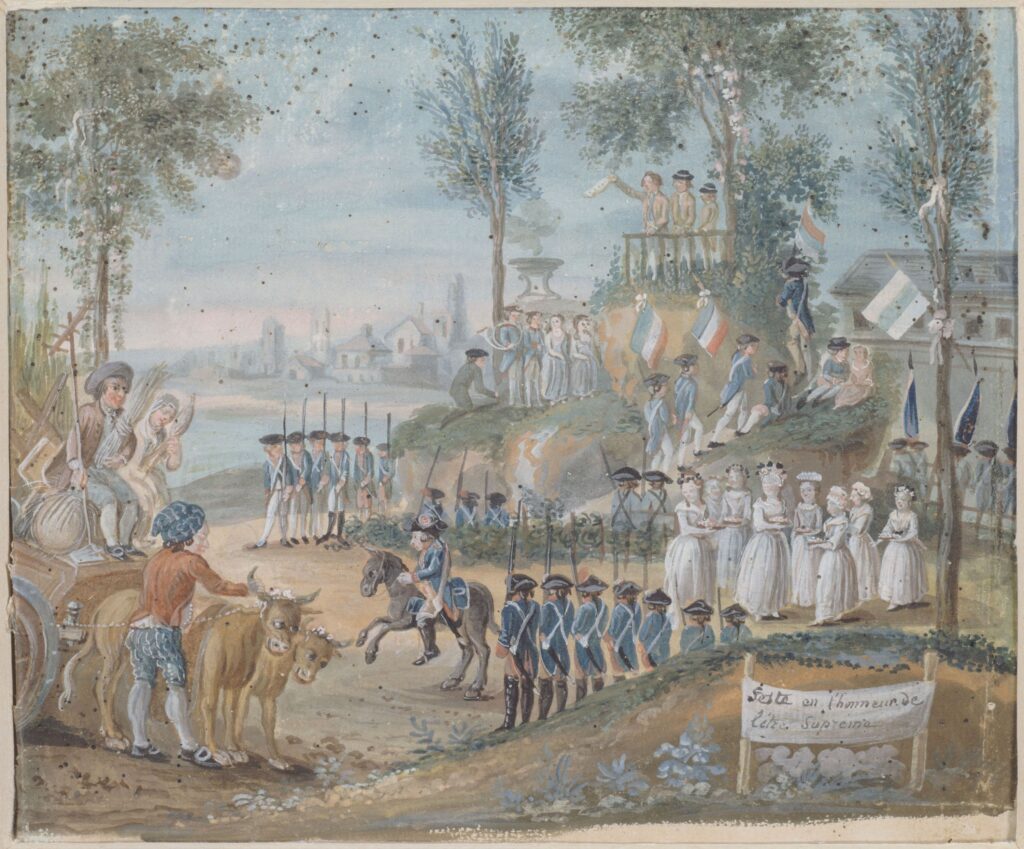
Musée des Beaux-Arts
14 rue du Musée
49100 Angers
Tel: +33 (0)2 41 05 38 00
Website
Open daily Tues-Sun 10am-6pm. Closed Jan 1; May 1; Nov 1 & 11; Dec 25
Admission Adult €4; concessions €2; free for those under 26 and for all 5-6pm. Included in the Angers City Pass
Galerie David d’Angers
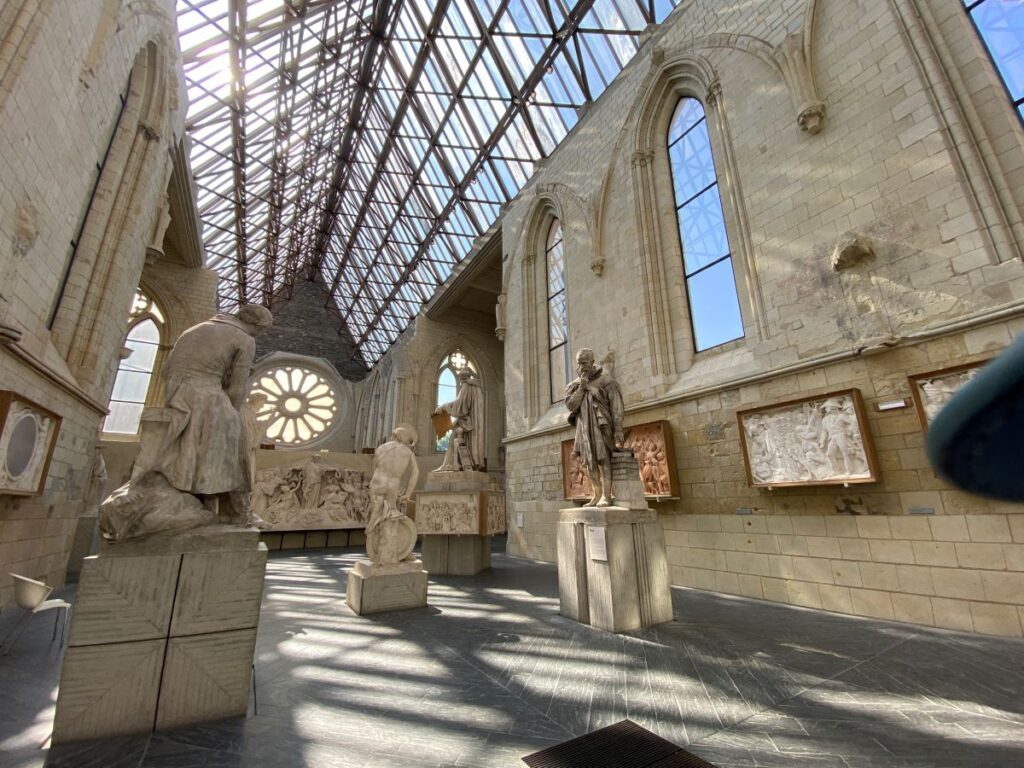
From the windows of the Fine Arts Museum, you can see a church, its roof now replaced by a huge glass structure. Apart from the garden, it is the only part left of the once rich and powerful Abbaye Toussaint d’Angers. Today it houses the Galerie David d’Angers, one of the most important sculptors of the first half of the 19th century. It’s dedicated to the statues of Pierre-Jean David d’Angers (1788-1856), the son of the Pierre-Louis David who carved the Altar of the Fatherland.
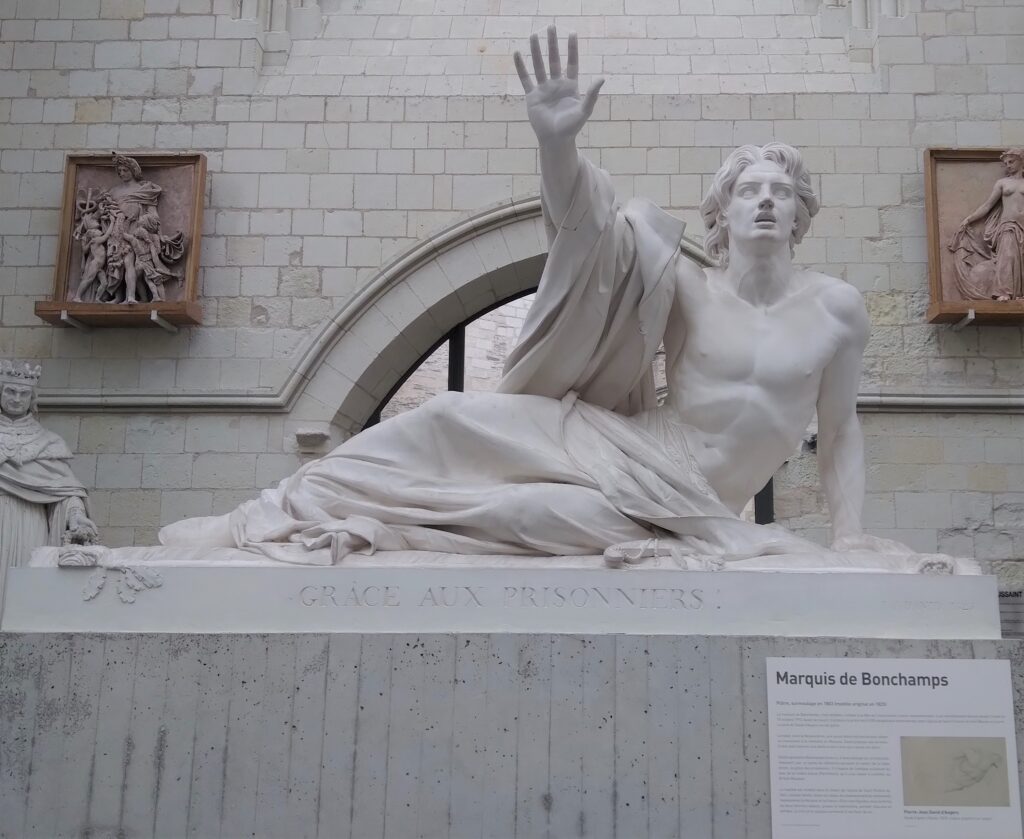
David was a prolific sculptor, producing monumental works of figures from Gutenberg to the Royalist Marquis de Bonchamps, who surprisingly pardoned the Republican prisoners (including David d’Angers’ father).
This excellent gallery has an upstairs viewing platform so for once you can look down on the sculptures rather than looking up at them.
Galerie David d’Angers
33 bis rue Toussaint
49100 Angers
Tel: +33 (0)2 41 05 38 90
Website
Open Tues-Sun 10am-6pm. Closed Jan 1; May 1; Nov 1 & 11; Dec 25
Admission Adult €4; concessions €2; free for those under 26 and for all 5-6pm. Included in the Angers City Pass.
Cathédrale Saint-Maurice d’Angers
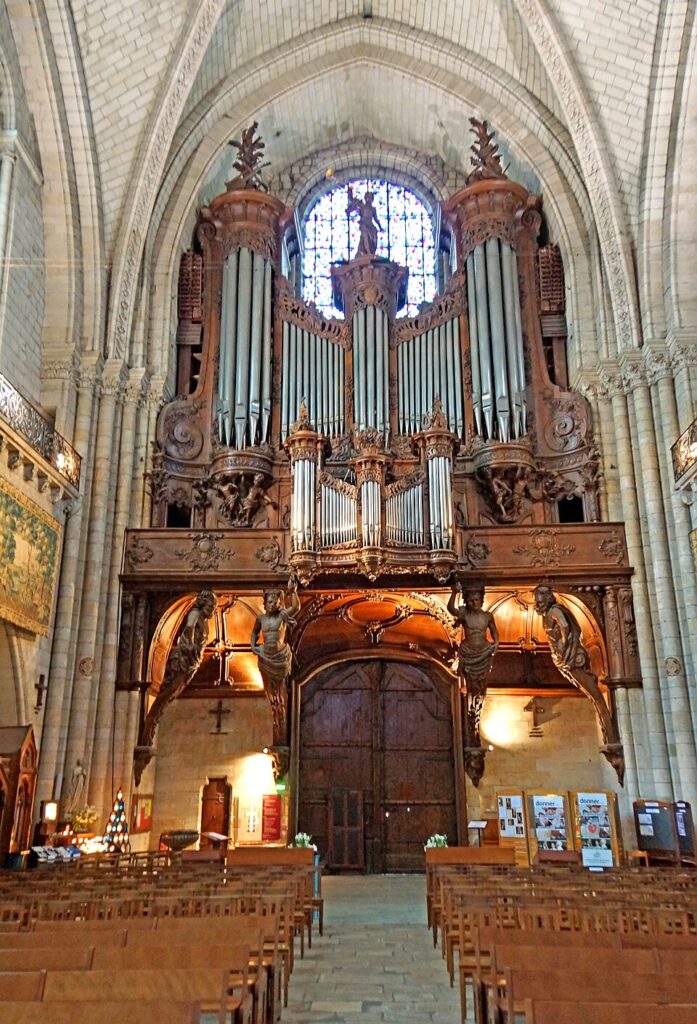
Walk up from the river for an impressive view of the cathedral. Built between the 11th and 13th centuries in Angevin Gothic style, its vaulted ceilings soar above you; the medieval stained glass windows cast coloured patterns on the stone floor. If you can, go to a concert or listen every Monday and Thursday as the stops are tested on this sweet sounding organ, installed in 1617.
A false front has been installed in front of the main door; some Angers inhabitants love it; others hate it. Make up your own mind about it.
Cathédrale Saint-Maurice d’Angers
4 rue Saint Christophe
49100 Angers
Tel: +33 (0)2 41 87 58 45
Website
Open Daily 9am-7pm
Admission Free
Walk the Old Town of La Cité
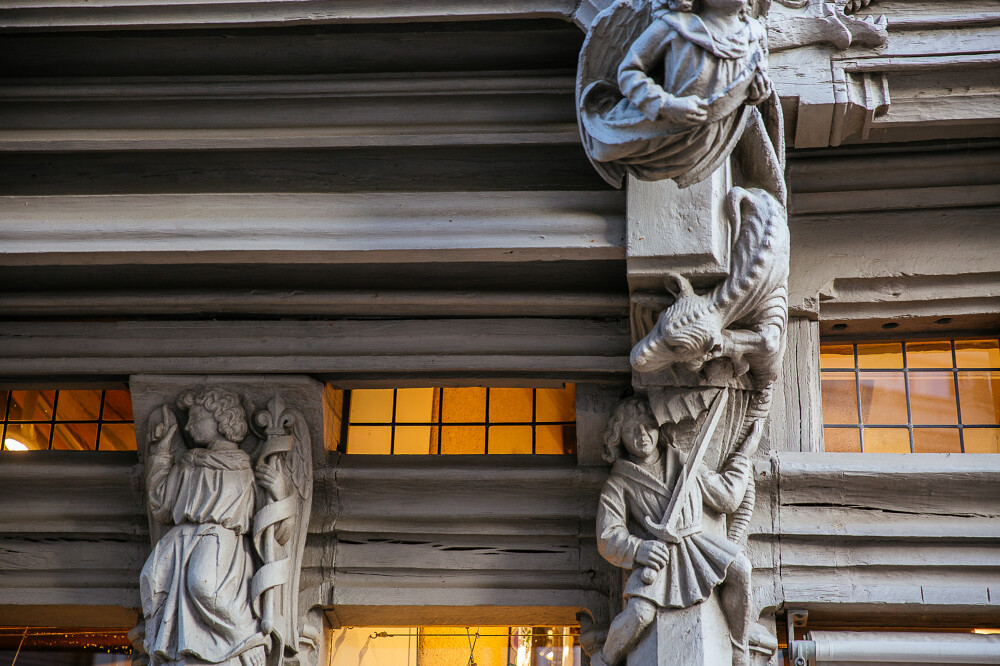
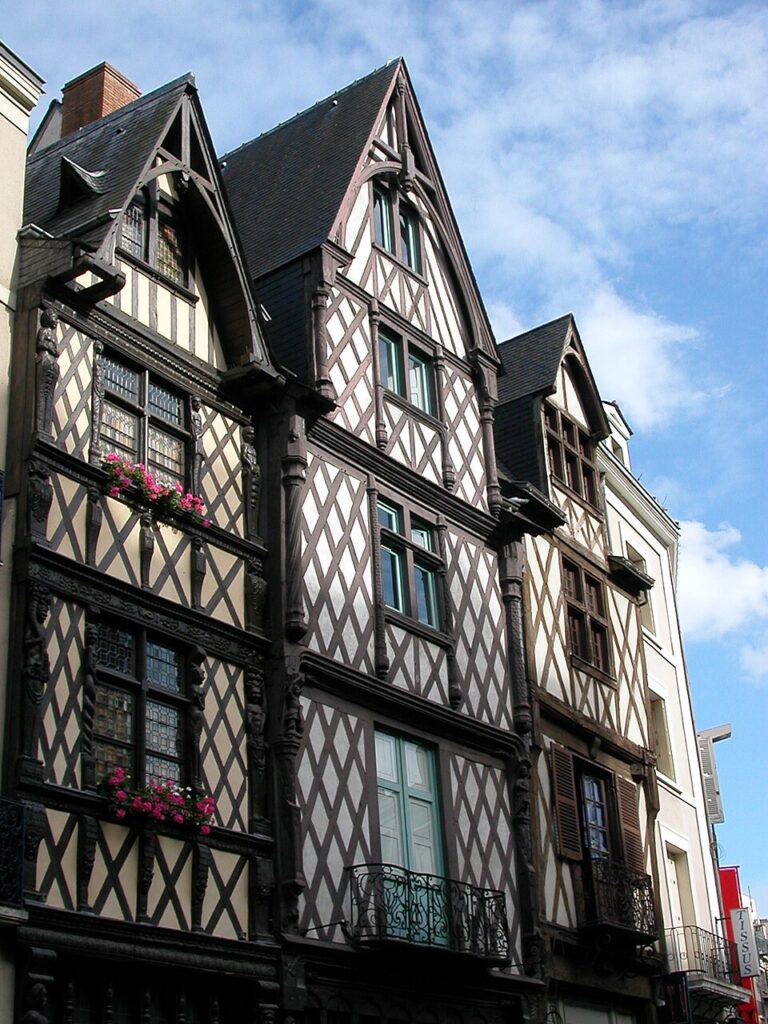
Cobbled streets with half-timbered house cluster in the medieval area around the Château, known as La Cité. Just wander through them, but don’t miss the extraordinary figures carved on Maison d’Adam on Place Saint-Croix. Cross the river on the Pont de Verdun to walk along Rue Beaurepaire past the home of apothecary Simon Poisson. Four allegorical figures were carved on the façade representing friendship, generosity, science and magnificence.
Museum of Jean-Lurçat and Contemporary Tapestry

Take the tram over the river to this extraordinary museum. It’s housed in the former 12th century St. John’s Hospital in the Great Hall for the Sick where the magnificent Gothic architecture provides the best setting for the dramatic tapestry, Le Chant du Monde (The Song of the World) tapestry by Jean Lurçat (1892-1966).
Jean Lurçat was born in the 19th century, learning art along with the likes of Matisse, Cézanne and Renoir. He began designing tapestries in 1917 and by the 1930s was an internationally acclaimed figure. In 1937 the sight of the Apocalypse Tapestry brought the superb art of tapestry making to his attention. Two years later he moved to the traditional city of tapestry, Aubusson, to help revive an art which had fallen out of favour and fashion.
The nuclear threat which he witnessed in World War II with the bombing of Hiroshima had a profound effect on him, inspiring the design for The Song of the World. This 80 metre-long, 10-panelled tapestry starts with the fear and horrors of nuclear warfare, then continues with renewal and hope at the end, echoing the story of the Tapestry of the Apocalypse. It was woven in Aubusson between 1957 and 1966 during the Cold War, but Jean Lurçat died before it was finished.
The museum’s contemporary tapestry section has around sixty works, telling the story of this particular art form from the 1950s to today.
The Le Chant du Mond tapestry is on loan to the Aubusson Museum until the end of 2026 when it will return to Angers. In the meantime you’ll see the Tolkien-inspired tapestries here.
Museum of Jean-Lurçat and Contemporary Tapestry
4 boulevard Arago
49100 Angers
Tel: +33 (0)2 41 24 18 45
Website
Admission Adult €6, concessions €3, free to under 18 years. Included in Angers City Pass
Open Tues-Sun 10am-6pm. Closed Jan 1, May 1, Nov 1 & 11, Dec 25
Musée du Génie/Museum of Military Engineering
Alastair’s choice of the museum of Military Engineering was a surprise. It belongs to the army and is located outside the centre. It’s not particularly well signposted as a museum and there’s no public parking in the museum grounds; you take potluck in the side streets.
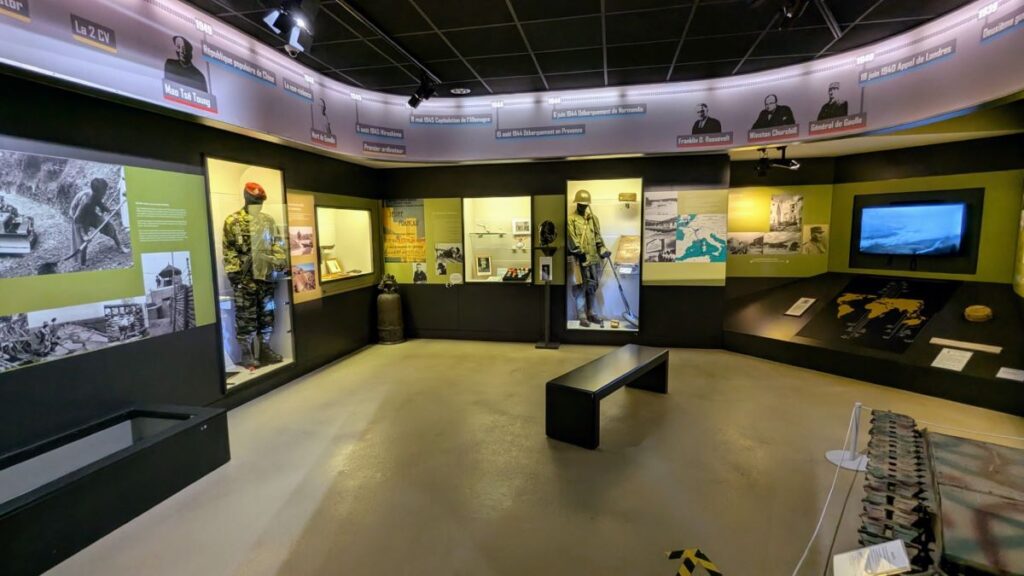
So first impressions are not ideal. But I left as a firm fan. For a start it has something I have not seen before – a timeline that stretches around the top of the walls as you make your way through the different sections, placing world events in context from BC to 2013.
In 800 Charlemagne was crowned; in the same year the Angkor kingdom was established. In 1485 Gutenberg invented the mechanical movable-type printing press; in 1492 Columbus crossed the Atlantic. In 1927 Charles Lindbergh flew solo across the Atlantic and Albert Calmette discovered a vaccine against TB. We learn about world-changing events in a vacuum; this timeline gives you a different perspective. The randomness of the timeline events makes the world a smaller but more intriguing place.
It’s so intriguing that we almost missed some of the exhibits and people associated with the army…like Vauban (1633-1707) ‘the father of military engineering’. Visitors to France find it difficult to miss one of Vauban’s forts; they were built throughout the country. But did you know that Vauban’s insistence that sappers wear a cuirass and a pot-en-tête (military helmet) led to the decoration on the buttons that sappers have worn for 250 years? And look at the cuirass on display here and you see a ‘hole’. Before a soldier wore the armour for the first time, a musket bullet was fired into the breastplate from the front as a test.
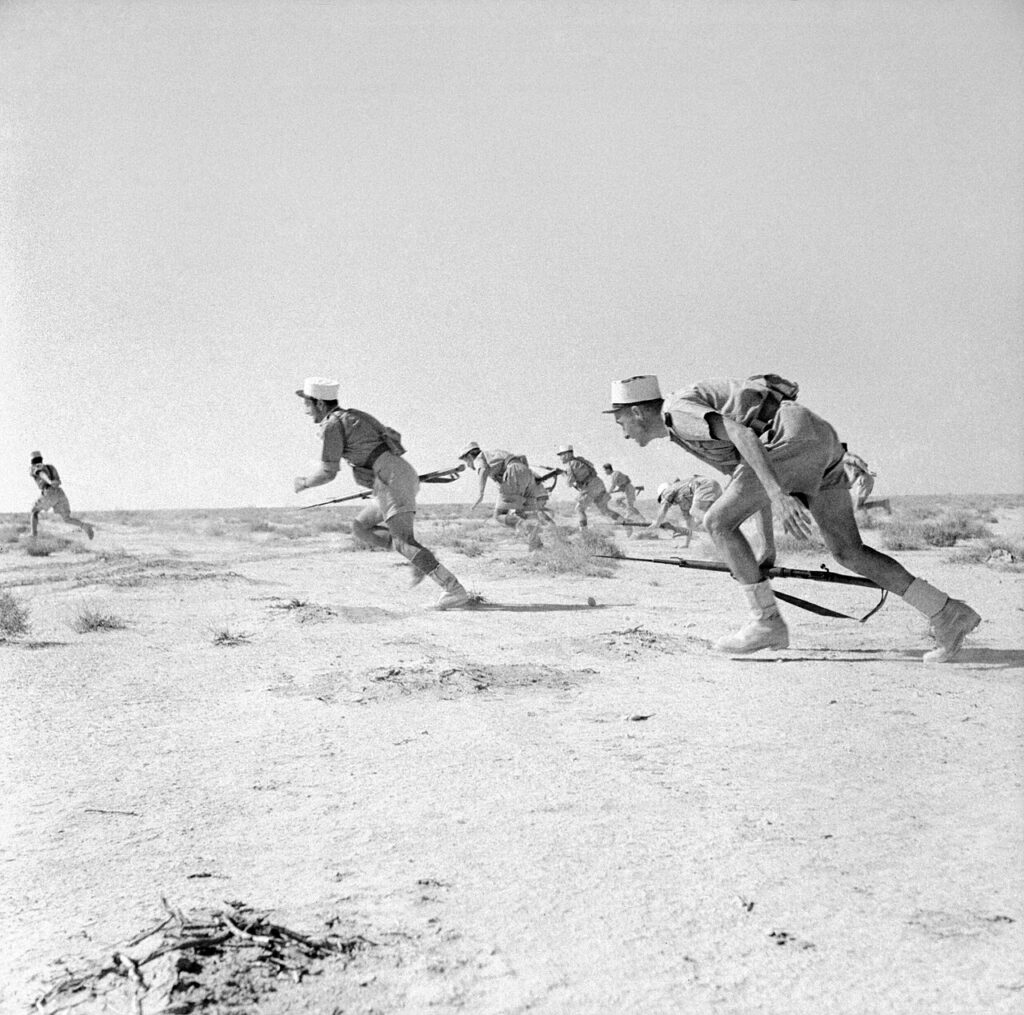
The displays and uniformed figures are conventional, but explore the history behind them…like the reference to the engineers at Bir Hakeim where the First Free French Foreign Legion Division blocked General Rommel’s troops for16 days from May 26 to June 11, 1942. The purpose of the defence? To allow the British troops at Tobruk to escape. The Free French force, made up of French Marines, Foreign Legionnaires, and soldiers from French African colonies such as Senegal, Madagascar under Brigadier General Marie-Pierre Koenig, numbered around 3,700 men; the Axis force of Germans and Italians facing them numbered around 32,000 to 35,000.
After visiting the museum I did some research on Bir Hakeim where French military engineers had spent three months creating field fortifications and mining the ground, building 1,200 entrenchments, foxholes, gun emplacements and underground bunkers. It was an incredible defence with a daredevil end to it as the French troops escaped in armoured cars and ambulances. General Koenig was driven to safety by Susan Travers, an English ambulance driver and the only woman at Bir Hakeim. “It is a delightful feeling, going as fast as you can in the dark,” she later remembered. “My main concern was that the engine would stall.”
The major battle that appears in the first part of the film De Gaulle (La Bataille de Gaulle). I urge you to see the film; it’s brilliant and depicts de Gaulle and the Free French in a totally new light. And it gives you a new respect for the military engineers. As Rommel said of the battle: “seldom in Africa was I given such a hard fought struggle.”
There’s more in the museum: the Diplodocus, or track-laying crane; the Bailey bridge; mine clearing and more. This small museum is well worth a visit and I hope that, like me, it will encourage you to delve deeper into the world of the military engineer.
Where to Stay in Anjou
We stayed in the 4-star hotel and spa Oceania Hôtel d’Anjou. Spacious, comfortable bedrooms are decorated in dark chocolate and blue colours; bathrooms with white marble walls are well equipped; there’s a small spa and a handsome Art Deco bar where breakfast is served. The hotel is located above the main city, within easy walking or tram distance of all the major attractions. It has an underground garage, but if you’re planning on using it, get precise directions as to where it is. It’s difficult to locate!
Oceania Hôtel d’Anjou
1 Bd du Maréchal Foch
49001 Angers
Tel: +33 (0)2 41 21 12 11
Website
Doubles from €99 off season to €557 full season
Most of the main hotel groups have properties in Angers. It’s a big convention city with plenty of accommodation in all price ranges. Here’s my guide to budget hotel chains in France.
Where to Eat in Angers
Our favourite was Le Mail (see above for a description). The cooking is excellent and very good value.
Le Mail
2 Av. du 11 Novembre 1918
49000 Angers
Tel: +33 (0)2 41 25 46 27
Website
Entreés from €10 to €12; main dishes from €22 to €25; desserts €10 to €12
Open Breakfast and Bar; Restaurant Mon-Sat Lunch & Dinner; Sun Lunch
Try a Guinguette
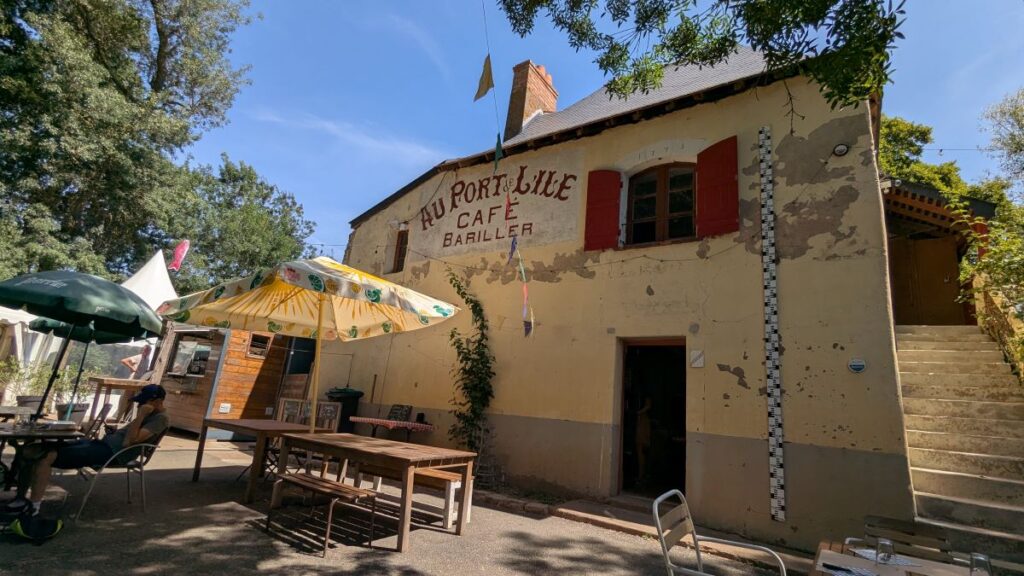
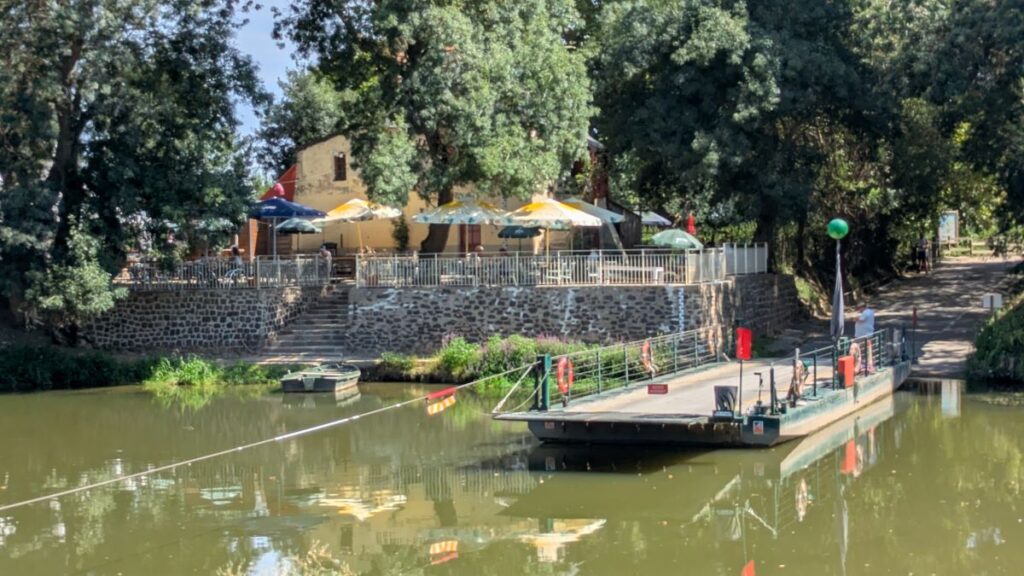
We had a very good lunch at the delightful guinguette (riverside café/bar/restaurant) Le Port de l’Ile. Drive for around 10 minutes from central Angers, park in the public car park, then board the ferry to cross the small river. The energetic can work up an appetite by pulling the cable that propels the ferry. Sit on the terrace, consuming the likes of a planche of charcuterie and cheeses or rillettes then burgers with some of the best chips around. The restaurant has a full menu at lunch; in the evenings there’s a choice of tapas and planches. It’s a remarkably peaceful, friendly local place.
Le Port de L’Ile
Chemin Bas d’Epinard
49100 Angers
Tel: +33 (0)2 41 39 85 29
Website
Open Daily noon-7.45pm
Here’s a list of guinguettes of all kinds along the river in Angers.
Practical Information
Getting Around Angers
By Tram
The Angers tramway has 3 main lines (A, B and C).
Line A crosses Angers from northeast to southwest, linking the Monplaisir and La Roseraie districts.
Lines B & C links the main economic, university and main attractions.
By Bus
The Irigo network, which manages public transport in Angers, operates a comprehensive service linking not only the city, but also the surrounding communes. With nearly 30 regular routes, you can easily access tourist sites, business parks or simply get around the city. For night owls, the network offers night buses, perfect for returning home after a night on the town.
Tickets
Angers Tourist Office sells 24-hour tickets and 10-journey tickets valid on the entire Irigo bus and tram network.
More information on Getting around Angers
By Bicycle
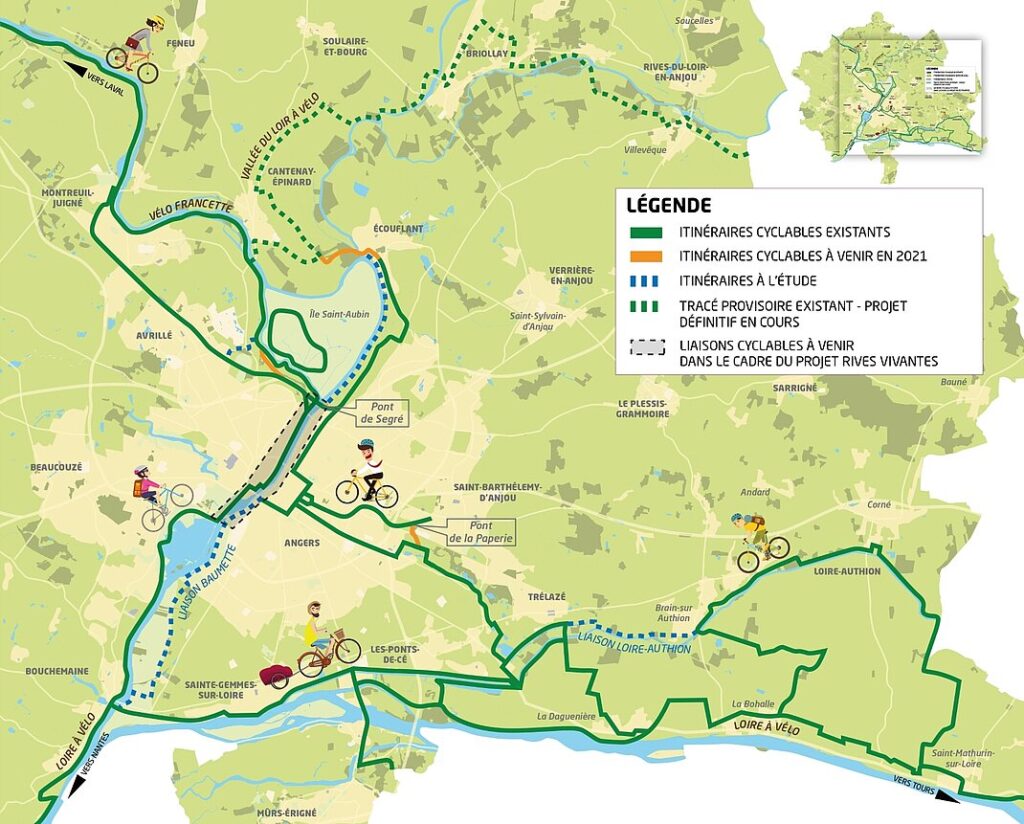
Angers Loire Métropole offers a network of cycle paths.
Angers City Pass
If you’re spending any time in Angers, the best value for attractions is the Angers City Pass. Choose from 24 hours (3 sites 19/21 euros low season/high season), 48 hours (4 sites 26/29), 72 hours (6 sites 35/42). It also gives you a 2e ticket for 24hour bus and tram journeys instead of 4.60. Buy it at the Tourist Office.
Angers Tourist Office
7 Pl. du Président Kennedy
49100 Angers
Tel: +33 (0)2 41 23 50 00
Website
Getting to Angers
We travelled to Angers taking Brittany Ferries from Portsmouth to Caen. From there it was a 250km/155mile, 2 hours 25 min drive on a toll autoroute to Angers.
Ferries to France from the UK
By TGV Train
TGV train services are very frequent, departing from or stopping off at Angers Saint-Laud SNCF station.
Here are the main destinations and train journey times:
35 minutes from Nantes
52 minutes from Tours (Saint-Pierre-des-Corps train station)
less than 90 minutes from Paris-Montparnasse
2h20 from Paris Charles de Gaulle (direct TGV)
4h from Lyon
3h30 from Lille
4h from Bordeaux
4h10 from Brussels (Thalys / TGV)
By Car
If you’re travelling by car, Angers can be reached via the A11, A85 and A87 autoroutes (tolls). Here are the journey times by car from the major towns around Angers:
Nantes-Angers: 90 kms/1 hour
Tours-Angers: 130 kms/1 hour 15 mins1h15
Rennes-Angers: 128 kms/1h45
Paris-Angers: 296kms/3 hours
Bordeaux-Angers: 396 kms/4 hours
By Air
To get to Angers by plane from London, you should fly into Nantes – Atlantique Airport (NTE), the closest major airport with regular direct flights. From Nantes-Atlantique to Angers takes around 1 hour by taxi (98kms/61 miles). To go by train you have to catch a bus from the airport to Gare Sud, then a regular train. Or by coach take a BlaBlaBusCoach or Flixbus taking around 1 hour 50 mins.
From London
Ryanair and easyJet offer direct flights from London airports (like Gatwick and Stansted) to Nantes. Flight Time: Around 1 hour and 25 minutes.
From Paris
Air France is the best major airline from Paris Charles de Gaulle to Nantes with a good range of fares and times. Flight Time: 1 hr 10 mins.
By Bicycle!
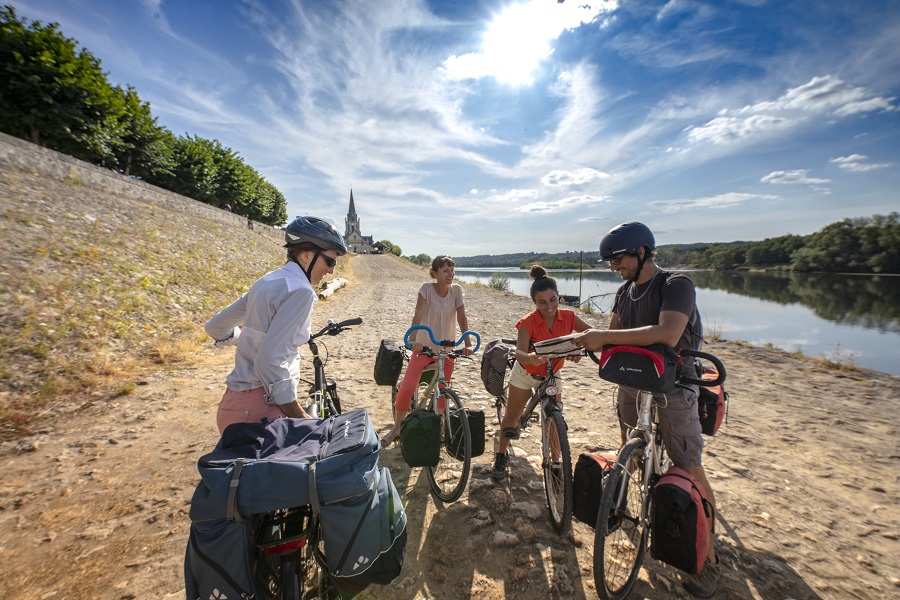
Yes, you can get to Angers by bicycle on the famous Loire à Vélo cycle trail which goes from Nevers to Saint Nazaire. It takes in Angers, between Saumur and Nantes.
Here’s my article on the whole trip from source to sea; where to stay, eat and more. Loire Valley Cycle Route.
More about the Region’s Cities and Attractions
Le Mans Guide – A Tale of Two Cities
24 Hours of Le Mans – The Race and The Museum