
 Mary Anne
Loches is a delightful city to visit with a Royal City encompassing an imposing defensive Keep and Royal Residence, historic gates and ramparts and plenty of glorious old buildings. Add an excellent market, wonderful views, an eccentric, once mighty village over the river, and just outside, the best bed and breakfast I have encountered in France. So why is Loches not better known?
Loches sits on the Indre River in Touraine, a little distance from the grand, much-visited châteaux of the western Loire Valley. If you’ve been to Chenonceaux, Azay-le-Rideau, Chinon and the like and want to see a different château town, turn south and visit Loches. You won’t be disappointed; Loches is well worth a visit.
Loches is one of France’s most beautiful towns and is listed in the Most Beautiful Detours of France 2026 book, so there’s really no excuse. And because of its location, it isn’t overrun by tourists.
The Story of Loches
Loches was founded, as were so many towns in France, by local monks and a hermit who in the early 500s established the Saint-Ours monastery in this part of the western Loire Valley. Fast forward five centuries to the splendidly named Foulques III, Count of Anjou (970–1040), one of the first great builders of medieval castles. Take a guided tour around Loches and everywere you’ll see the work of Foulques Nerra, or Foulques the Black as he was named.
Foulques was a colourful character who built around 100 castles and abbeys in the Loire Valley, had two wives, fathered three children, and undertook four pilgrimages. He was a fearsome warrior, a scourge of his enemies and deeply feared by everyone – even his immediate family and friends.
Better known is his grandson Geoffrey Plantagenet, who married Matilda, daughter of Henry I of England and began the Plantagenet line of English Kings.
What to See and Do in Loches
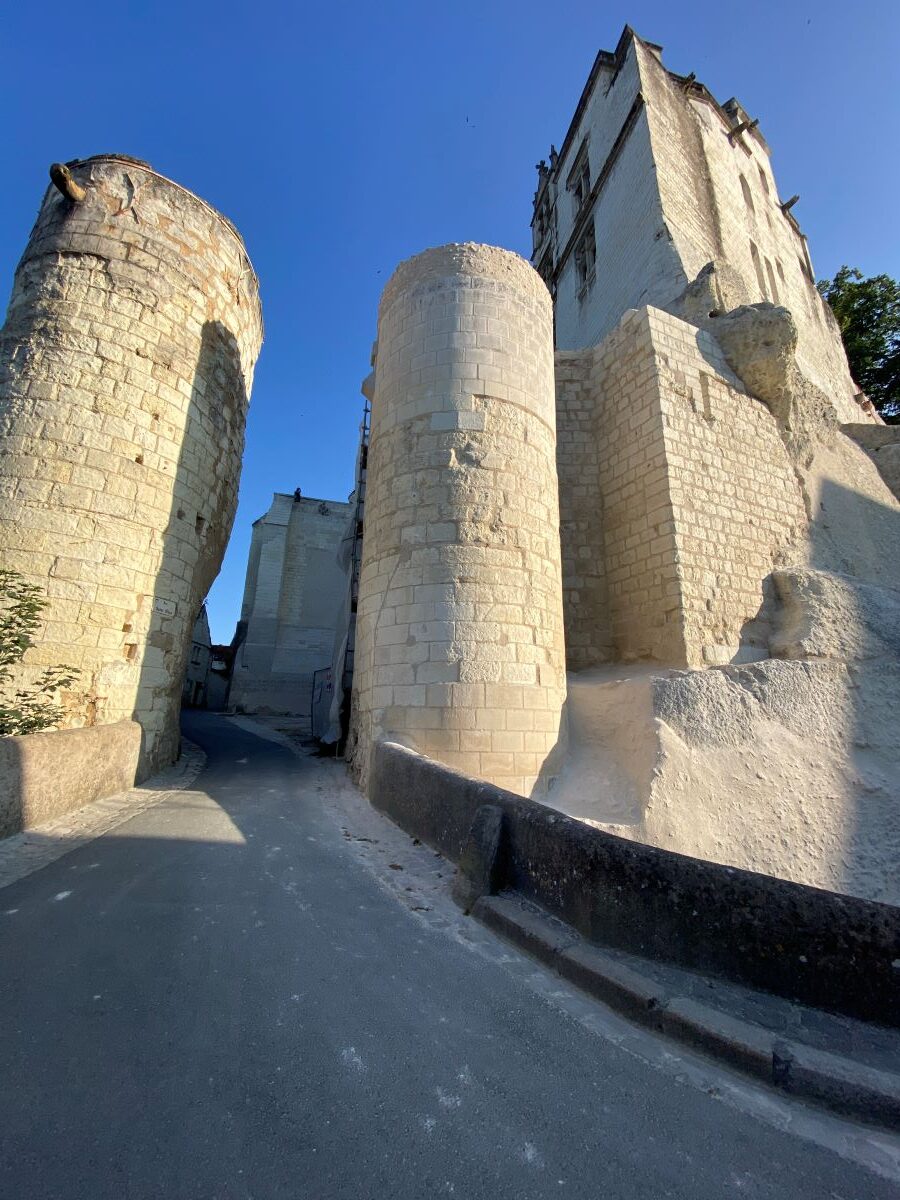
Loches is compact and small with narrow streets that lead from the river up the hill to the old quarter, contained within massive ramparts that loom above the rest of the city.
It’s an easy place to walk around but get a map or book a tour guide at the tourist office for a full-on medieval experience. If you’re doing the walk on your own, be guided along the different routes by fleur-de-lys symbols embedded in the pavements.
The Royal City of Loches/La Cité Royal
Different buildings fill the Royal City at the top of the town. Walk through the Royal Gate and you’re in a little maze of cobbled streets and small green gardens. Dominating the hill is the massive 11th-century keep which Foulques built to protect and control the Indre valley. So let’s start there.
The Keep and the Ramparts
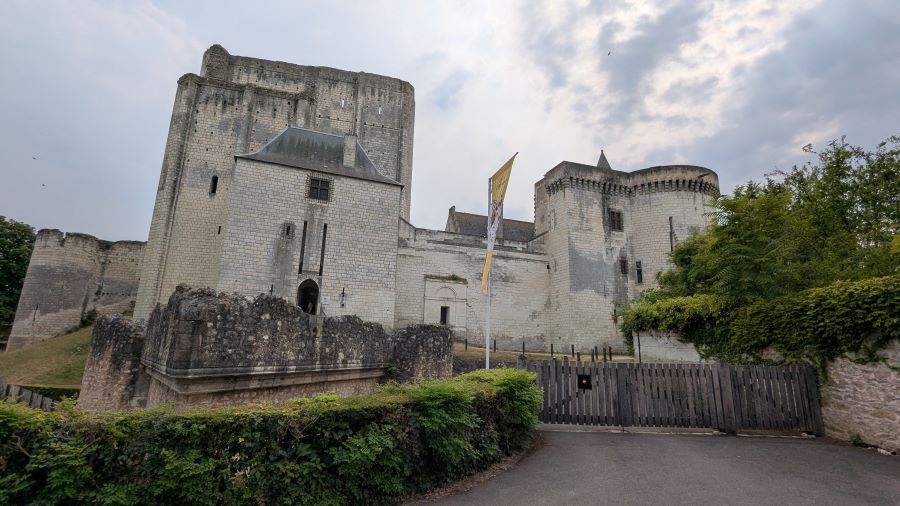
Foulques the Black’s Keep (donjon) is massive and imposing. It was added to over the next four centuries as a royal castle, but it’s still more a keep than a palace. The 36-metre-high walls have few windows and it’s hard to imagine the building as a place to live.
Far easier to envisage is the miserable life of the prisoners who were caged here. Louis XI (1423-1483), a particularly cruel man, devised special shackles to put around the necks of prisoners, called rather ironically ‘the king’s little girls’. Some prisoners were treated with more respect, like the once all-powerful Ludovico Sforza, Duke of Milan, patron of Leonardo da Vinci and one of the greatest figures in the Italian Renaissance. During the war with Italy he was captured and imprisoned in a semi-underground windowless cell for four years. He never regained his freedom and died here in 1508.
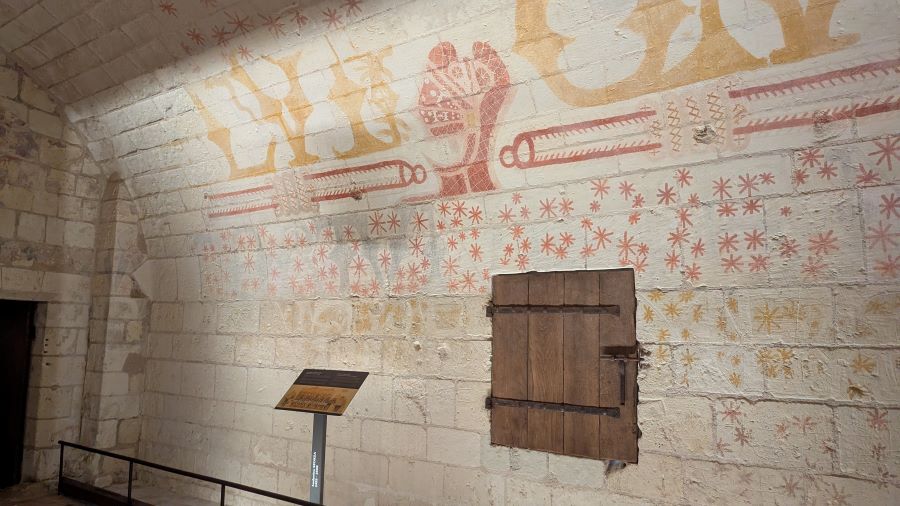
He was however a privileged prisoner. Go down the steep steps into his prison to see his remarkable frescoes and self portraits. The keep continued as a prison to 1926.
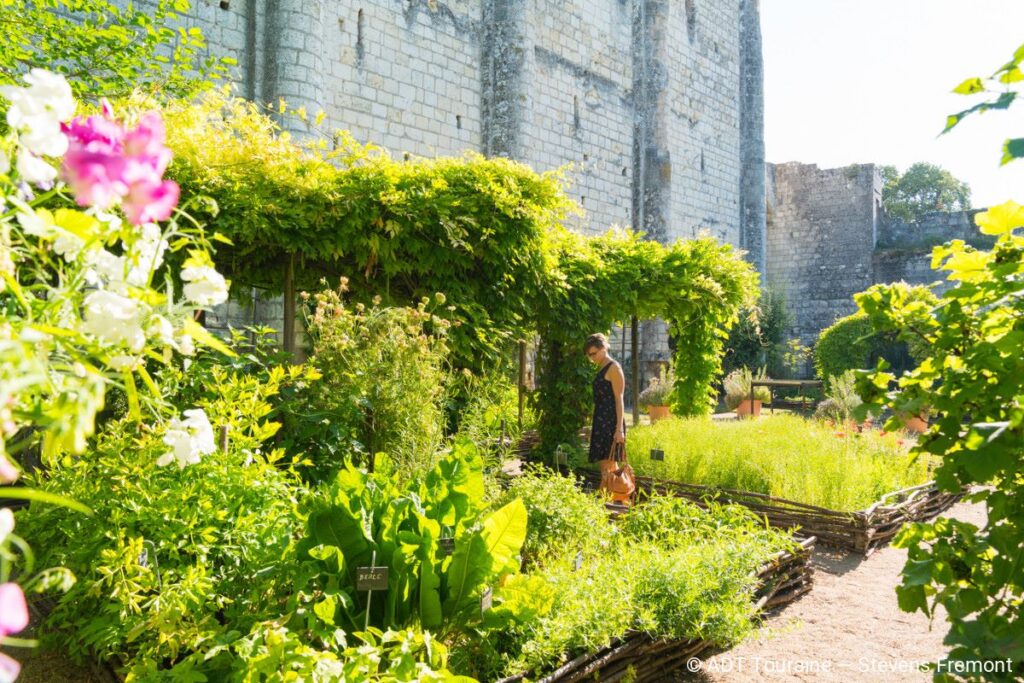
Sit in the medieval garden outside the keep and scroll through its history on the Histopad which you can rent from the ticket office.
The Royal Residence (Logis Royal)
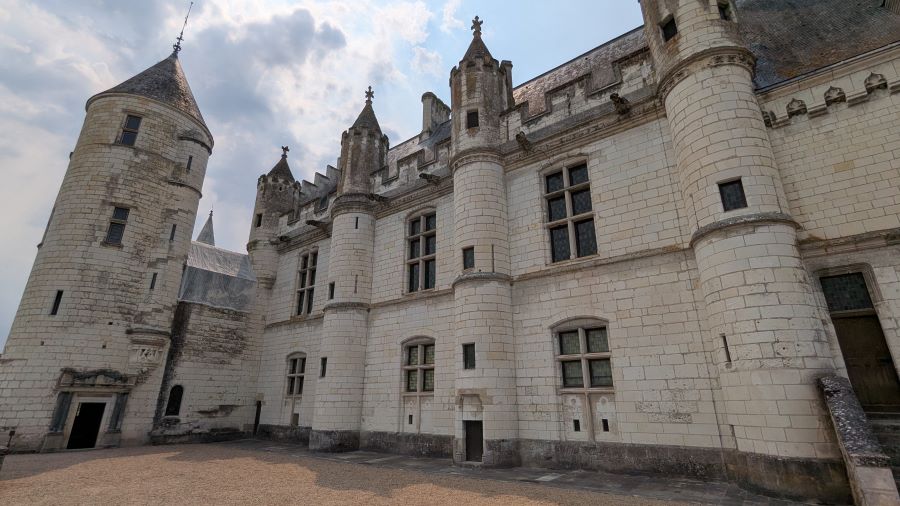
Renaissance towers, white walls and large windows grace the Royal Residence. Built between the late 14th and 15th centuries, it does have towers but they’re ornamental rather than defensive. There’s more history of old Loches here, but it’s the characters who lived in Loches who you meet on your way around that provide the interest.
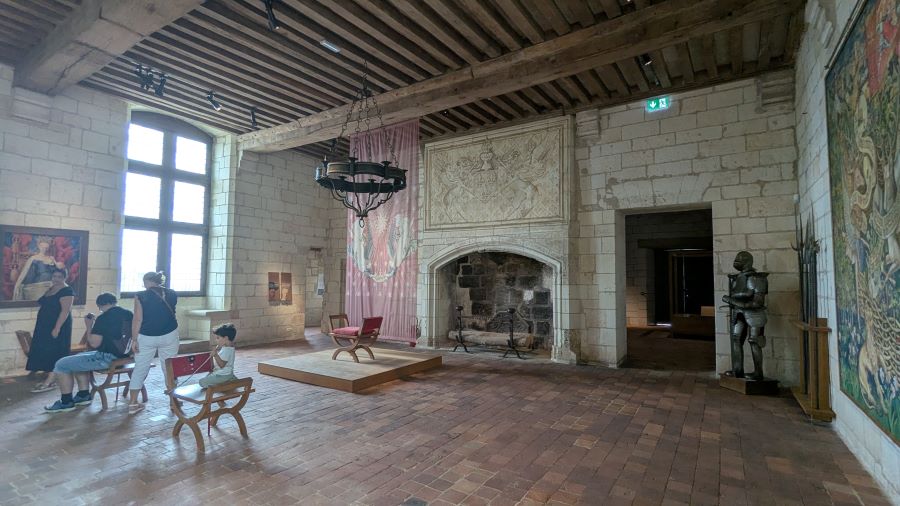
On May 2, 1429 after Orléans was liberated from the English, Joan of Arc arrived in Loches. Her goal? To persuade Charles VII to claim the crown of France. The fair maid was successful and Charles was crowned in Reims, the city of official French coronations, on July 17, 1429.
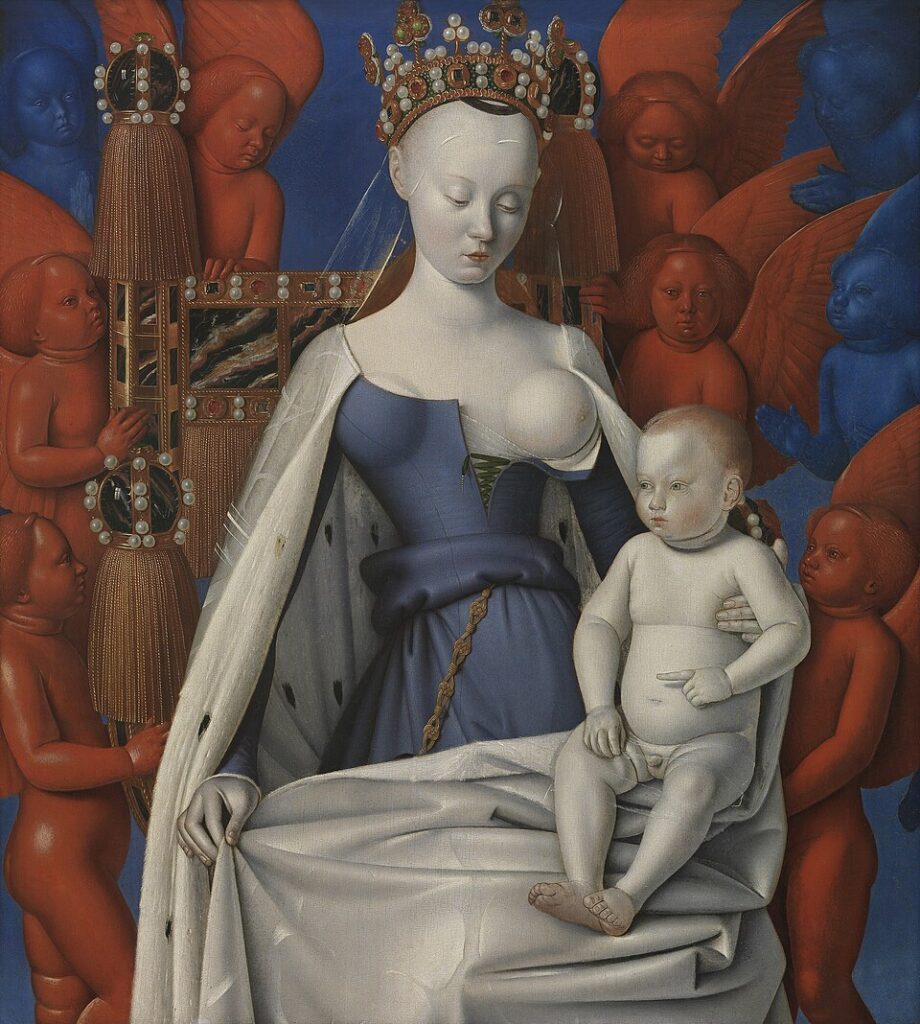
Loches was just one of the castles Charles VII lived in but it was one of his favourites. Here you’ll see traces of Agnès Sorel, Charles VII’s mistress who never left his side. This beautiful, clever woman, originally lady-in-waiting to Charles’s wife, Marie of Anjou, bore him three daughters.
But she also made enemies. In 1450, pregnant with her fourth daughter, she travelled north to Normandy to join him in his battle against the English during the Hundred Years Way. She gave birth at Jumièges but died suddenly and unexpectedly along with her baby daughter.
It took until 2005 to discover the truth about her death. A forensic team examined her bones; they contained enough mercury to kill ten people. But was it just an accident? Or was it the doing of Charles VII’s son, Louis XI, who loathed his father’s mistress?
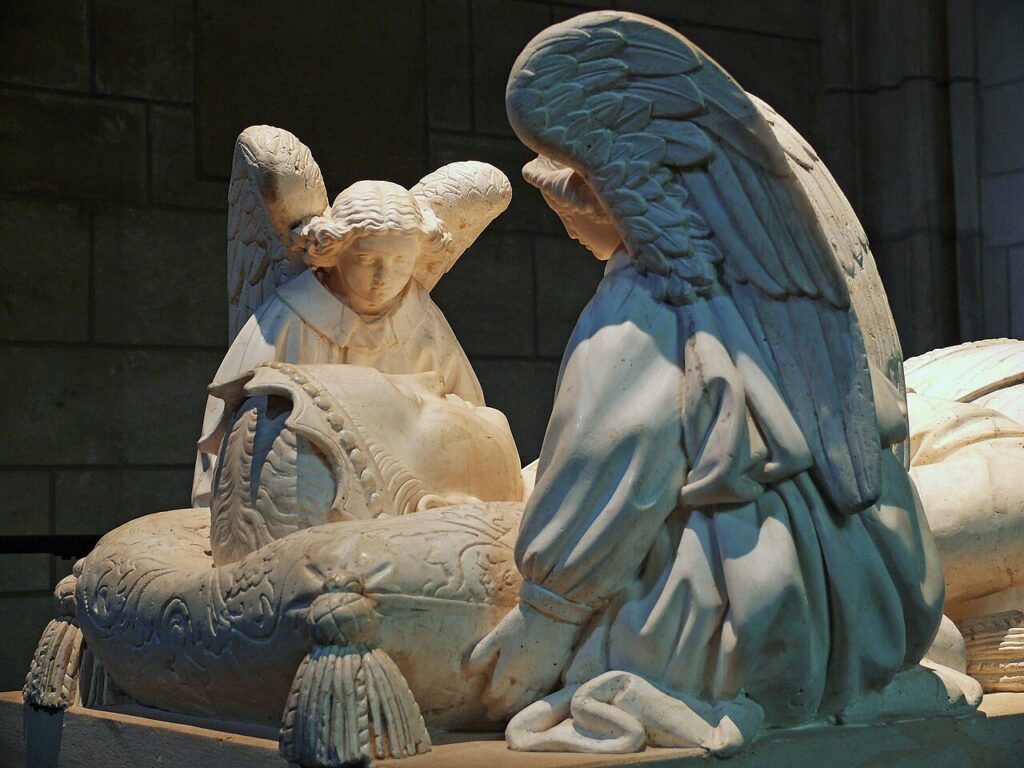
The ‘Lady of Beauty’ was buried in the Saint-Ours Collegiate Church, in the Royal City. It’s a lovely effigy, with two angels at her head to look over her.
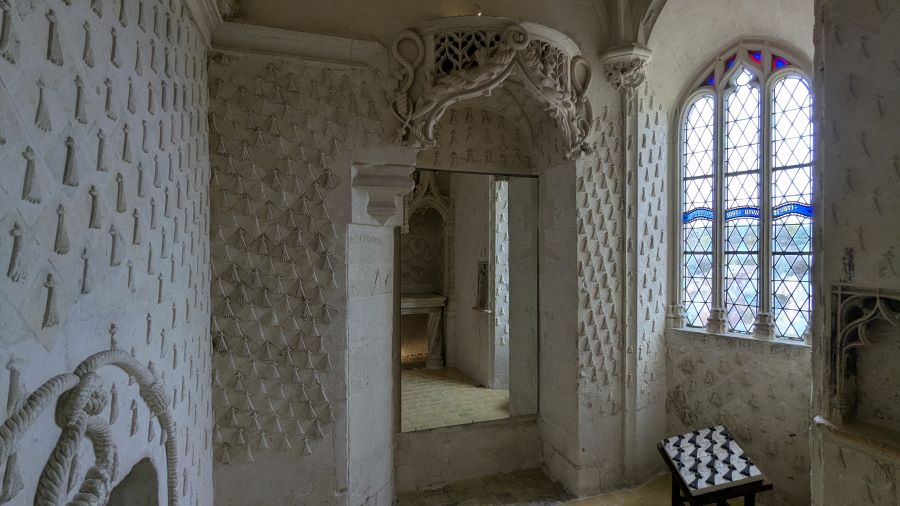
Another of France’s great queens, Anne of Brittany (1488-1514) married Charles VIII (1470-1498) in 1491 and spent part of her time at Loches. When the young Charles died, she married his cousin Louis XII and kept her affection for Loches. You see some of the story of her life in the residence, like the lovely Gothic private oratory she had built.
The Royal City/La Cité Royal
5 place Charles VII
37600 Loches
Tel: +33 (0)2 47 19 18 08
Website
Admission Adult €12.50; 7-18 years & concessions €10.50
Open Daily: Jan, Feb, Nov, Dec 9.30am – 5pm; Mar, Apr, Sept, Oct 9.30-6; May. Jun, Jul, Aug: 9.30-7. Closed Jan 1, Dec 25
There’s a lot more to see in Loches
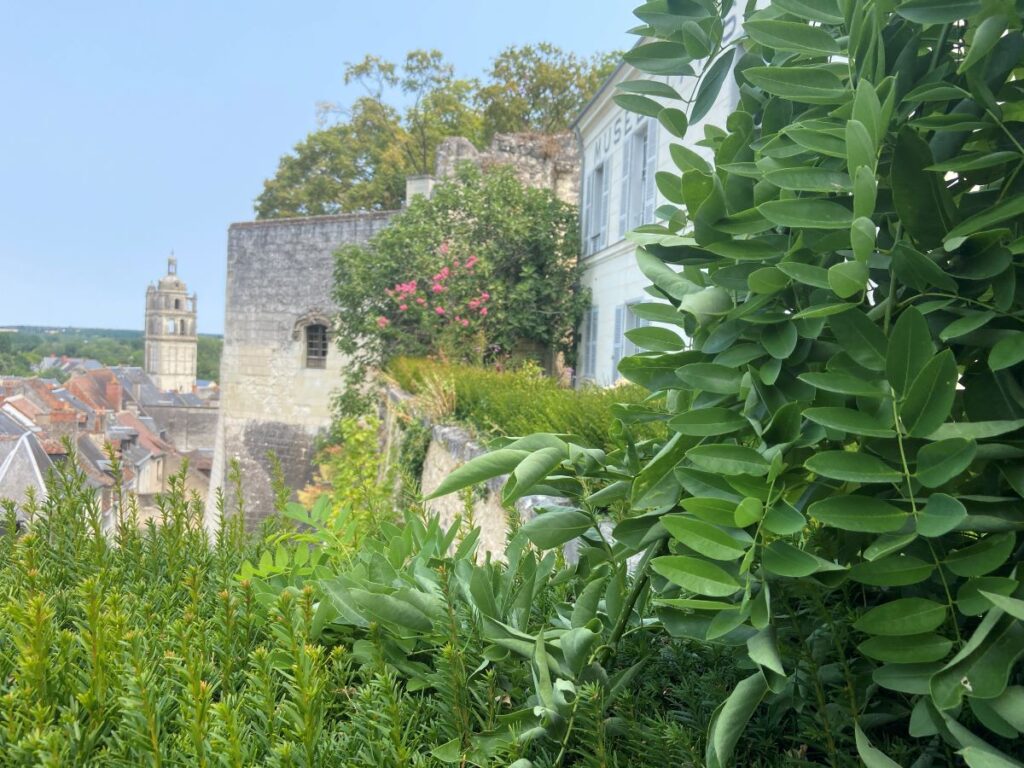
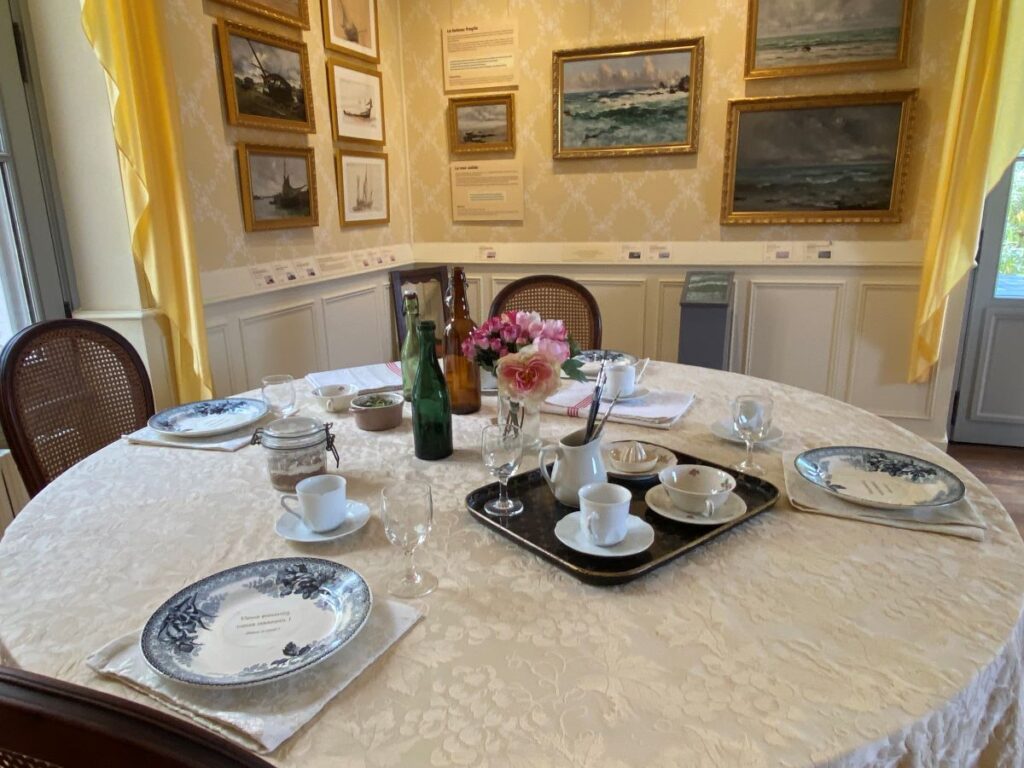
On our way to the Royal Residence, we came across the Musée Lansyer, just a few yards down the Rue du Château. This small, delightful family house is full of paintings, engravings and photographs of the artist Emmanuel Lansyer (1835-1893).
It must have been an inspiring place to live and work with its small rooms filled with light and its delightful garden full of sweet-smelling flowers. And the view over Loches spread before you is lovely.
Musée Lansyer
1 rue Lansyer
37600 Loches
Tel: +33 09 63 52 52 52
Website
Admission free
Open End of April to Nov 1 Wed-Sun 10.30-12.30am & 2-5.45pm
Hôtel de Ville
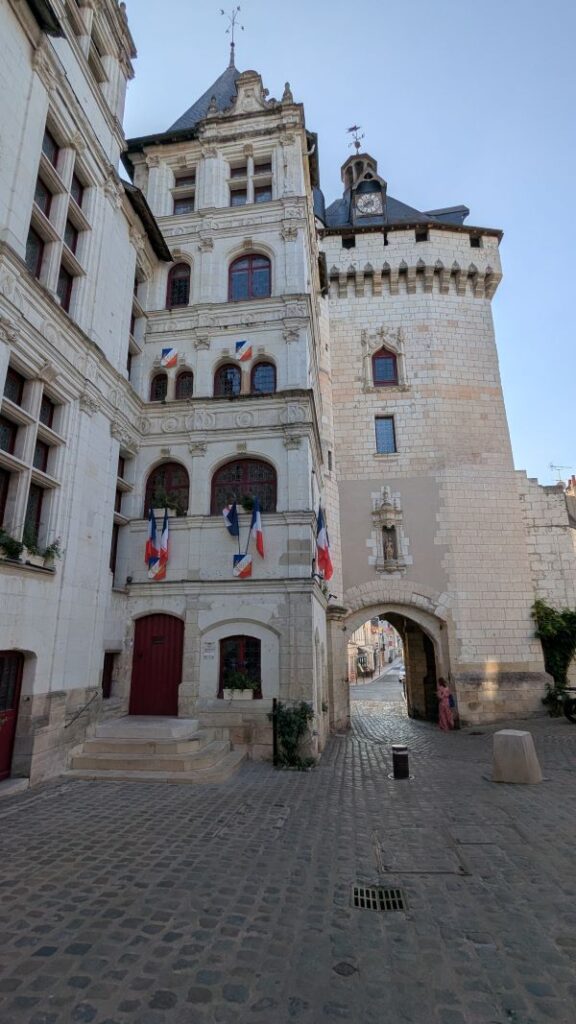
Loches Town Hall and Medieval Gateway Loches Royal City © mechtraveller.com
Outside the Royal City, you can’t miss the splendid Hôtel de Ville, still functioning as the Town Hall. Built in 1519 by order of King François I, it stands just by the medieval Porte de Picois. It looks rather strange, attached to the gate which was specifically preserved by the King when the Hôtel de Ville was built. Look up to see the famous salamander of the King which appears everywhere François I lived. The Hôtel de Ville is worth visiting to see some of the interior of this magnificent Renaissance building.
Hôtel de Ville/Town Hall
Place de l’Hôtel de ville
37600 Loches
Tel: + 33 (0)2 47 91 19 50
Website
Admission free
Open Mon-Thurs: 9am-12noon & 2.30-4.45pm; Fri 9am-noon & 1.30-4pm; Sat 9am-11.45am; Sun closed
A Walk by the River Indre
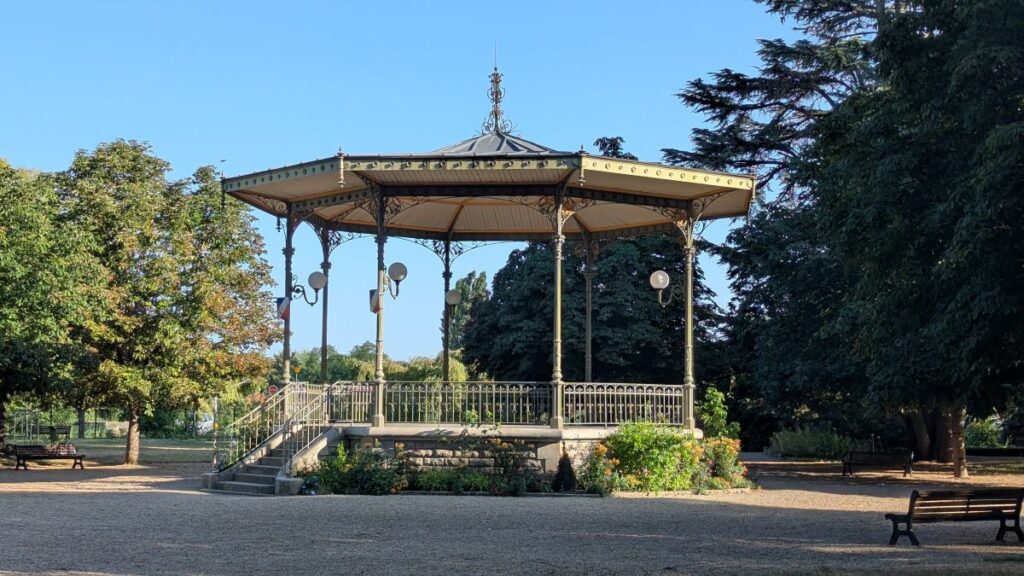
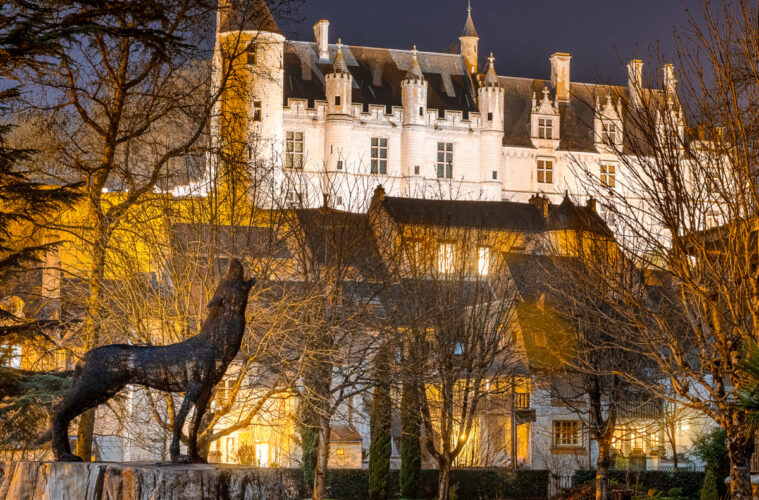
Make your way to the Jardin Public, a small garden by the river and look up to the Royal City (it makes a great photograph). You can also see the garden if you use the extensive free parking lot beside the Tourist office.
If you’re feeling energetic, walk across the river to Beaulieu-lès-Loches. This delightful small town, just 1.1km (15 min walk or 4-minute drive) is well worth a visit.
A Market to Delight
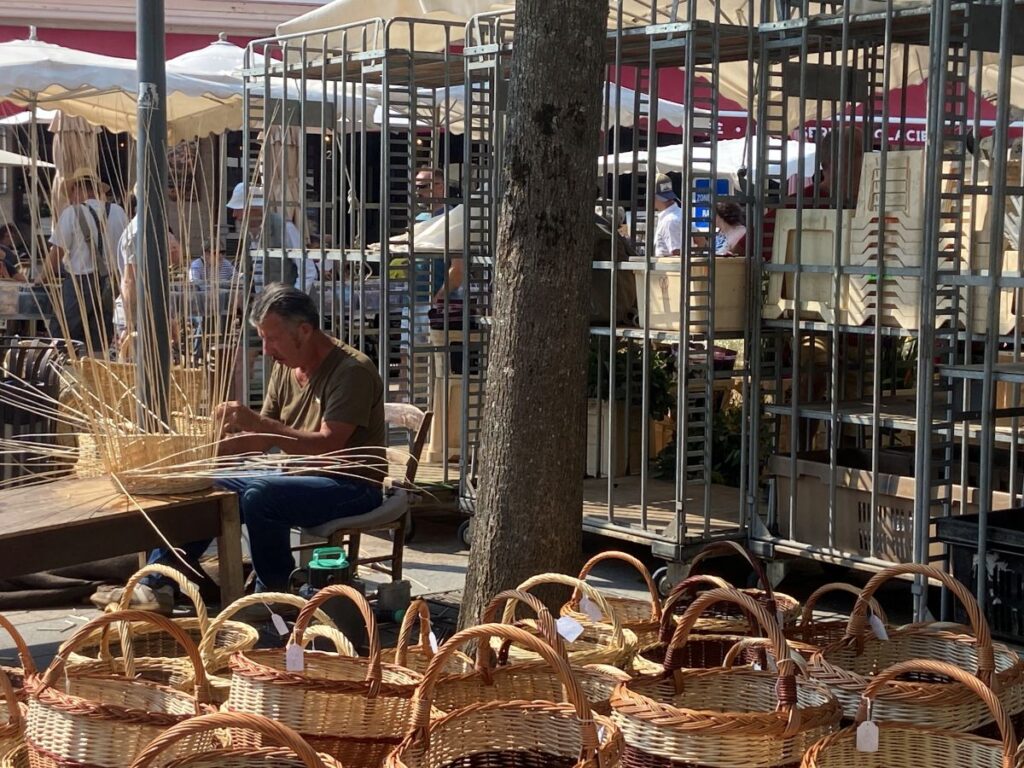
The Wednesday and Saturday markets in Loches are a sight to behold. Over 100 vendors and producers take over the town, their stalls pitched side by side up the streets. Look out for baskets hand-woven in front of you, the goat’s cheese Sainte-Maure de Touraine, and my favourite rilletes de Touraine. They’re made from slow-cooked pork shoulder and belly, then shredded and preserved in their own fat. True aficionados look for the label IGP (Indication Géographique Protégée) which guarantees traditional recipes and production methods.
During the Renaissance, Touraine was called the ‘Jardin de France’, and the tradition continues. So get your fruit and vegetables at the market.
Where to Stay in Loches
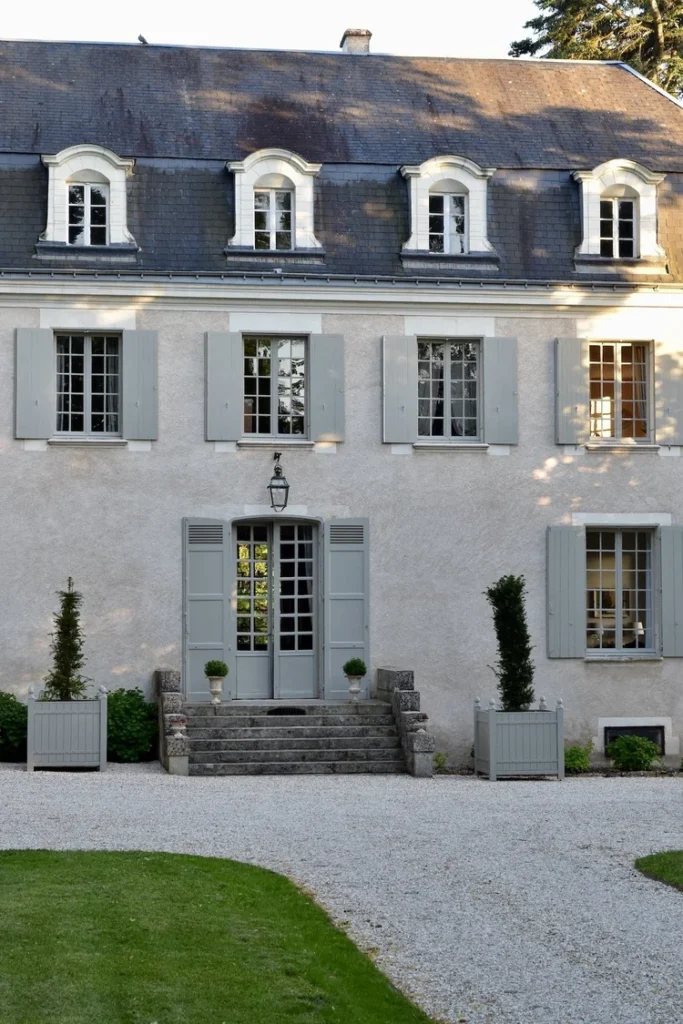
We stayed just outside Loches at the best chambres d’hôte we have ever come across. The Château de Chavigny ticked every single box on comfort, charm and chic sophistication. And a stay here won’t blow the bank account. Book here at what the charming English owners call their boutique bed and breakfast. It’s just a 10 minute drive from the centre of Loches.
Château de Chavigny
1, Chavigny
37310 Chambourg-sur-Indre
Tel: +33 (0)7 59 57 75 77
Website
Doubles from €131-€197 inc breakfast
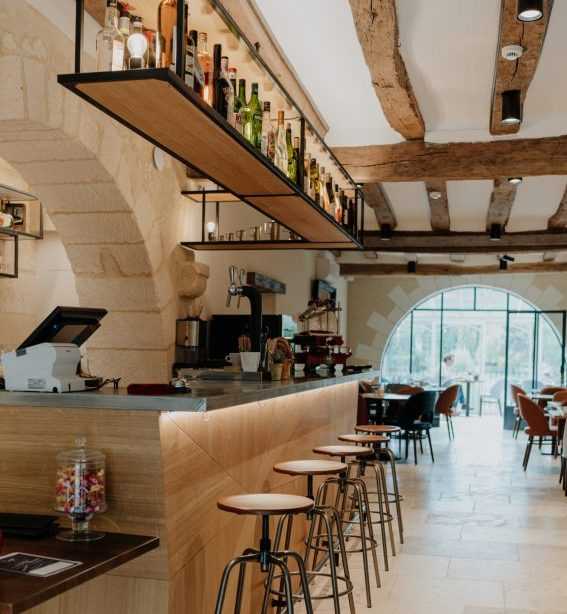
Le George is a 3-star hotel looking out onto the river Indre that flows past the back bedrooms and the restaurant. Rooms are simply furnished; bathrooms have showers. There’s a delightful bar; book a table on the restaurant’s terrace in summer.
Le George
39 rue Quintefol
37600 Loches
Tel: +33 (0)2 47 59 39 74
Website
Doubles from €77 to €125. Breakfast €13.50
Where to Eat in Loches
We ate dinner at Le George Hotel. Expect good traditional cooking using local ingredients. Menus run from 2 courses at €32, to 3 courses at €39. The restaurant is open Tuesday to Saturday lunch and dinner and Sunday for lunch.
There are plenty of good restaurants in Loches and even on a busy market day you’ll find somewhere to eat. We sat outside La Porte Picois, a small bar/café/restaurant in a side street (3 rue Saint Antoine, Tel: +33 (0)2 47 59 24 61). I ordered some of those famous rillons. I hadn’t tried these caramelized chunks of pork belly before, crisp on the outside and wonderfully tender inside. I have included them in Awful Offal and Other French Delicacies; they are very good.
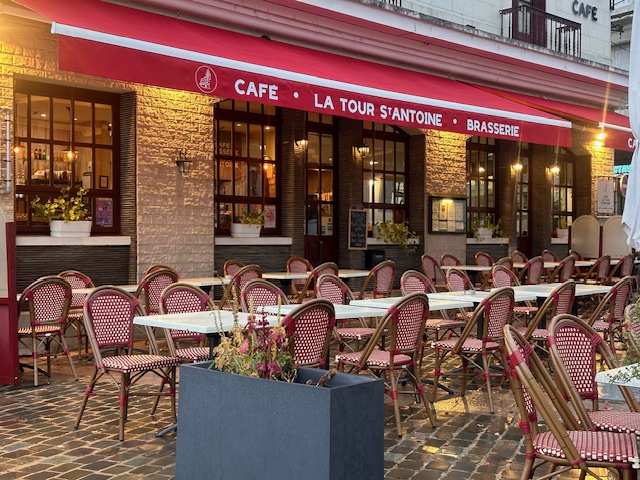
Other recommendations we were given included Le Prosper, a smart bar, wine bar and bistro on the market square at 4 place de la Marne, and just beside it La Tour St Antoine at 2 place de la Marne, a welcoming brasserie.
Christmas in Loches
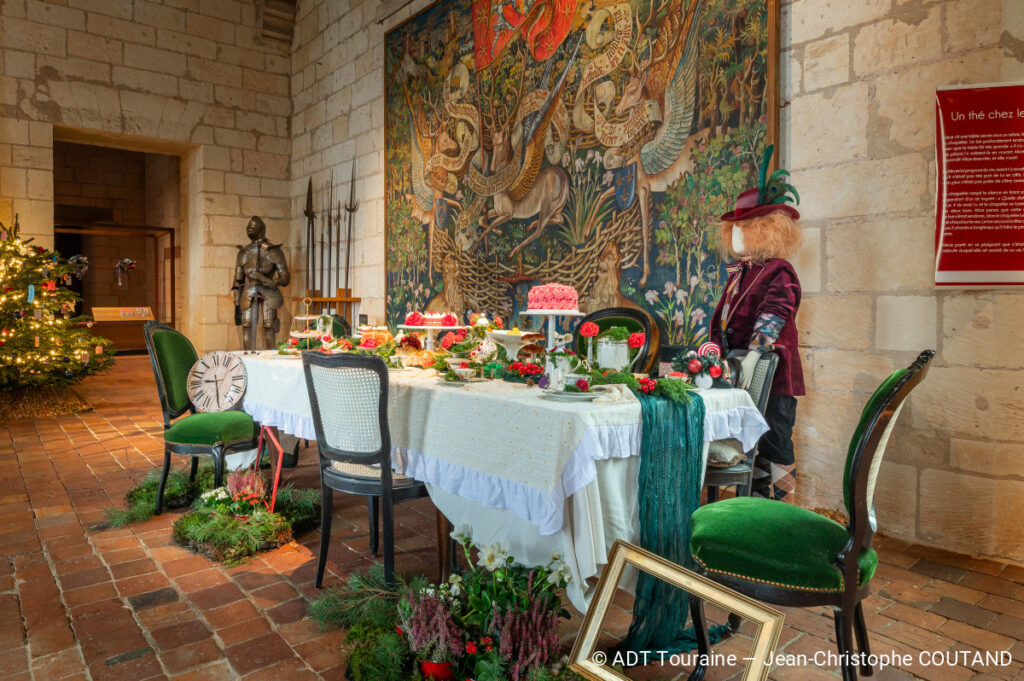
With some of the other great châteaux of the Touraine part of the Loire Valley, Loches enters into the spirit of Christmas with gusto. This year’s festive decoration theme is Beauty and the Beast (La Belle et la Bête), filling the Royal Residence with lights, decorations and immersive story scenes. It runs from Nov 28, 2026 to Jan 3, 2027.
How to Get to Loches
By Car
From Paris the the trip takes around 3 hours 15 minutes (264 kms/164 miles)
From Caen
We travelled with Brittany Ferries from Portsmouth to Caen. From Caen the car journey takes around 3hours 15 mins (313 kms/195 miles)
From Dieppe
Cross the Channel from the UK with DFDS. From Dieppe the car journey takes from 4 hours 15 mins to 5 hours (423kms/263miles)
By train
From Paris
From Montparnasse or Austerlitz, trains go to Loches approximately hourly. Change at Tours or Le Mans. The journey takes from 2 hours 25 mins.
More about the Region
Guide to Glorious Angers in the Loire Valley
The Tapestry of the Apocalypse – A Medieval Masterpiece
The Complete Loire Valley Drive
Le Mans – A Tale of Two Cities