
 Mary Anne
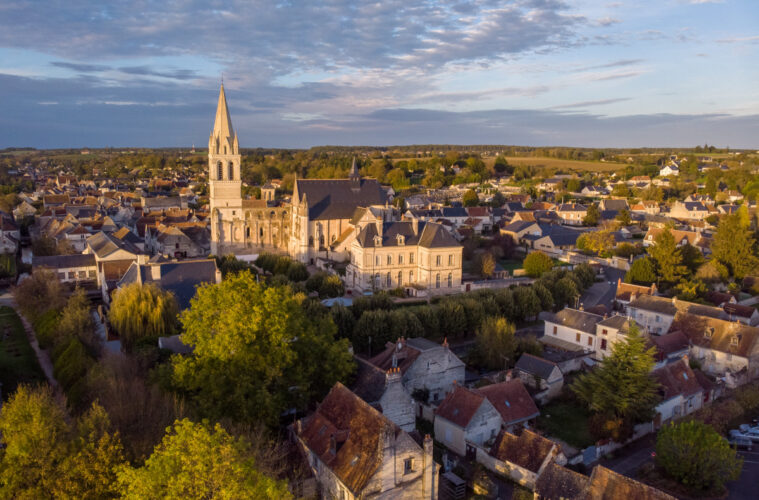
Beaulieu-lès-Loches is a delightful surprise and lives up to its official designation of a Little City of Character. Imposing Abbey ruins are a testament to its original religious importance and medieval houses line the streets, their front doors opening onto the pavement. To cap it all, there’s a truly eccentric garden to enjoy. Today Beaulieu-lès-Loches is a quiet, peaceful place but in the past it was a powerful city, more important than its close neighbour, Loches, a hop, skip and a jump away.
A Great Abbey
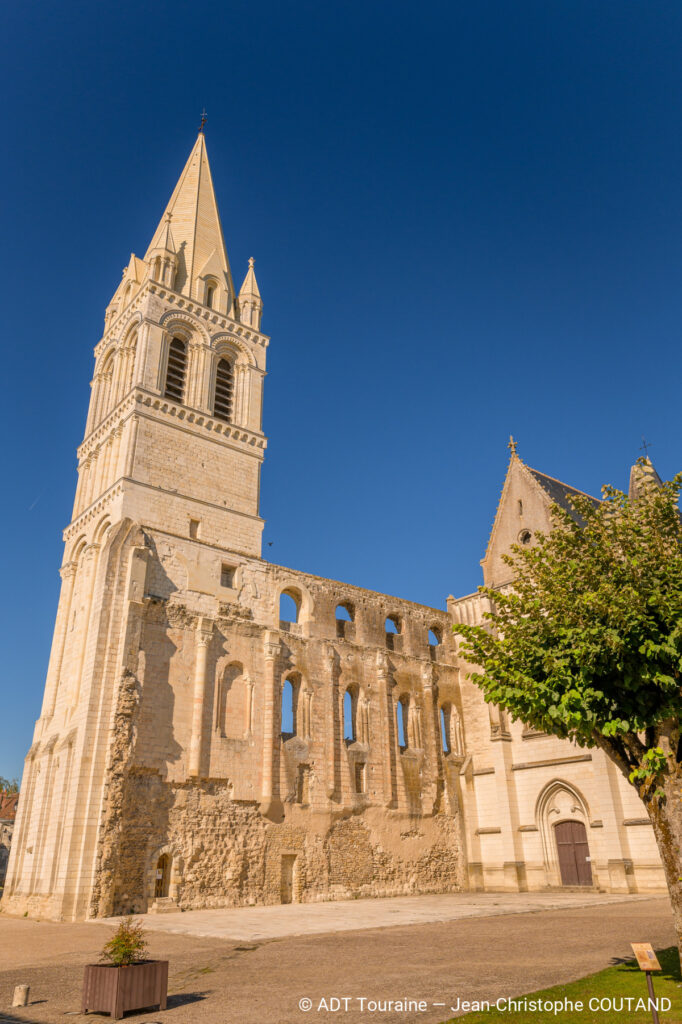
It was the mighty Foulques Nerra (Foulques the Black), Count of Anjou, who built the great Benedictine abbey church of Saint-Trinité in the 11th century. From far away, its great 64-metre tower provides a landmark; up close it seems out of all proportion to the streets around.
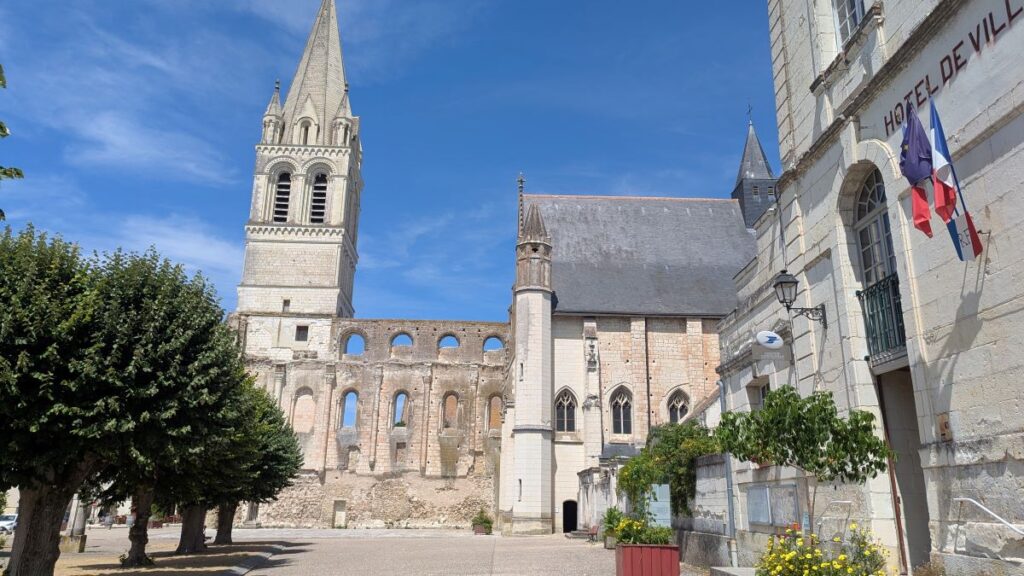
The English occupied Beaulieu from 1359 to 1412 during the Hundred Years War and built a defensive wall which has now disappeared, its stones taken to build houses. The abbey was plundered and burnt and despite some rebuilding it never recovered. What was left survived the French Revolution with some of the buildings taken over for the new secular administration like the current Town Hall.
A Walk Through Beaulieu-lès-Loches
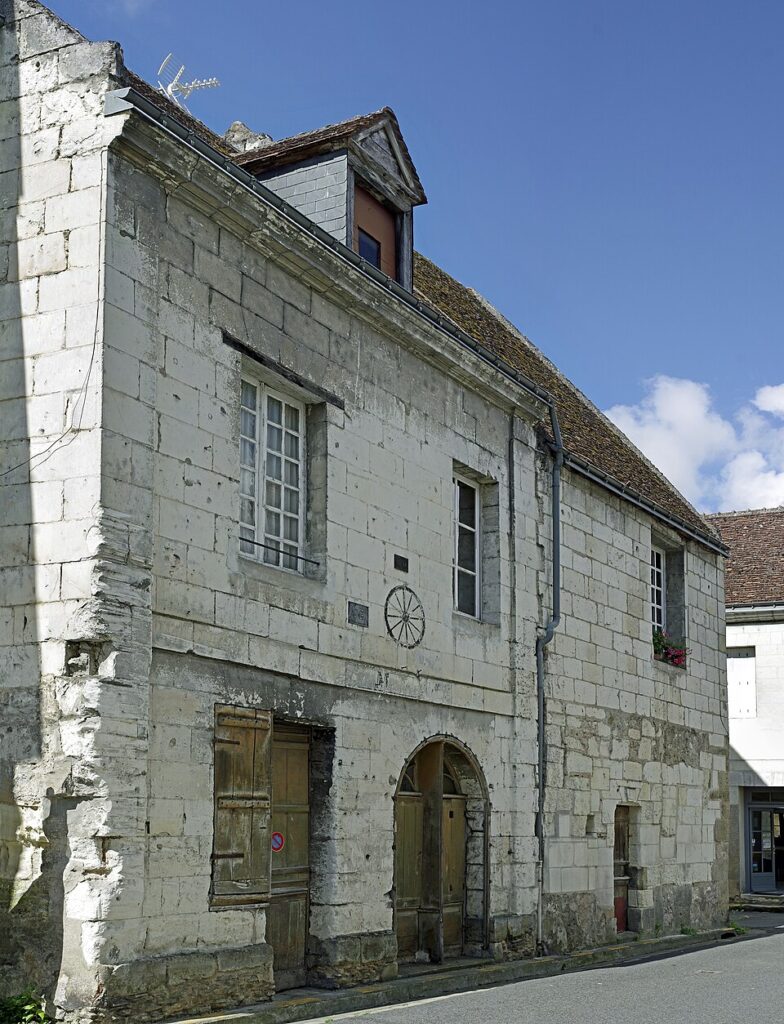
Start in the main square near the Abbey and walk past old buildings like the wheelwright’s house, marked with a wheel symbol on its wall, witness to the vital commercial life of the past. The old houses front directly onto the roads and small squares, with tiny green spaces and large trees providing shade and a rural feeling to this delightful town.
There was a rich merchant’s quarter and an area devoted to the lucrative tanning industry.
Along the Canal
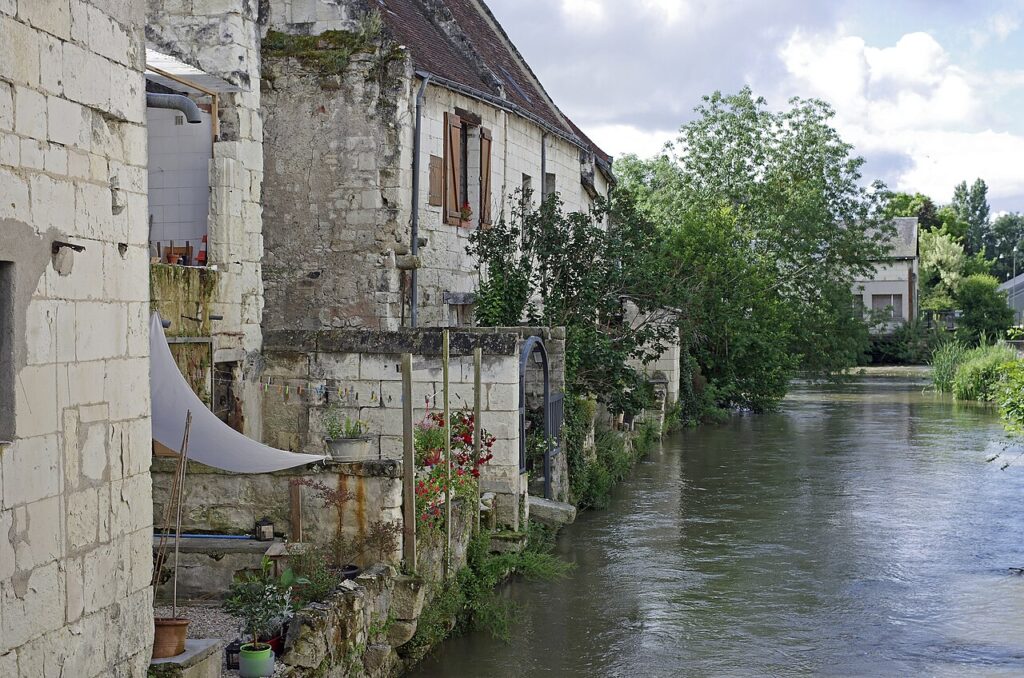
The all-important Beaulieu canal that powered tanning and flour mills was created in the 14th and 15th century by diverting the Indre River. Stroll along the delightful banks of Le Canal des Tanneries starting at Les Prairies du Roy. This large area of 240 hectares separates Beaulieu from Loches. It’s a vital biodiverse stretch of land which absorbs flood water from the two towns.
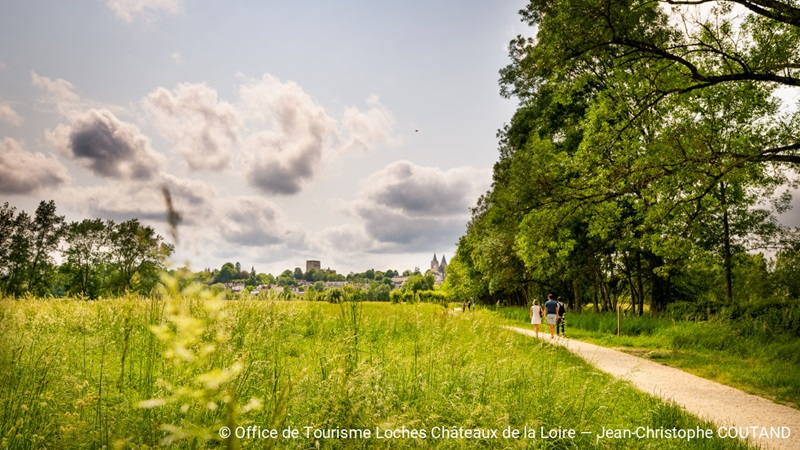
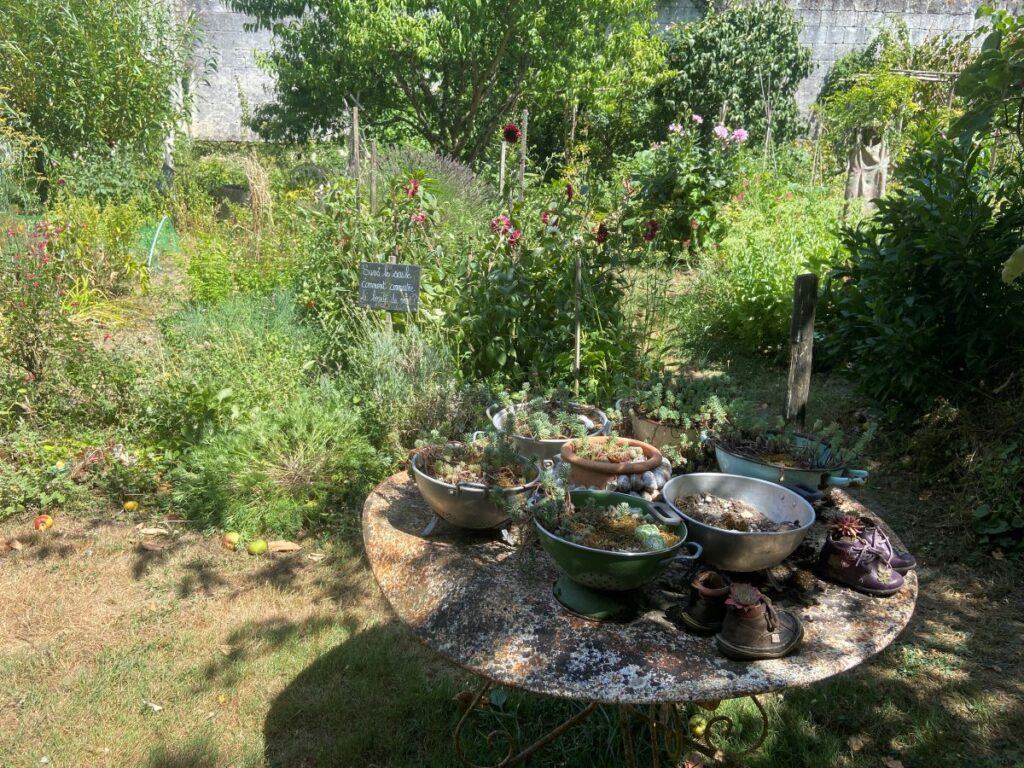
Go past the Abbey Gardens, now occupied by a government building. Then it’s on to one of the most delightful areas we have seen, the gardens of the Viantaises Convent. Founded in 1643, three of the convent’s buildings still exist within the town.
A small path leads you past the tiny gardens of the original convent. Tended by the locals, each small patch is full of objects like old bicycles, ladders, tables and strange figures, all embellished with plants and flowers and small descriptive handwritten signs. It feels as if a playful elf had passed through the gardens.
And Where there’s a Canal, There’s a Waterwheel
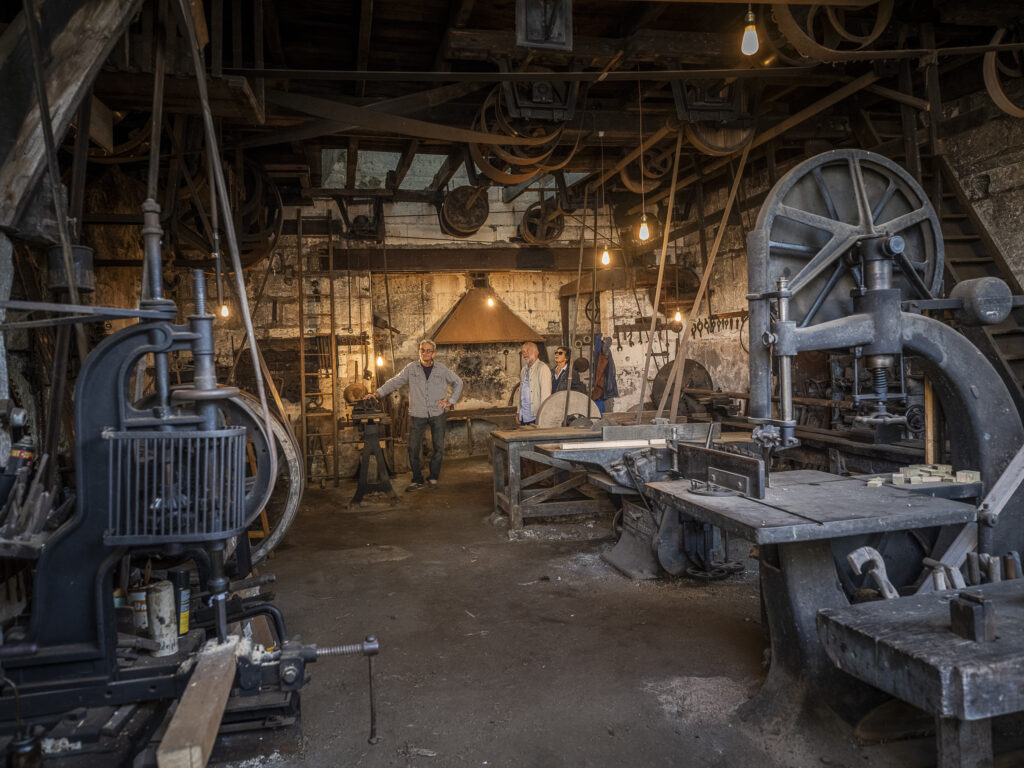
If you’re in Beaulieu for one of the official Patrimonie weekends (May and September), you’ll be able to visit the Moulin des Mécaniciens (Mechanics’ Mill). The mill’s waterwheel was strong enough to crush the oak bark which produced the tan – vital to harden the leather and make it rot-proof. Built in the early 1500s, it was one of the major economic drivers for centuries. It was transformed into a mechanical workshop and operated from 1880 to 1972. Today it’s a living Eco museum humming with historic machinery.
Run by volunteers, it’s only open a few weekends each year, April to October. Check the website for details.
A Guinguette to Finish
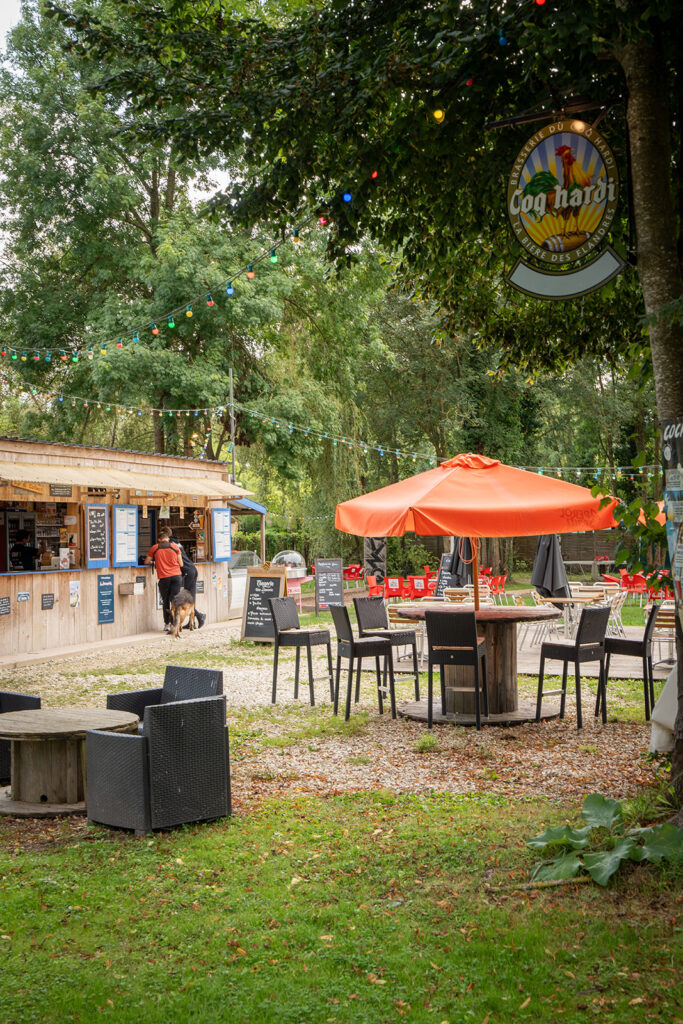
Les Javanaises came as a surprise as we walked along the path. This large guinguette comes alive on summer evenings with celebrations, dances and a funfair. We passed it when it was shut and looked rather forlorn; but locals insist it’s a great venue.
Les Javanaises is open Monday to Thursday 5pm to 11pm; Friday to Sunday and public holidays from noon to midnight (though if it rains it shuts firmly at 3pm). April to November.
Where to Eat and Drink in Beaulieu-lès-Loches
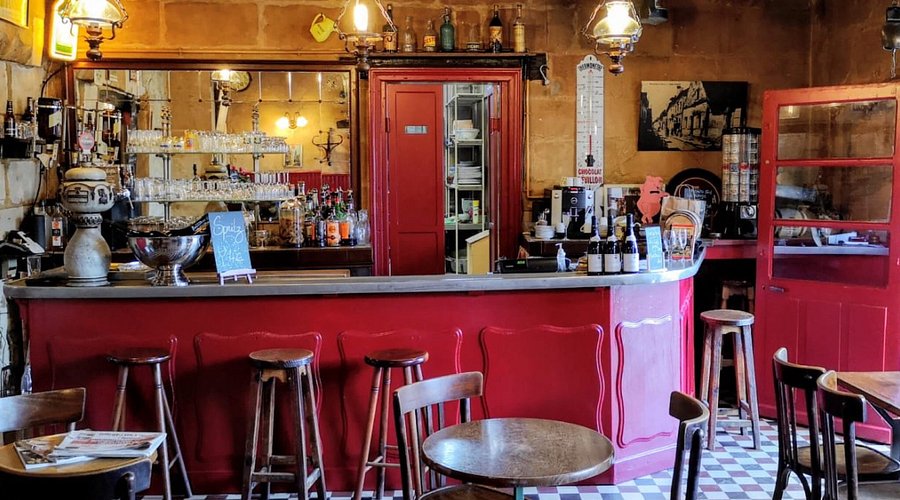
You can’t miss L’Estaminet, just by the main square. It’s a charming bar, café and restaurant run by the amiable, omnipresent Jules Dupuis. We arrived around 4pm when he had just finished clearing up lunch and sat on the terrace. ‘Bonjour’ he boomed (he’s that kind of outgoing personality).
Jules worked as a journalist in Paris before the chance to buy and run the Estaminet came up. He bought it because he knew and loved Beaulieu. He’s a formidable character in the life of both Beaulieu and Loches, well known locally and even to the new owners of the boutique Chateau de Chavigny where we stayed. It’s a small world.
Expect excellent home-cooked dishes in a welcoming atmosphere – and a fireplace in winter. Open Mon, Wed to Sun.
How to Get to Beaulieu-lès-Loches
We drove from Loches over the rue des Ponts. It’s the same route as you would walk, with the car taking just a few minutes and the walk around 17 minutes.
Cover photo: © ADT/Olivier Chable
More about the Region
Guide to Glorious Angers in the Loire Valley
The Tapestry of the Apocalypse – A Medieval Masterpiece